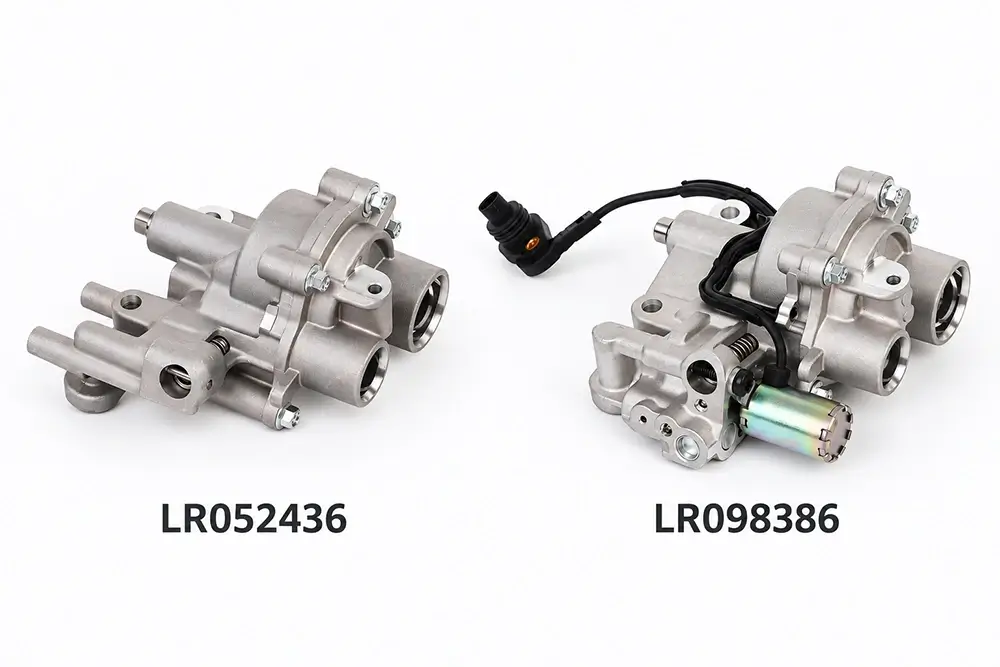
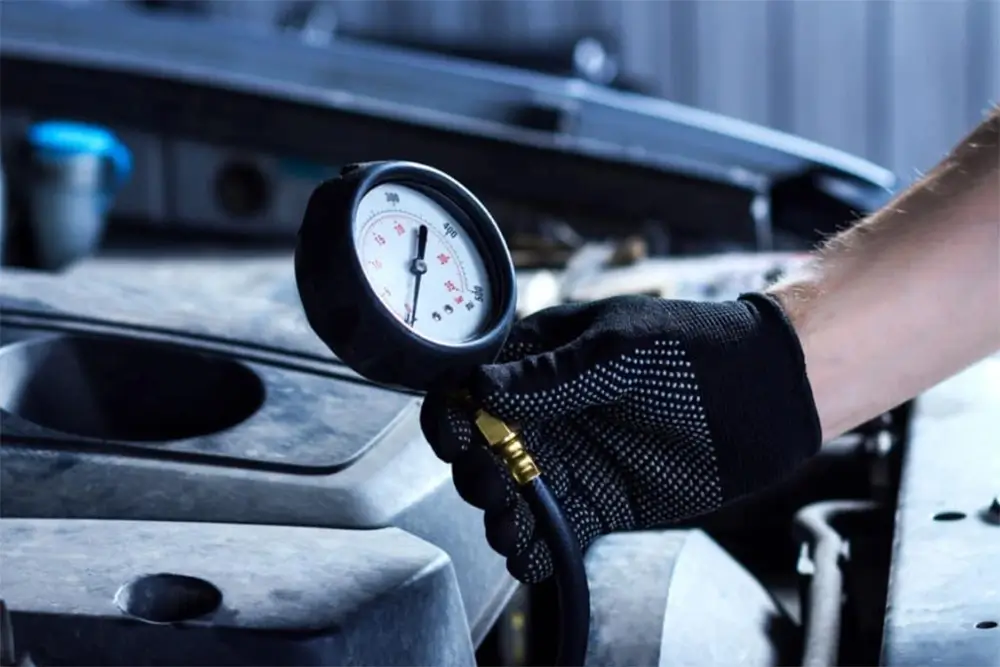
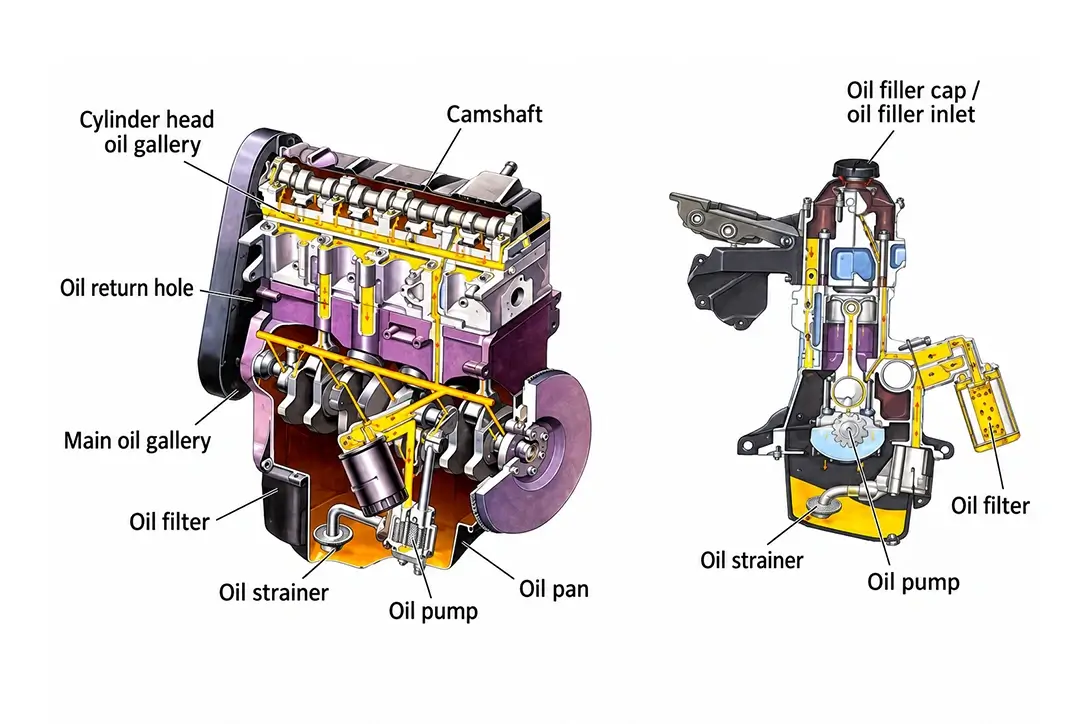
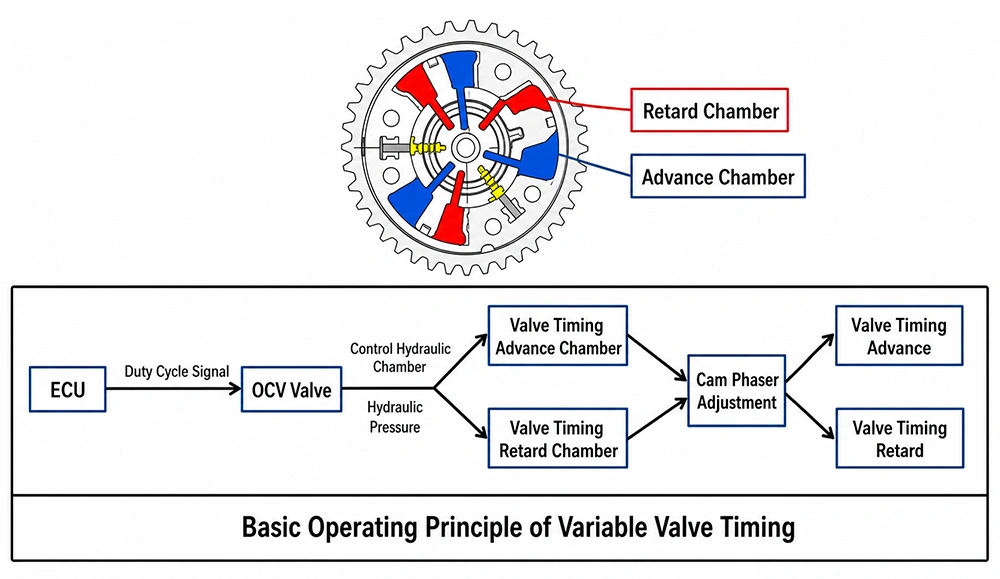
A variable valve timing (VVT) system changes camshaft timing while the engine is operating. The engine control unit commands a VVT solenoid or oil control valve, controlled oil pressure moves the camshaft phaser, and the phaser advances or retards the camshaft position.
The main VVT components include the control unit and sensors, VVT solenoid, engine oil passages, camshaft phaser, camshaft and timing drive. A fault in one component does not automatically prove that another VVT part requires replacement.
For B2B parts matching, confirm the OE number, engine code, intake or exhaust position, cylinder bank, connector or mounting design, original-part photographs, required quantity and supplied scope before quotation.
What Is a Variable Valve Timing System?
A variable valve timing system changes the angular position of a camshaft relative to the engine timing drive. Depending on the engine design, the system may control the intake camshaft, exhaust camshaft, both camshafts or different cylinder banks independently.
VVT operation combines electronic commands, hydraulic oil control and mechanical timing adjustment. The exact component design and operating range vary by engine, so replacement parts must be matched by confirmed application data.
VVT System Components at a Glance
| VVT component | Main function | Buyer matching points |
|---|---|---|
| ECU and sensors | Determine when a timing adjustment is required | Engine application and diagnostic context |
| VVT solenoid or oil control valve | Regulates oil flow according to an electrical command | OE number, engine code, connector and position |
| Engine oil supply and passages | Provide hydraulic pressure to the phaser | Oil circuit, cleanliness and engine condition |
| Camshaft phaser or adjuster | Changes the angular position of the camshaft | OE number, intake/exhaust side, bank and mounting structure |
| Camshaft and timing drive | Operate the valves and transfer the timing adjustment | Engine code, camshaft position and timing interface |
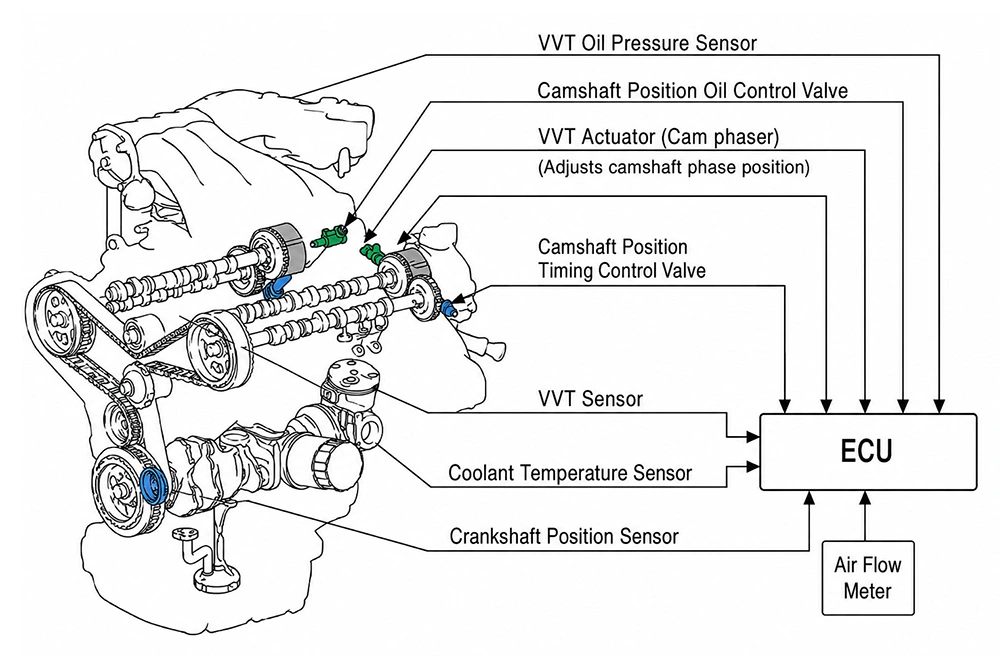
Main Components of a VVT System
VVT Solenoid or Oil Control Valve
A VVT solenoid is an electrically controlled valve that regulates engine oil flow to the camshaft phaser. Depending on the catalogue or engine manufacturer, it may also be called an oil control valve, camshaft timing solenoid or camshaft control valve.
The solenoid does not directly change the camshaft position. It controls the hydraulic circuit used by the phaser. For replacement matching, confirm the OE number, engine code, intake or exhaust position, cylinder bank, connector, mounting structure and seal location.
Review the available VVT solenoid product range or compare a VVT solenoid with a camshaft phaser before selecting the required component. Confusing the control valve with the feedback sensor? See our guide to VVT solenoid vs camshaft position sensor.
Camshaft Phaser or Camshaft Adjuster
A camshaft phaser is the mechanical and hydraulic component that changes the camshaft’s angular position relative to the timing drive. It may also be described as a camshaft adjuster, VVT gear, timing adjuster or camshaft actuator.
Controlled oil pressure moves the internal phaser mechanism. For matching, confirm the OE number, engine code, intake or exhaust position, cylinder bank, central bolt, timing-wheel design, oil passages, rear structure and supplied scope.
Use the camshaft phaser identification guide to compare position and structure, then review the available camshaft phaser product range.
Camshaft
The camshaft operates the intake or exhaust valves through its lobes and related valve-train components. In a VVT-equipped engine, the phaser changes the timing position of the camshaft while the camshaft continues to control valve movement.
Material, appearance or overall length cannot reliably identify the camshaft position. Use the intake and exhaust camshaft guide when the required position is unclear.
Engine Control and Oil Supply
VVT operation depends on both electronic control and hydraulic oil pressure. The ECU sends the command, the solenoid regulates oil flow and the phaser responds to the controlled pressure.
A VVT-related fault may involve wiring, sensors, oil condition, oil pressure, blocked passages, the solenoid, the phaser or another timing component. Replacing one part should not be presented as a guaranteed repair without confirming the diagnostic context.
How a VVT System Works
- The ECU uses engine speed, load, temperature and sensor information to calculate the required camshaft position.
- The ECU sends an electrical command to the VVT solenoid or oil control valve.
- The solenoid directs engine oil through the relevant control passage to the camshaft phaser.
- Controlled oil pressure moves the phaser, advancing or retarding the camshaft relative to the timing drive.
- The control system monitors the resulting camshaft position and adjusts the command where required.
Why VVT Parts Are Often Misidentified
VVT components are application-specific. Similar external shapes do not prove that two parts use the same connector, internal specification, mounting structure, calibration or engine application.
Common matching errors include:
- Matching by appearance alone: similar housings may contain different internal specifications.
- Using only the vehicle model: one model may use several engine codes or technical revisions.
- Confusing the solenoid with the phaser: the solenoid controls oil flow; the phaser changes camshaft position.
- Ignoring intake, exhaust or bank position: apparently similar parts may be designed for different locations.
- Using incomplete OE references: prefixes, suffixes and superseded numbers may change the result.
- Treating every oil-control solenoid as a VVT valve: piston cooling and oil-pump control solenoids perform different functions.
For example, a piston oil cooling solenoid controls oil supply to the piston-cooling circuit and should not be classified as a camshaft timing valve.
VVT Parts Identification Checklist for Buyers
Accurate quotation preparation begins with a structured set of application and product information.
| Check | Required details | Why it matters |
|---|---|---|
| Part type | VVT solenoid, camshaft phaser, camshaft or complete VVT assembly | Prevents different components being treated as interchangeable |
| OE reference | Complete number, suffix and superseded reference | Establishes the initial replacement identity |
| Engine information | Engine code, displacement, fuel type and technical revision | Separates similar vehicle applications |
| Installation position | Intake, exhaust, Bank 1, Bank 2, left or right where confirmed | Prevents position-related mismatch |
| Physical interface | Connector, terminals, mounting holes, bolt pattern, oil passages and dimensions | Confirms electrical, hydraulic and mechanical compatibility |
| Product evidence | Full view, connector, mounting surface, markings and original sample where available | Supports physical comparison |
| Supplied scope | Individual valve, phaser, gear, bolt set or wider VVT assembly | Prevents quotation and delivery disputes |
| Commercial requirement | Quantity, packaging, private label, target market and required documentation | Supports quotation and production planning |
A “VVT assembly” is not one universal supplied configuration. Buyers should list every required component and confirm whether bolts, seals, gears, valves or related parts are included.
Key Considerations When Sourcing VVT Replacement Parts
Confirm the Application Before Quotation
A quotation based on incomplete application data may refer to the wrong component even when the product description appears correct.
Before confirming a part, the supplier and buyer should establish:
- which engine uses the component;
- whether it is an intake or exhaust part;
- whether bank position is relevant;
- whether the OE reference is current;
- whether regional application differences exist;
- whether the requested component is a solenoid, phaser or another control part.
When information conflicts, the part should remain unconfirmed until additional evidence is available.
Distinguish Reference OE Numbers from Confirmed Applications
An OE number may be used as a replacement reference, but it should not automatically be treated as proof of every listed vehicle application.
Reliable sourcing documentation should distinguish between:
- a reference number supplied by the buyer;
- an alternative or superseded reference;
- a confirmed engine application;
- an application that still requires verification.
This distinction reduces the risk of unsupported compatibility claims.
Review Product Specifications
Depending on the component, buyers may need to compare:
- connector configuration;
- electrical specification;
- valve-body dimensions;
- mounting structure;
- sealing surfaces;
- timing-wheel design;
- material and manufacturing requirements;
- packaging and marking requirements.
Only specifications supported by product data or inspection records should be presented as confirmed facts.
Define Commercial Requirements
Technical matching is only one part of B2B sourcing. Buyers should also clarify:
- forecast quantity;
- minimum order expectations;
- packaging format;
- branding requirements;
- sample requirements;
- production or delivery schedule;
- destination market;
- required documentation.
These details help the supplier determine whether the product and supply arrangement are suitable for the enquiry.
Request Confirmation Where Data Is Incomplete
If the buyer cannot provide a complete OE number or engine code, the quotation request should clearly state which details are missing.
Useful supporting materials may include:
- product photographs;
- part dimensions;
- engine identification information;
- existing catalogue records;
- sample components.
A responsible supplier should identify the information that still requires confirmation rather than treating an approximate match as a verified application.
VVT Solenoid and Camshaft Phaser Comparison
| Comparison | VVT solenoid | Camshaft phaser |
|---|---|---|
| Main function | Regulates engine oil flow | Changes camshaft timing position |
| Control | Electrical command and hydraulic flow | Controlled oil pressure and mechanical movement |
| Typical location | Cylinder head or oil-control passage | Camshaft and timing-drive area |
| Matching focus | OE number, connector, terminals and valve-body design | OE number, intake/exhaust side, bank and mounting structure |
| Interchangeable | No | No |
For symptoms, component differences and detailed matching checks, read VVT Solenoid Valve vs Camshaft Phaser.
Information to Include in a VVT Parts Enquiry
To request application review or a quotation, provide:
- Part type: VVT solenoid, camshaft phaser, camshaft or assembly
- Complete OE or reference number
- Engine code
- Vehicle make, model, year and market
- Intake, exhaust or cylinder-bank position
- Connector, mounting or timing-end photographs
- Original-part markings
- Required quantity
- Packaging or private-label requirement
- Sample, drawing or inspection requirement where applicable
Need help identifying a VVT component? Send the OE number, engine code, installation position and clear product photographs for application review.
Frequently Asked Questions
What is a VVT system?
A variable valve timing system changes camshaft timing while the engine is operating. It normally combines electronic control, regulated engine oil flow and a camshaft phaser.
What are the main components of a VVT system?
The main components can include the ECU and sensors, VVT solenoid or oil control valve, engine oil passages, camshaft phaser, camshaft and timing drive.
What is a VVT valve?
“VVT valve” commonly refers to the VVT solenoid or oil control valve that regulates oil flow to the camshaft phaser. The term should still be checked against the OE number and engine application.
Are a VVT solenoid and camshaft phaser the same part?
No. The VVT solenoid regulates oil flow, while the camshaft phaser uses controlled oil pressure to change the camshaft position.
What is included in a VVT assembly?
The term can refer to different supplied configurations. Buyers should confirm whether the enquiry covers a solenoid, phaser, gear, bolts, seals or a wider set of components.
What information is required for a VVT parts quotation?
Provide the part type, OE number, engine code, vehicle application, intake or exhaust position, cylinder bank where applicable, clear photographs, required quantity and packaging requirements.
Related VVT Products and Technical Resources
Review Wellgine’s VVT solenoid product category for available engine oil-control and timing-control components. Confirm the individual product function because the broader category may include solenoids used outside the camshaft timing system.
Explore the camshaft phaser product category for replacement camshaft adjusters and related timing components.
Read VVT Solenoid Valve vs Camshaft Phaser for a direct comparison of their functions.
Read How to Identify the Correct VVT Solenoid Valve for a more detailed component-identification process.
Source VVT Components with Clear Application Information
Wellgine supports international aftermarket buyers seeking VVT solenoids, camshaft phasers and related engine components.
To request product confirmation or a quotation, provide:
- the complete OE reference;
- engine code;
- vehicle or equipment application;
- intake, exhaust or cylinder-bank position;
- clear product photographs;
- required quantity;
- packaging or private-label requirements, where applicable.
Application and replacement information remains subject to confirmation against the available technical and product data.
Contact Wellgine with your VVT component requirements.