VVT solenoid valves can look almost identical while serving different engines, camshaft positions or oil-control functions. For importers, distributors and procurement teams, matching by appearance alone creates a significant risk of incorrect quotations, returns and application complaints.
The correct identification process should normally combine the OE reference number, engine code, vehicle application, intake or exhaust position, connector design, valve-body dimensions, oil-port arrangement and mounting structure. Where catalogue information is incomplete or conflicting, clear photographs, dimensions or a physical sample may be required before a product can be confirmed.
What Is a VVT Solenoid Valve?
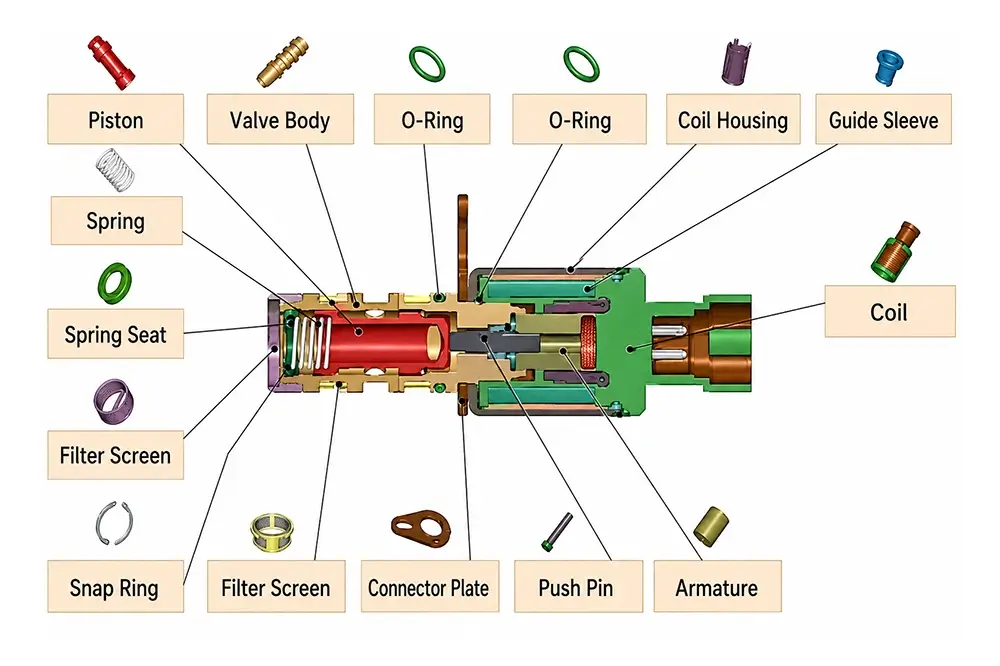
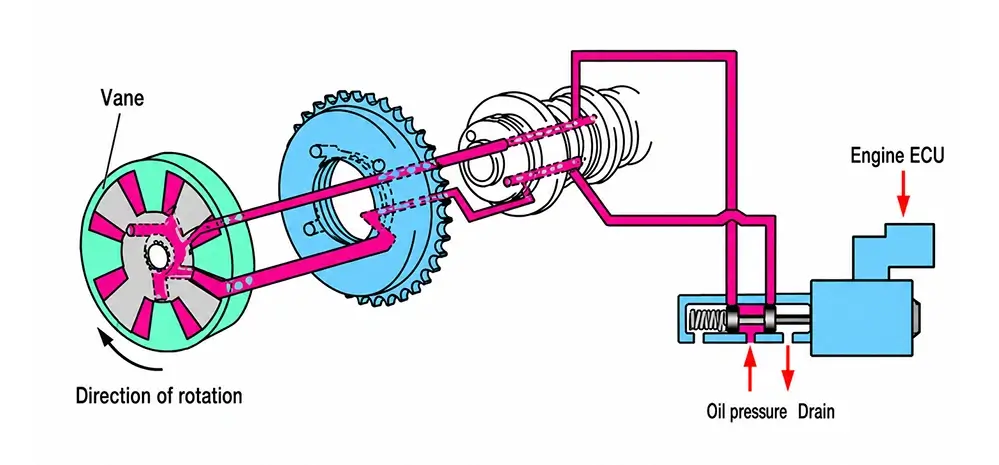
A variable valve timing solenoid is an electrically controlled valve used in a variable valve timing system. In many hydraulically actuated systems, it regulates engine-oil flow to a camshaft phasing mechanism. The phaser can then change the angular relationship between the camshaft and its drive system within the limits designed for that engine.
Camshaft phasing may be used on the intake side, the exhaust side or both sides, depending on the engine design. Some engines use one control valve, while others use separate valves for intake and exhaust timing control.
The same general component may appear in catalogues as a VVT solenoid valve, variable timing solenoid, camshaft solenoid, camshaft control valve, oil control valve or camshaft timing control valve. These names are not applied consistently across all manufacturers and markets. Buyers should therefore confirm the actual function, engine and installation position rather than relying on the product name alone.
How Does a VVT Solenoid Valve Work?
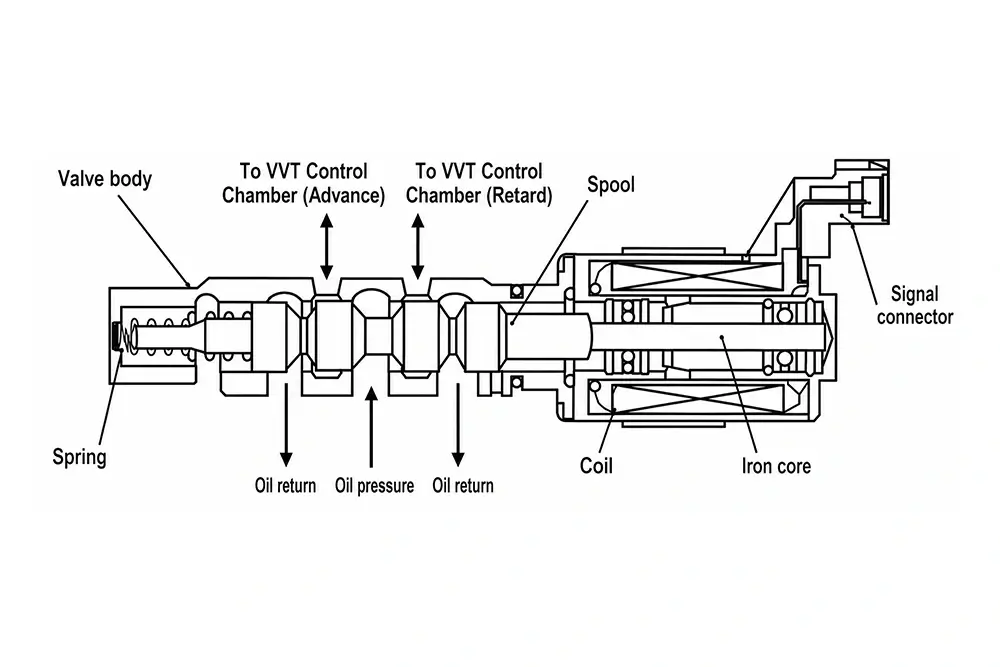
A VVT solenoid valve converts an electrical control signal into hydraulic oil-flow control. When the engine control unit sends current to the solenoid coil, the magnetic field moves an internal armature or plunger. This movement shifts the spool valve inside the valve body and changes the connection between the oil-supply, control and return passages.
By redirecting pressurised engine oil, the solenoid allows the camshaft phaser to advance or retard the camshaft position according to engine operating conditions. When the electrical signal changes or is removed, the spring and hydraulic forces return the internal valve to its specified position.
The exact operating sequence depends on the engine and valve design. Some applications use separate intake and exhaust solenoids, while others use a different control arrangement. Oil-port position, spool movement, electrical characteristics and default valve position may therefore vary between similar-looking products.
For sourcing purposes, buyers should not confirm a VVT solenoid from its general function alone. The OE reference, engine code, intake or exhaust position, connector, valve-body dimensions and oil-port arrangement should all be checked before interchangeability is accepted.
Why Similar-Looking Solenoid Valves May Not Be Interchangeable
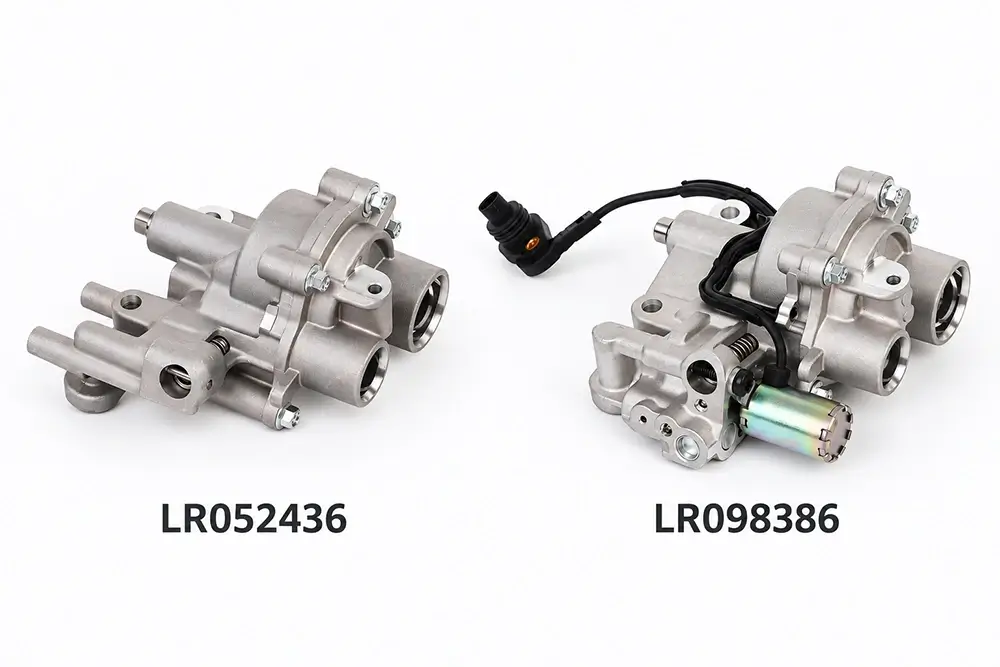
An engine may contain several electrically controlled valves with similar external shapes. Depending on the application, a valve may control camshaft timing, oil-pump operation, piston cooling or another oil circuit.
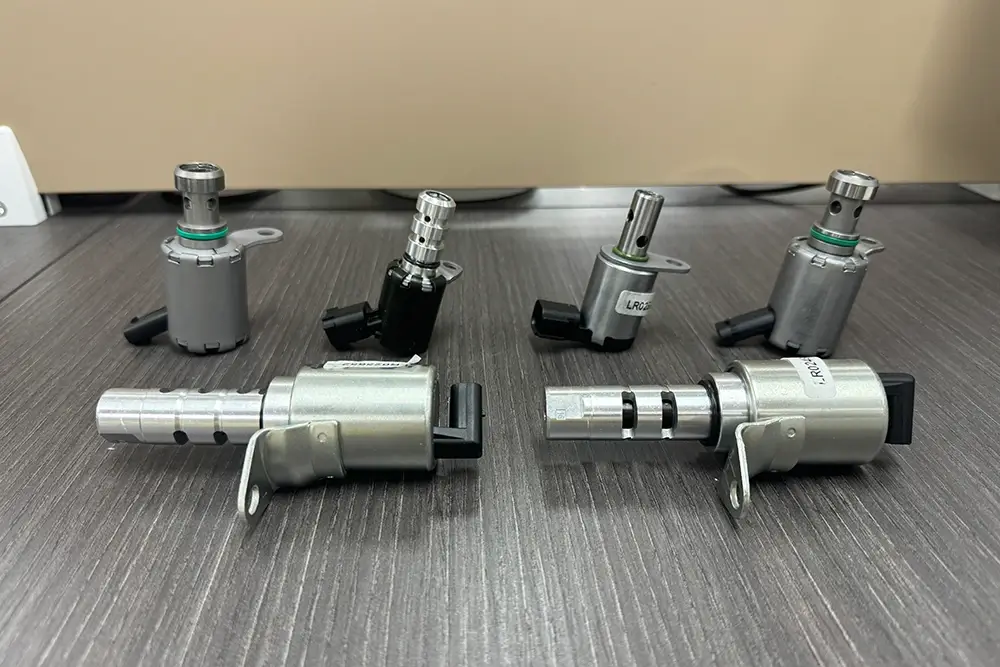
Two valves with a similar connector and cylindrical body may still differ in internal spool design, oil-port position, body length, electrical characteristics, connector orientation, mounting depth, sealing position or intended intake and exhaust location. Visual similarity is therefore not sufficient evidence of interchangeability.
Can Intake and Exhaust VVT Solenoids Be Interchanged?
They should not be assumed interchangeable. On some engines, intake and exhaust VVT solenoids may share a similar external shape, connector or mounting arrangement, but this does not confirm that the internal oil passages, control characteristics or installation depth are the same.
Before treating two valves as interchangeable, buyers should confirm:
- OE reference for each position
- Engine code
- Intake or exhaust designation
- Connector orientation and pin arrangement
- Valve-body length and oil-port position
- Mounting depth and sealing point
- Official supersession or cross-reference information
If the OE references differ, the safest approach is to treat the valves as separate applications until reliable technical data or sample comparison confirms otherwise.
Eight Checks for Correct VVT Solenoid Identification
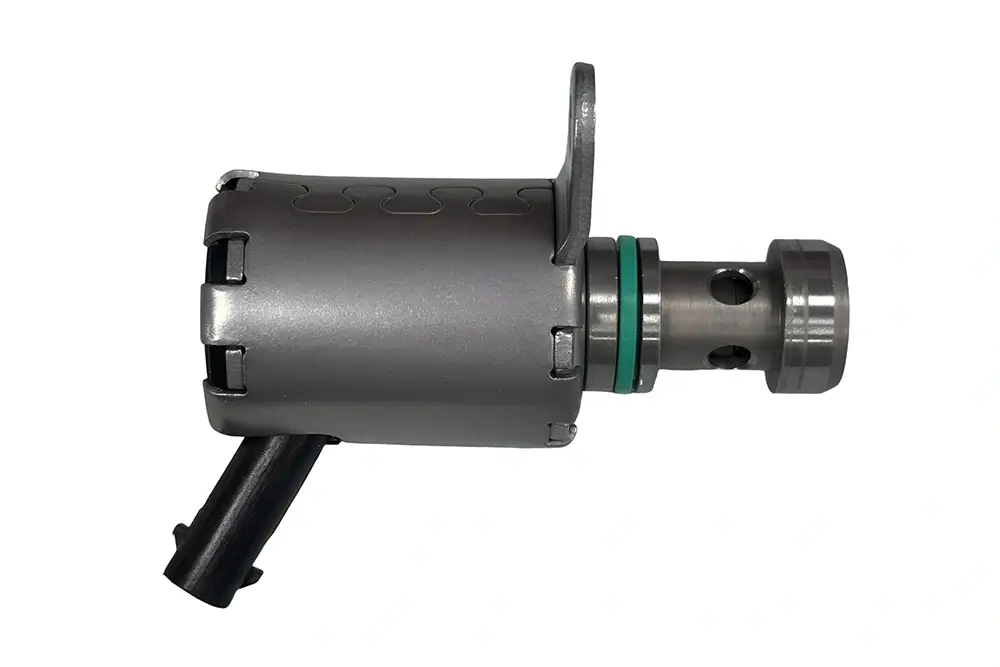
1. Confirm the OE Reference Number
The OE reference is normally the first identification point. Buyers should provide the complete number exactly as it appears on the original component, packaging, parts catalogue or vehicle documentation.
It is also important to check whether the number has been superseded, whether several references lead to the same service replacement, whether the reference changes by production date and whether the number belongs to the solenoid, phaser or complete assembly.
2. Confirm the Engine Code
The vehicle model alone may not identify the correct solenoid. One vehicle range can use several petrol or diesel engines, and an engine family may have different versions across markets or production periods.
The full engine code, displacement, fuel type, model year and target market provide a stronger application reference.
3. Confirm Intake or Exhaust Position
On engines with variable timing on both camshafts, separate solenoids may be used for the intake and exhaust sides. They may look similar while differing in calibration, oil passages, connector direction or installation position.
The enquiry should clearly state intake or exhaust, front or rear where relevant, and left or right bank on a V engine.
4. Compare the Connector
The connector should be photographed from more than one angle. Compare the connector shape, number of pins, keying slots, locking-tab position, connector angle and distance between the connector and mounting point.
A matching pin count does not automatically mean that two valves are compatible. Connector keying and internal electrical requirements may still differ.
5. Compare the Valve Body
Important physical checks include overall length, body diameter, inserted-section length, oil-port position, filter-screen arrangement where fitted, nose shape and end-cap structure.
A side-by-side photograph with a ruler or calliper reading can be useful when catalogue data is incomplete.
6. Check the Mounting and Seal Position
Compare the mounting-bracket shape, bolt-hole diameter, distance from the bolt hole to the body, O-ring position, insertion depth and seating surface. Even a small difference may prevent correct installation or sealing.
7. Confirm the Actual Function
Not every engine oil-control solenoid is a VVT solenoid. Before quotation, buyers should confirm which system the valve controls. Useful evidence includes the installation location, original catalogue description, associated system information and photographs of the installed component.
8. Use a Sample When Data Is Unclear
A sample may be the strongest reference when the OE number is unreadable, cross-references conflict, the original supplier used a private number or a new aftermarket programme is being developed.
The sample should still be accompanied by application and quantity information. A sample may identify the structure without confirming every vehicle application.
Why an OE Number Alone May Still Lead to a Wrong Match
An OE number is essential, but it is not always sufficient on its own. Matching errors can still occur when:
- The original number has been superseded
- The supplied number refers to a complete assembly rather than the valve
- A market-specific suffix has been omitted
- A private-label or distributor code is mistaken for an OE number
- The number on the old component is worn or incomplete
- An outdated cross-reference database is used
- Several visually similar valves are grouped under a broad catalogue description
For this reason, OE data should be checked together with the engine code, application, connector, body structure and installation position.
VVT Solenoid Identification Checklist
| Check point | Information to confirm | Why it matters |
|---|---|---|
| OE reference | Original number and replacement references | Establishes the starting reference |
| Engine code | Exact engine family and version | Reduces vehicle-model ambiguity |
| Position | Intake, exhaust, bank or installation side | Prevents position mismatch |
| Connector | Shape, pins, locking tab and direction | Supports electrical and physical matching |
| Valve body | Length, diameter and oil-port arrangement | Supports fit and hydraulic-function checks |
| Mounting | Bolt hole, bracket and insertion depth | Confirms installation compatibility |
| Seal | O-ring position and sealing diameter | Helps avoid leakage or poor seating |
| Sample | Original part or approved reference sample | Useful where catalogue data is incomplete |
VVT Solenoid Inspection and Functional Testing
Inspection and testing should follow the confirmed product specification rather than one universal test plan for every VVT solenoid.
Depending on the application, relevant checks may include:
- Appearance and surface condition
- Connector housing and pin condition
- Critical dimensions
- Mounting-hole and seal position
- Electrical resistance or other electrical characteristics
- Valve movement or response
- Functional operation
- Leakage, flow or pressure checks where applicable
- Comparison with an approved sample or drawing
Every finished VVT solenoid valve is subject to 100% final inspection or functional testing before shipment. The exact test items depend on the valve design and agreed technical requirements. A statement of 100% testing does not mean that every possible destructive, durability, flow or pressure test is carried out on every individual valve.
Batch Consistency Checks for B2B Orders
For distributors and importers, one approved sample is not enough if batch consistency is not maintained. Before shipment, buyers should expect the supplied batch to remain consistent in product identity, connector structure, mounting position and packaging information.
Relevant batch checks may include:
- OE-reference or internal part-number consistency
- Connector type and orientation
- Valve-body dimensions
- Oil-port arrangement
- O-ring and filter-screen condition
- Mounting-ear geometry
- Appearance and cleanliness
- Packaging labels and quantity
- Batch traceability information
These checks reduce the risk of mixed parts, wrong connectors or inconsistent stock entering a distributor’s warehouse.
Common VVT Solenoid Sourcing Mistakes
Common errors include matching by vehicle model alone, relying on one product photograph, ignoring intake and exhaust positions, confusing the solenoid with the camshaft phaser, treating every oil-control valve as a VVT valve and failing to check superseded OE numbers.
A camshaft, camshaft phaser and VVT solenoid are different components. The camshaft operates the valves, the phaser changes camshaft phase, and the solenoid controls the hydraulic circuit in many VVT systems.
For a detailed comparison, see the difference between a VVT solenoid valve and a camshaft phaser.
Example of an Incomplete VVT Solenoid Enquiry
A buyer may send one OE number and a front-view photograph and request a quotation. However, if the engine code, connector face, side view and valve-body dimensions are missing, several similar products may still remain possible.
In this situation, the supplier should request additional information rather than quote on appearance alone. Useful follow-up details include:
- Full engine code
- Connector-face photograph
- Side and valve-tip photographs
- Body length and insertion depth
- Mounting-ear position
- Vehicle market and year
- Expected order quantity
This approach reduces the risk of an apparently fast quotation leading to a wrong shipment later.
Information to Include in a VVT Solenoid Enquiry
- OE reference number
- Engine code
- Vehicle make, model and year
- Intake or exhaust position
- Bank or installation side where applicable
- Clear connector photographs
- Full product photographs from several angles
- Relevant dimensions
- Sample availability
- Required quantity
- Target market
- Packaging or private-label requirements
Providing these details at the beginning of the enquiry reduces repeated communication and helps the supplier evaluate the application more accurately. Buyers can also use Wellgine’s engine parts enquiry checklist.
How Wellgine Supports VVT Solenoid Sourcing
Wellgine supports B2B enquiries for engine solenoid valves and selected Jaguar Land Rover variable timing solenoids.
Application review can be based on the OE reference, engine code, vehicle application, connector and body comparison, product photographs, sample information, order quantity and packaging requirements.
Materials, hardness, dimensional characteristics and functional parameters are controlled according to the confirmed drawing, approved sample, application requirements or agreed project specification. Product-specific voltage, resistance, flow, pressure or control requirements are confirmed against the relevant technical data rather than applied as one specification across every solenoid.
Wellgine provides a 12-month product warranty, subject to the agreed sales terms, correct application confirmation, proper installation, normal use and traceable batch information.
Frequently Asked Questions
Can two VVT solenoids with the same connector be interchangeable?
Not necessarily. They may differ in body dimensions, oil-port position, mounting depth, internal valve design or intended engine function.
Is a camshaft solenoid the same as a VVT solenoid?
The terms are often used for the same general component, but naming varies. Buyers should confirm that the valve actually controls camshaft timing rather than another oil circuit.
Can a VVT solenoid be identified by vehicle model alone?
Usually not with sufficient confidence. A vehicle range may use several engines or timing-system variants.
Can an OE number alone confirm a VVT solenoid?
Not always. The OE number should be checked together with the engine code, installation position, connector and body structure.
Are all two-pin VVT solenoids interchangeable?
No. The same pin count does not confirm identical keying, electrical characteristics, valve-body dimensions or oil-control function.
What is the difference between a VVT solenoid and an oil-pump control solenoid?
A VVT solenoid controls oil flow for camshaft timing in many applications, while an oil-pump control solenoid regulates an oil-pump-related function. Similar appearance does not mean the functions are interchangeable.
Should buyers provide resistance values when requesting a quotation?
They can be useful where reliable product data is available, but resistance should not replace the OE number, engine code and structural comparison.
Why do some OE numbers have replacement numbers?
Vehicle manufacturers may revise part numbers because of product updates, supplier changes, service consolidation or catalogue changes.
What photographs are useful for matching?
Provide the complete product, connector face, valve tip, oil ports, mounting ear, markings and seal location. Include dimensions where possible.
Conclusion
Correct VVT solenoid identification requires more than a similar photograph or general vehicle description. The most reliable process combines the OE reference, engine code, camshaft position, connector, valve-body structure, mounting details and application data.
Send Wellgine your OE number, engine code, connector photographs, product photographs and required quantity for application review and quotation support.