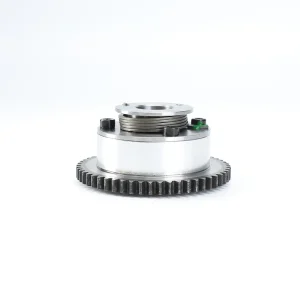
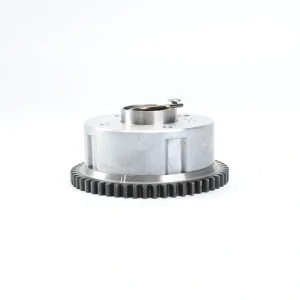
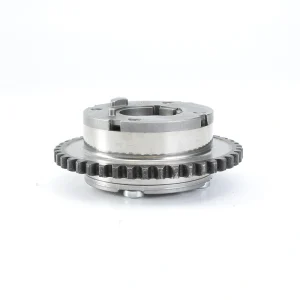
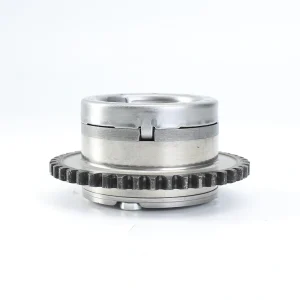
Camshaft Phaser, Camshaft Adjuster and Dephaser Terminology
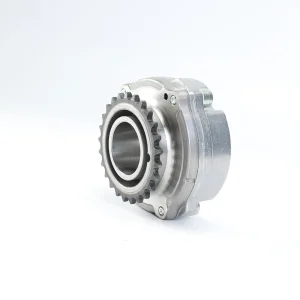
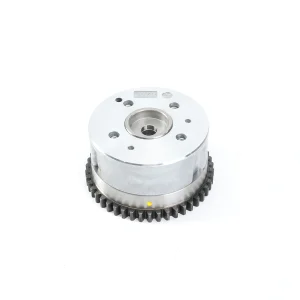
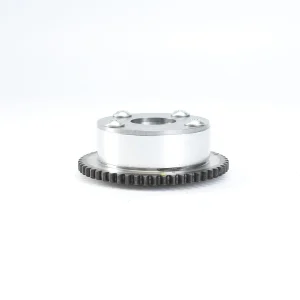
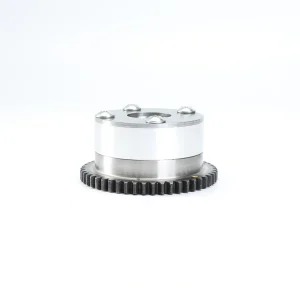
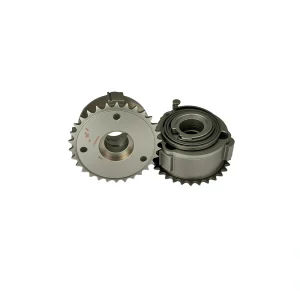
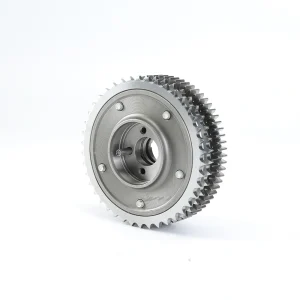
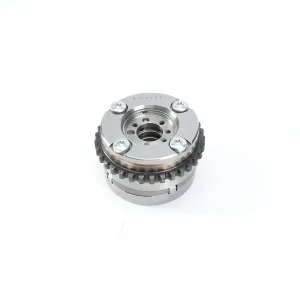
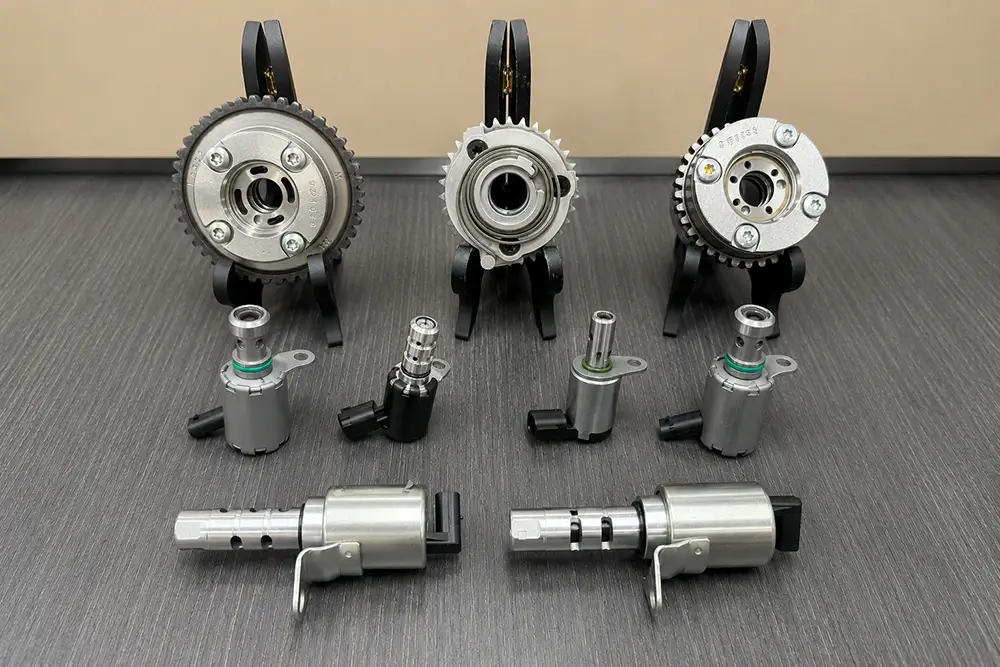
A camshaft phaser may also be described as a VVT unit, camshaft adjuster, camshaft dephaser, timing actuator, variable timing gear or VVT sprocket, depending on the manufacturer and market.
These terms often describe a similar timing-adjustment function, but they should not be treated as universal part-number equivalents. OE reference, engine code, intake or exhaust position and physical structure still require confirmation.
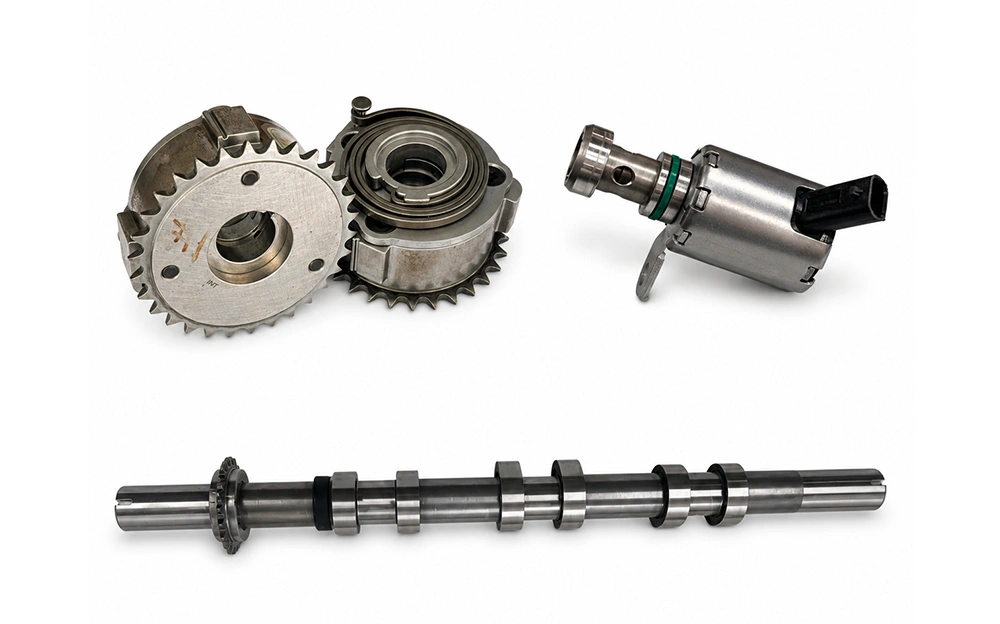
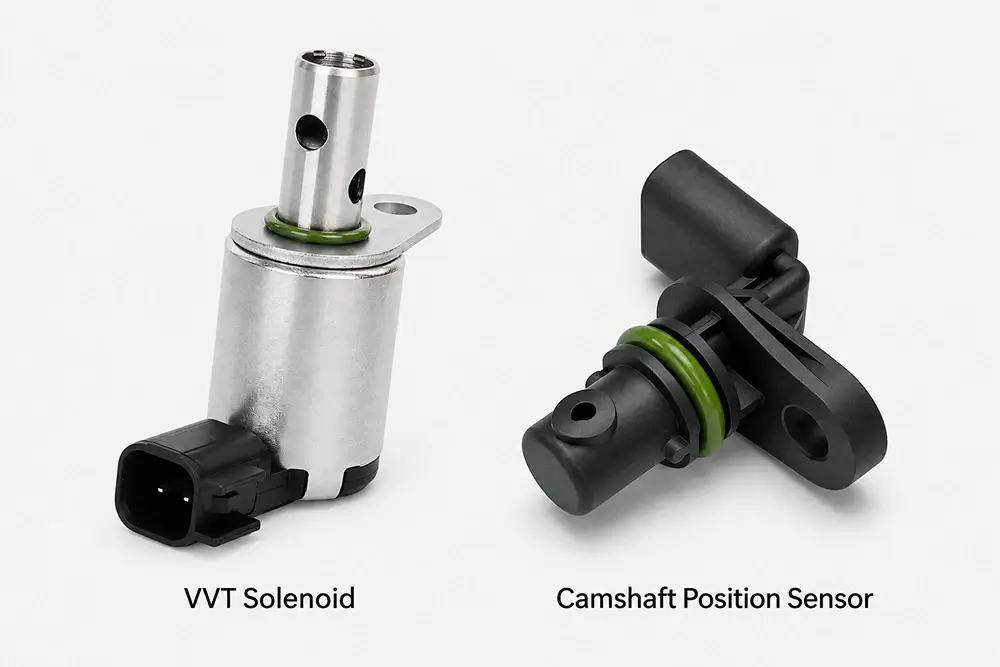
A camshaft phaser is different from a VVT solenoid. The solenoid controls engine-oil flow, while the phaser mechanically changes the camshaft timing position.
Buyers can review the detailed guide to the difference between a VVT solenoid valve and a camshaft phaser.
How to Match a Camshaft Phaser
Camshaft phasers should be matched by OE and engine information together with the timing position and physical structure of the assembly.
For a step-by-step process covering intake/exhaust position, rear mounting face, oil passages and set scope, see our camshaft phaser identification guide.
| Confirmation point |
Why it matters |
| OE or reference number |
Provides the initial product cross-reference. |
| Engine code |
Distinguishes engine families and generations. |
| Vehicle application |
Confirms model and production context. |
| Intake or exhaust position |
Prevents position-specific mismatch. |
| Sprocket profile and tooth structure |
Confirms timing-drive compatibility. |
| Locking structure |
Helps distinguish visually similar variants. |
| Oil-passage arrangement |
Confirms compatibility with the VVT control system. |
| Centre bore and mounting details |
Confirms physical installation. |
| Product photographs |
Supports structural comparison. |
| Quantity and packaging |
Supports a complete B2B quotation. |
Wellgine supports camshaft phaser sourcing through OE-reference review, engine-code confirmation, intake or exhaust position checking and product-photo or sample comparison. Buyers can also submit technical drawings where additional structural confirmation is required.
Camshaft Phaser Quality-Control Points
Quality review should focus on application matching, sprocket structure, locking condition, oil-passage arrangement and visible assembly quality. The exact inspection process may vary according to the OE reference and project requirement.
- OE reference and approved-sample comparison
- Sprocket profile and tooth-structure inspection
- Centre bore, mounting and dimensional review
- Intake or exhaust position confirmation
- Locking structure and visible movement review where applicable
- Oil-passage and surface-condition inspection
- Assembly and packaging inspection
- Sample approval for custom or private-label projects
Buyers can review Wellgine’s engine parts quality-control capabilities or submit project-specific inspection requirements before order approval.
Frequently Asked Questions About Camshaft Phasers
1. What information should I provide for camshaft phaser matching?
Please provide the OE number, engine code, vehicle application, intake or exhaust position, product photographs, sample details or technical drawing if available.
2. What is a camshaft phaser?
A camshaft phaser is a variable valve timing component that changes the angular position of the camshaft relative to the timing drive. It is controlled through the engine’s oil-pressure and VVT system.
3. Are camshaft phasers the same as VVT units?
In different markets, camshaft phasers may also be called VVT units, camshaft adjusters, camshaft dephasers, timing actuators or variable timing sprockets.
4. Do you support wholesale camshaft phaser orders?
Yes. We support wholesale orders, mixed product purchasing and long-term supply cooperation depending on product type, quantity and project requirements.
5. Do you support custom or OEM-oriented camshaft phaser projects?
Selected custom and OEM-oriented projects can be reviewed based on OE references, samples, drawings, target quantity and technical requirements. Feasibility should be confirmed for each project.
6. What quality points are important for camshaft phasers?
Important review points include OE matching, engine-code confirmation, intake or exhaust position, sprocket structure, locking condition, oil-passage arrangement, mounting dimensions and assembly condition.
7. Are intake and exhaust camshaft phasers interchangeable?
Not necessarily. Intake and exhaust phasers may use different OE references, timing positions, locking structures or sprocket designs. The installation position should be confirmed before ordering.
8. Is a camshaft dephaser the same as a camshaft phaser?
“Camshaft dephaser” is a market term commonly used for a variable timing camshaft phaser or adjuster. The exact OE reference and engine application must still be confirmed.
8. Can you help confirm the correct camshaft phaser before ordering?
Yes. Our team can review OE numbers, engine information, photos or sample details to help confirm the correct camshaft phaser for the required engine application.