Low engine oil pressure does not always appear in the same operating condition.
One engine may show low pressure only at hot idle and recover as RPM rises. Another may maintain acceptable idle pressure but fail to build enough pressure as engine speed increases. A third may show an intermittent drop during acceleration, cornering or sustained load.
These patterns can provide useful diagnostic direction, but they do not identify a failed oil pump on their own.
Oil pressure should always be interpreted together with engine speed, oil temperature, oil viscosity and the manufacturer’s pressure specification.
For engine-parts buyers and rebuilders, this distinction matters before an oil pump, pressure-control component or other lubrication part is selected for replacement.
Low Oil Pressure at Idle vs Under Load: Quick Interpretation
| Pressure pattern | What it may suggest | What must still be checked |
|---|---|---|
| Low at hot idle, rises with RPM | Thin or incorrect oil, increased internal clearance, marginal pump output | OEM pressure specification, oil condition, bearing clearance, pump condition |
| Low at idle and remains low as RPM rises | Significant oil-supply or pressure-generation problem | Oil level, pickup, pump, relief valve, leakage, bearing clearance |
| Normal at idle but pressure fails to rise sufficiently with RPM | Pump output, regulation or internal leakage issue | Pump delivery, regulator/relief valve, oil galleries, internal clearances |
| Pressure suddenly drops during acceleration or cornering | Possible pickup starvation, aeration or oil-level issue | Oil quantity, sump design, pickup sealing and condition |
| Pressure is low only when the engine is fully hot | Oil viscosity or excessive internal leakage may become more visible | Correct oil grade, actual oil temperature, bearing clearance, pump wear |
| Dashboard shows low pressure but mechanical pressure is normal | Sensor, switch, wiring or gauge issue | Mechanical pressure test and electrical diagnosis |
These are diagnostic patterns, not replacement decisions.
Why Oil Pressure Is Usually Lower at Idle
At idle, the oil pump is operating at relatively low speed.
On many mechanically driven oil-pump systems, lower pump speed means lower oil delivery. Once the engine is warm, the oil is also less viscous and therefore passes more easily through bearing clearances and oil galleries.
This combination explains why hot idle often represents one of the lowest oil-pressure operating points.
However, low relative pressure at idle is not automatically abnormal.
The important question is whether the measured pressure remains within the engine manufacturer’s specification at the specified temperature and RPM.
Why There Is No Universal “Normal Idle Oil Pressure”
It is tempting to use a general rule such as 10, 20 or 30 psi at idle.
That is unreliable.
Oil-pressure specifications vary substantially between engines.
For that reason, diagnosis should record:
- engine model or engine code;
- oil temperature or confirmed operating temperature;
- engine RPM;
- measured oil pressure;
- specified oil viscosity;
- manufacturer’s minimum and test pressure.
Without these reference conditions, a pressure number has limited diagnostic value.
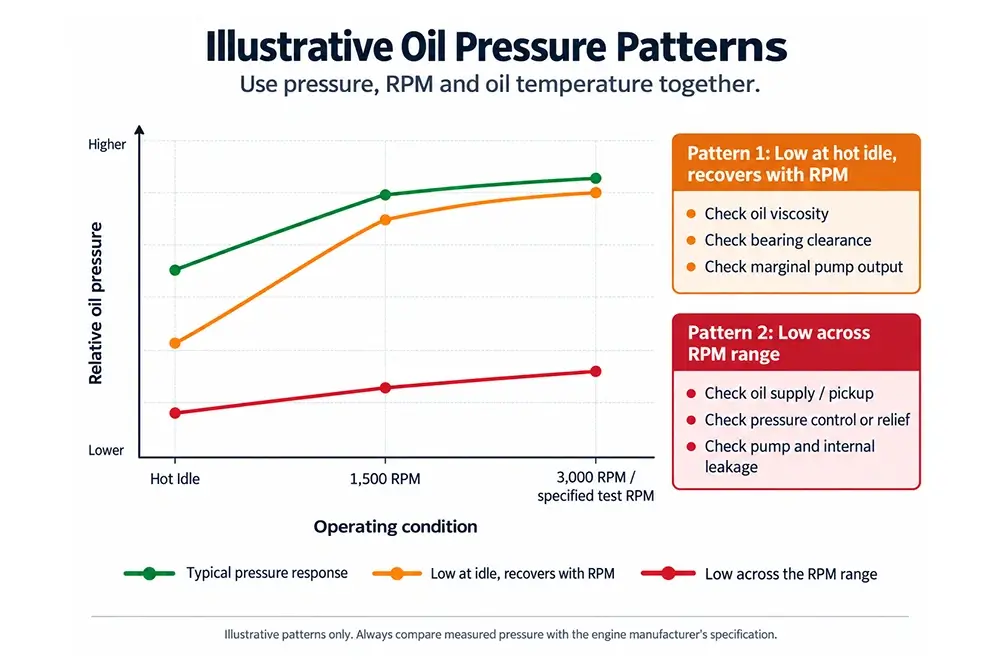
Low Oil Pressure at Idle but Normal When RPM Increases
This is one of the most common pressure patterns.
The engine shows low pressure at hot idle, but pressure rises when engine speed increases.
This can happen because the oil pump is turning faster and delivering more oil.
Oil That Is Too Thin or Incorrect for the Engine
Oil viscosity strongly affects pressure.
If the oil is below the specified viscosity, excessively hot, fuel-diluted or otherwise degraded, internal leakage through engine clearances increases.
The pressure problem may first become visible at hot idle because pump output is lowest and the oil is at its thinnest.
The correct viscosity should always come from the engine manufacturer’s specification rather than from a generic recommendation.
Increased Bearing Clearance
Main and connecting-rod bearings form controlled oil clearances.
As those clearances increase through wear or an incorrect rebuild dimension, oil can escape more rapidly from the pressure circuit.
At higher RPM, increased pump delivery may partially compensate for that leakage.
At idle, it may not.
This is why low hot-idle pressure can be associated with internal engine clearance rather than the pump alone.
Worn or Marginal Oil Pump
An oil pump with excessive internal clearance may deliver insufficient volume at low speed while still producing a higher pressure reading as RPM increases.
That pattern can justify inspection of the pump, but it is not enough to confirm pump failure.
Oil supply, pickup condition, pressure regulation and engine clearances must be checked as well.
Pressure-Control Valve Leakage
Oil pumps and lubrication systems may incorporate pressure-control or relief valves.
Their job is to keep system pressure within the intended range. A valve that does not seat correctly can allow oil to bypass when it should remain in the pressure circuit.
The exact valve arrangement must therefore be confirmed for the engine being diagnosed.
What If Oil Pressure Stays Low as RPM Increases?
This pattern deserves more attention.
If engine speed increases but oil pressure remains below specification, the lubrication system may be unable to produce or retain the required pressure.
Possible areas include:
- insufficient oil level;
- restricted or damaged pickup;
- pickup-tube leakage;
- oil aeration;
- excessive oil-pump clearance;
- damaged pump drive;
- pressure-control or relief-valve fault;
- excessive bearing clearance;
- major internal oil leakage;
- incorrect oil viscosity.
This is much stronger evidence than assuming a pump has failed from a dashboard warning alone.
Low Oil Pressure Under Load: What Does “Under Load” Actually Mean?
This term needs care.
Engine load and engine RPM are related during normal driving, but they are not the same variable.
A vehicle accelerating uphill may have:
- higher engine load;
- higher RPM;
- higher oil temperature;
- different oil-pump control strategy.
Therefore, saying that pressure is “low under load” is not precise enough.
A better diagnostic record is:
Oil pressure is X at Y RPM and Z oil temperature under the specified operating condition.
That makes the result comparable with service information.
When Low Pressure Under Load Is More Concerning
Oil pressure normally tends to increase as a conventional mechanically driven pump turns faster, until pressure regulation limits further rise.
Therefore, if pressure actually falls while RPM increases, or remains significantly below the manufacturer’s specified higher-RPM pressure, that deserves investigation.
Pickup Starvation
The pump cannot create reliable pressure if its inlet supply is interrupted.
Conditions that can contribute include:
- low oil level;
- damaged or restricted pickup;
- pickup sealing problems;
- oil moving away from the pickup during acceleration or cornering;
- severe aeration.
This pattern can sometimes be intermittent rather than constant.
Excessive Oil Temperature
Oil becomes less viscous as temperature rises.
A problem that appears after extended driving or heavy load may therefore expose an underlying pump-clearance or bearing-clearance issue that is not obvious when the oil is cold.
The relevant comparison should be made at known oil temperature rather than simply “cold” versus “hot”.
Excessive Internal Leakage
If pump delivery cannot keep up with leakage through worn bearings or another internal oil path, pressure may stay below specification even though pump speed has increased.
Again, this does not automatically prove the pump is defective.
Cold vs Hot Oil Pressure Matters
Temperature is often more useful than the simple idle/load distinction.
Cold Engine
Cold oil has higher viscosity.
This normally produces more resistance to flow and can result in substantially higher pressure.
A relief or control valve may limit maximum pressure.
Fully Warm Engine
When the oil reaches operating temperature, its viscosity falls.
This is when excessive bearing clearance, pump wear and other leakage paths may become easier to detect.
A complaint described only as “low oil pressure” is therefore incomplete.
For diagnostic and sourcing purposes, ask whether the measurement was taken:
- after cold start;
- during warm-up;
- at fully stabilised operating temperature;
- at hot idle after extended load.
Does Low Oil Pressure Mean the Oil Pump Is Bad?
No. An oil pump is one possible cause, but oil pressure is produced by the entire lubrication circuit.
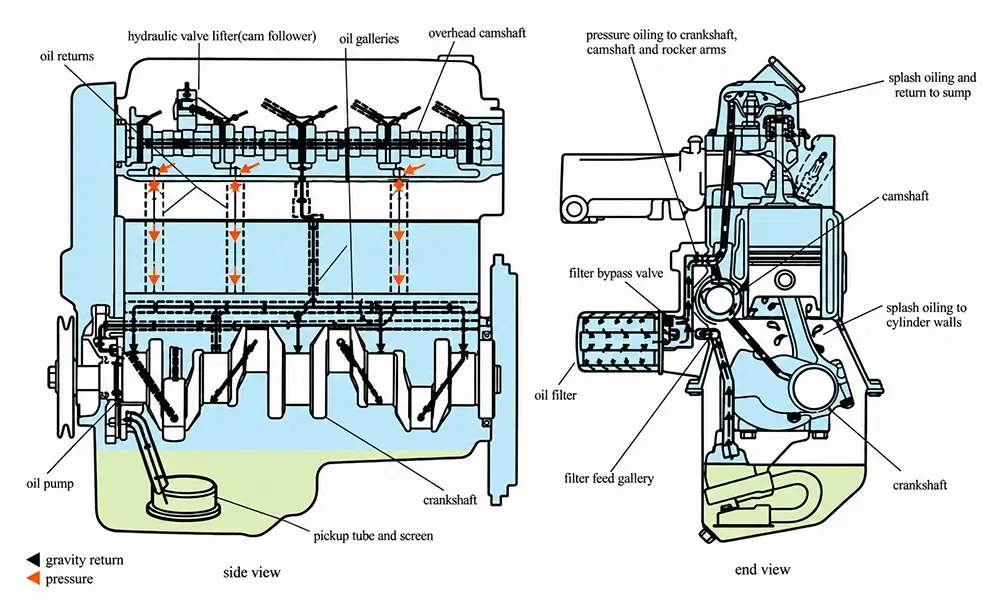
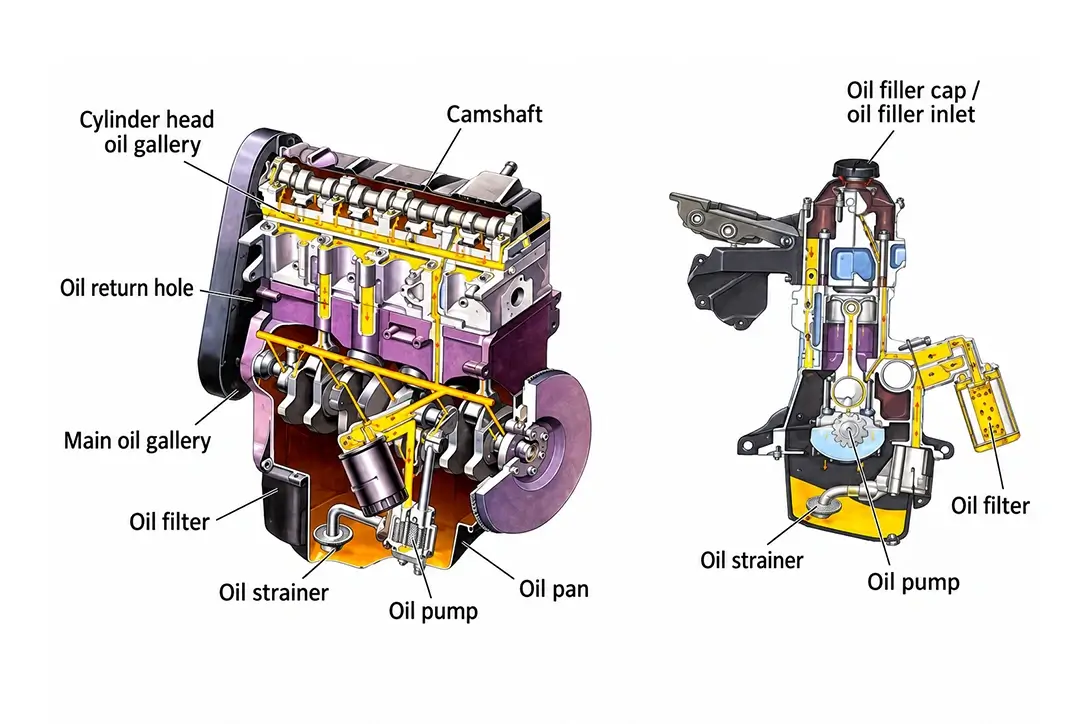
Depending on engine design, that circuit can include:
- oil sump;
- pickup and screen;
- pickup tube and seals;
- oil pump;
- pump drive;
- pressure regulator or relief valve;
- filter and bypass valve;
- oil cooler;
- main oil galleries;
- crankshaft and camshaft bearings;
- piston cooling jets;
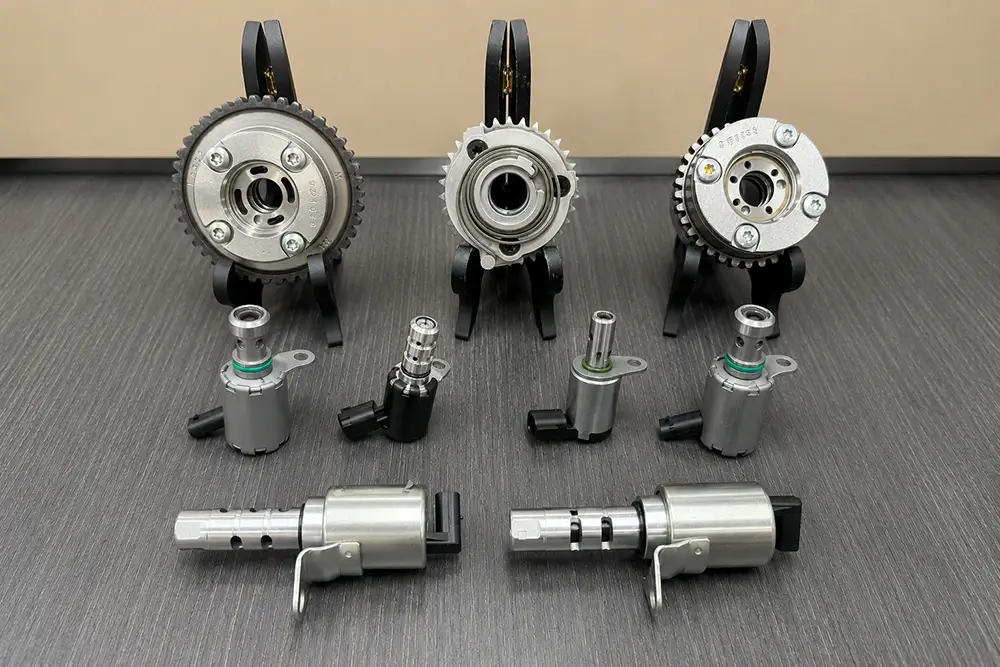
- VVT and hydraulic timing circuits;
- oil-pressure switch or sensor.
Replacing the pump without confirming the actual pressure problem can therefore leave the original fault unresolved.
For a wider symptom assessment, see Oil Pump Failure Symptoms: How to Diagnose Before Replacement.
Sensor Reading vs Actual Oil Pressure
A warning lamp or electronic gauge does not always prove that hydraulic pressure is actually low.
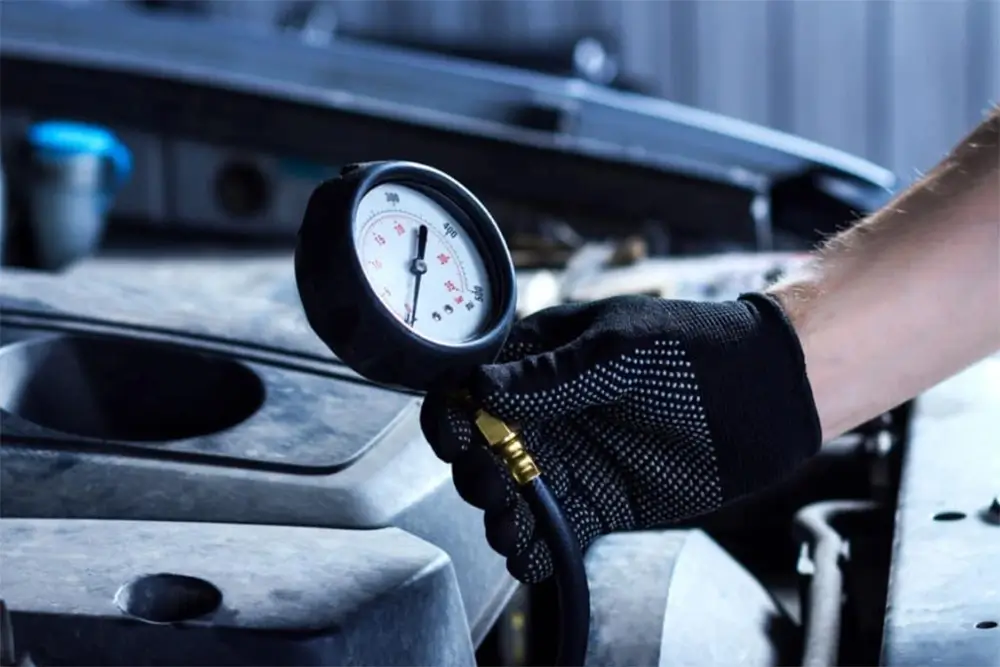
Oil-pressure sensors measure pressure and provide the information to the control system. A sensor or electrical fault can therefore produce an incorrect warning.
A common professional diagnostic step is to compare the electronic reading with a mechanical pressure gauge installed at the specified test point.
If mechanical pressure meets specification while the electronic indication remains incorrect, the pressure-sensing circuit requires investigation.
If mechanical pressure is also low, the hydraulic lubrication system must be diagnosed.
A Better Oil-Pressure Diagnostic Matrix
| Operating condition | Pressure response | Diagnostic direction |
|---|---|---|
| Cold idle | High, then gradually falls | Often reflects changing viscosity; compare with specification |
| Hot idle | Low but within specification | May be normal |
| Hot idle | Below specification | Check oil, clearance, pump, pickup and pressure control |
| Raise RPM | Pressure rises into specification | Low-speed delivery or internal leakage may require investigation |
| Raise RPM | Pressure remains below specification | Lubrication-system fault more likely |
| Higher RPM | Pressure suddenly falls | Check supply starvation, aeration, temperature and pump control |
| Dashboard low | Mechanical gauge normal | Sensor / switch / electrical path |
| Dashboard low | Mechanical gauge also low | Hydraulic pressure problem |
The table is a diagnostic framework only. Vehicle-specific service data has priority.
Where the Oil Pump Fits in the Diagnosis
The oil pump should be investigated when actual pressure is verified below specification and the surrounding system supports a pump-related diagnosis.
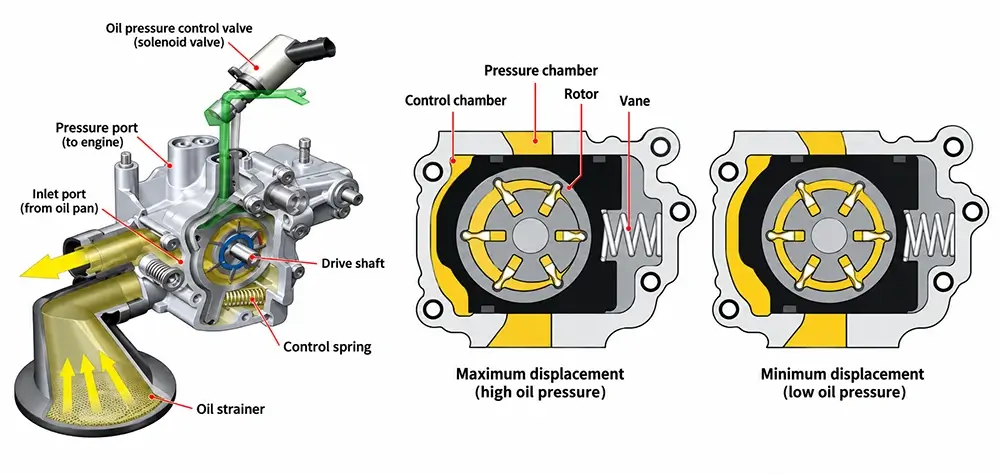
Inspection may include:
- pump rotor or gear clearance;
- housing wear;
- drive integrity;
- pressure-control valve;
- pickup condition;
- pickup seals;
- inlet restriction;
- outlet arrangement;
- integrated oil-pump components.
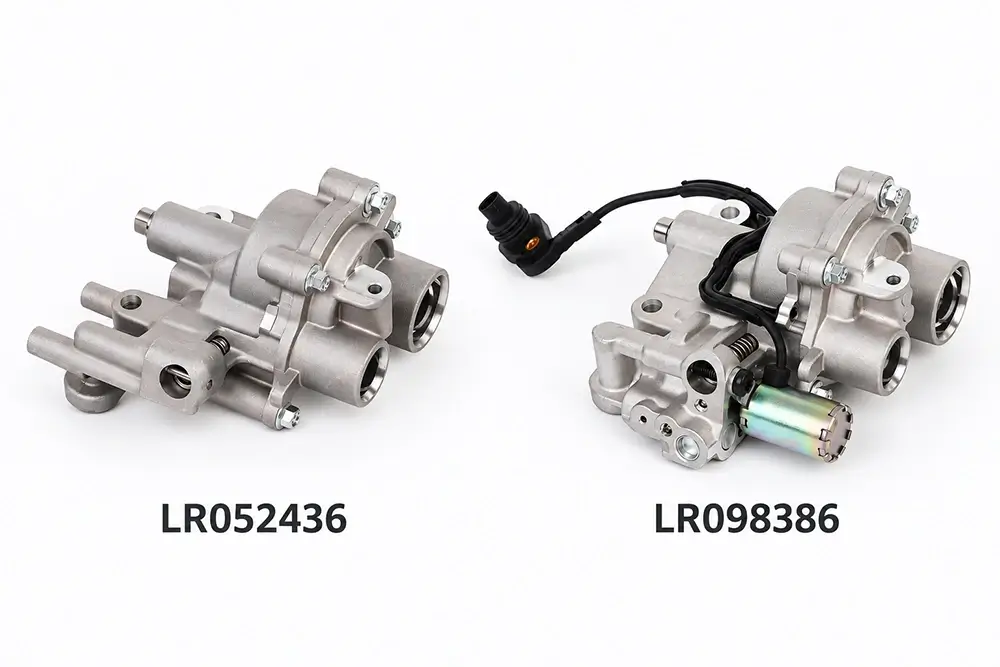
Do not assume that two pumps are interchangeable because their housings appear similar.
Oil pumps can differ in:
- housing design;
- drive interface;
- mounting points;
- inlet and outlet arrangement;
- pressure-control design;
- integrated balance-shaft or vacuum functions;
- engine application.
For replacement sourcing, confirm the OE reference, engine code and physical pump structure.
What Information Should a B2B Buyer Provide?
For an engine oil pump enquiry related to low-pressure diagnosis, provide:
- OE or reference number;
- engine code;
- vehicle make and model;
- model year and market;
- oil-pump photographs;
- pump housing and drive-side photographs;
- inlet and outlet configuration;
- integrated components, if applicable;
- original markings;
- required quantity.
A symptom such as “low pressure at idle” should not be used as the sole basis for product matching.
Wellgine supplies selected engine oil pumps for aftermarket, wholesale and B2B sourcing requirements. Application should be confirmed before quotation.
Frequently Asked Questions
Is Lower Oil Pressure at Idle Normal?
Oil pressure is commonly lower at idle because pump speed is lower, especially when the oil is fully warm. Whether the pressure is acceptable depends on the engine manufacturer’s specification.
Why Does Oil Pressure Rise When I Accelerate?
On many engines, increased RPM drives the oil pump faster and increases oil delivery. Pressure normally rises until the lubrication system’s regulation strategy limits it.
Does Low Oil Pressure at Idle Mean the Oil Pump Is Worn?
Not necessarily. Thin oil, excessive bearing clearance, a pickup problem, pressure-control fault or incorrect pressure reading can create a similar pattern.
Why Is Oil Pressure Low Only When the Engine Is Hot?
Hot oil has lower viscosity. This can make excessive pump or bearing clearance more visible because oil escapes through internal clearances more easily.
What If Oil Pressure Does Not Rise with RPM?
Pressure that remains below the manufacturer’s higher-RPM specification should be investigated. Possible areas include oil supply, pickup, oil pump, regulation and internal engine clearance.
Can an Oil-Pressure Sensor Cause a False Low-Pressure Warning?
Yes. A defective sensor, switch, wiring or gauge can produce an incorrect indication. Actual hydraulic pressure should be verified according to the manufacturer’s diagnostic procedure.
Is Low Oil Pressure Under Load Always Caused by the Pump?
No. Engine load, RPM and oil temperature must be separated during diagnosis. Pickup starvation, aeration, viscosity, engine clearances and pressure-control problems can also affect the reading.
Request Engine Oil Pump Matching
Need to confirm an engine oil pump for a low-pressure diagnosis or replacement programme?
Send Wellgine the OE reference, engine code, vehicle application, pump photographs and required quantity for component review before quotation.