A piston oil cooling solenoid is an electrically controlled valve that manages oil flow to the piston cooling circuit or piston oil jets in specific engine applications. It is different from a VVT solenoid, an oil pump control solenoid and the piston oil jet itself.
Quick identification
- Function: Controls oil flow to the piston cooling circuit or related oil gallery.
- Location: May be installed in the engine block oil passage, oil-filter module or another oil-control area, depending on the engine design.
- Identification: Confirm the OE reference, engine code, installed position, inserted length, oil-port layout, seal position, mounting flange and connector orientation.
What Is a Piston Oil Cooling Solenoid?
A piston oil cooling solenoid is an electrically controlled valve used to manage oil flow related to piston cooling in specific engine designs. Depending on the application, it may control or regulate oil supply to a piston cooling oil circuit, piston oil jets, oil squirters or a related oil gallery.
Piston cooling is not handled in the same way on every engine. Some engines use fixed piston oil jets, some use controlled oil flow, and some may use a solenoid-operated valve as part of the oil-management system. For this reason, a piston oil cooling solenoid should always be identified according to the engine design and application data, not by product name alone.
In B2B sourcing, the term may appear in different ways, including piston oil cooling solenoid, piston cooling solenoid, piston oil cooling valve, oil jet control valve or engine oil cooling solenoid. These names can be useful starting points, but they do not replace OE reference, engine code, installed position and structural comparison.
Piston Cooling Solenoid Location in the Engine Oil Circuit
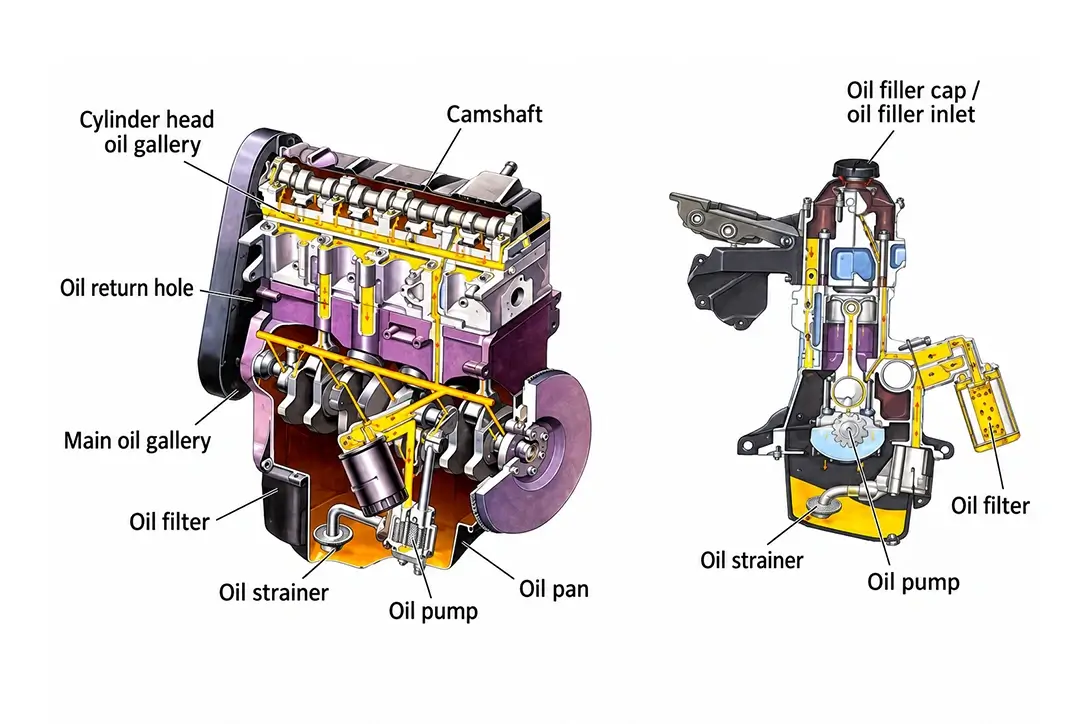
The engine oil pump supplies pressurised oil through internal oil passages. This oil may feed crankshaft bearings, camshaft journals, timing components, turbocharger lubrication, variable valve timing systems and piston cooling circuits, depending on the engine layout.
A piston oil cooling solenoid is related to the piston cooling branch of this oil system. Its role is different from the oil pump itself. The oil pump generates and circulates oil pressure, while the solenoid is used to control oil flow in a specific part of the circuit where the engine design requires it.
This distinction matters because several engine solenoid valves may look similar from the outside. A valve used for piston cooling may share a connector style or cylindrical body shape with a VVT solenoid or oil pump control solenoid, but the internal oil passages, valve tip, inserted depth, mounting position and controlled circuit can be different.
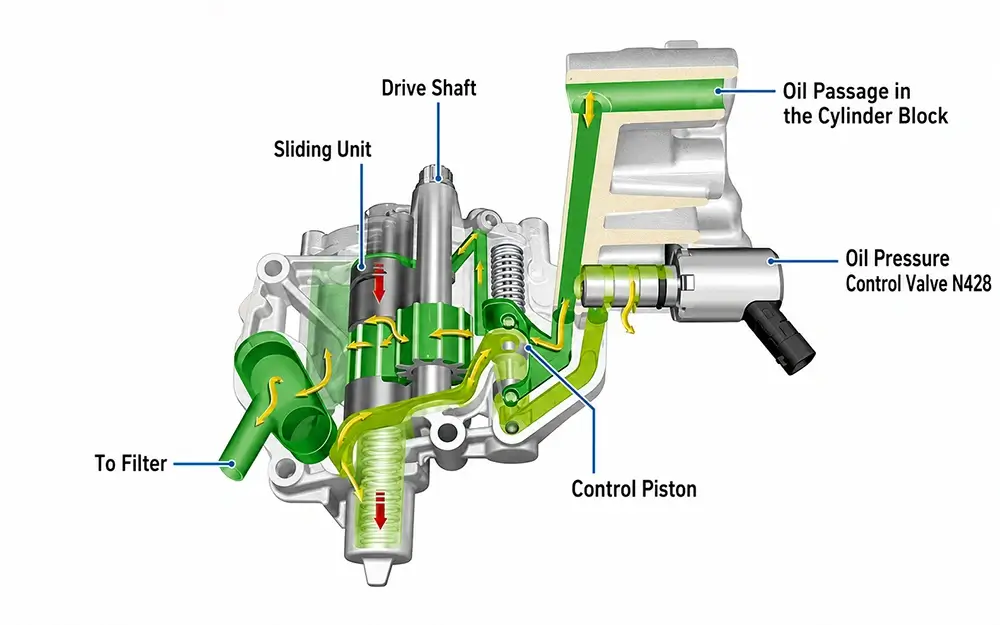
Before quotation or replacement matching, buyers should therefore ask a more precise question: does this solenoid control the piston cooling oil circuit, the camshaft timing oil circuit, the oil pump control circuit or another oil-management function?
Piston Cooling Oil Jets, Oil Galleries and Solenoid Control
Piston cooling systems may include several related parts. These parts are connected by function, but they are not the same component.
Piston oil jets, sometimes called oil squirters, direct oil towards the underside of the piston or a related cooling area. Their purpose is to support piston temperature control and lubrication according to the engine design.
Oil galleries are the internal oil passages that carry pressurised oil through the engine block or related module. These passages may supply bearings, timing components, cooling jets or other oil-fed areas.
The piston oil cooling solenoid is the control valve. In applications that use this design, it controls oil flow to the relevant piston cooling circuit or oil gallery. It is not the same as the oil jet and should not be confused with a sensor or pump.
This distinction is important in procurement communication. If a buyer asks for a “piston cooling valve”, “oil jet valve” or “oil control valve”, the supplier should confirm whether the enquiry refers to the solenoid valve, the oil jet, a complete module or another oil-control component.
How It Differs from Other Engine Oil-Control Solenoids
A piston oil cooling solenoid belongs to the broader group of engine solenoid valves, but it should not be grouped carelessly with every oil-control valve. Different solenoids may control different oil circuits and should not be selected by appearance alone.
| Component | Controlled circuit or function | Main identification risk |
|---|---|---|
| Piston oil cooling solenoid | Piston cooling oil circuit or related oil gallery | May be confused with a general oil-control valve or VVT solenoid |
| VVT solenoid valve | Camshaft timing oil circuit in many variable valve timing systems | May be confused with camshaft phasers, camshaft solenoids or other oil-control valves |
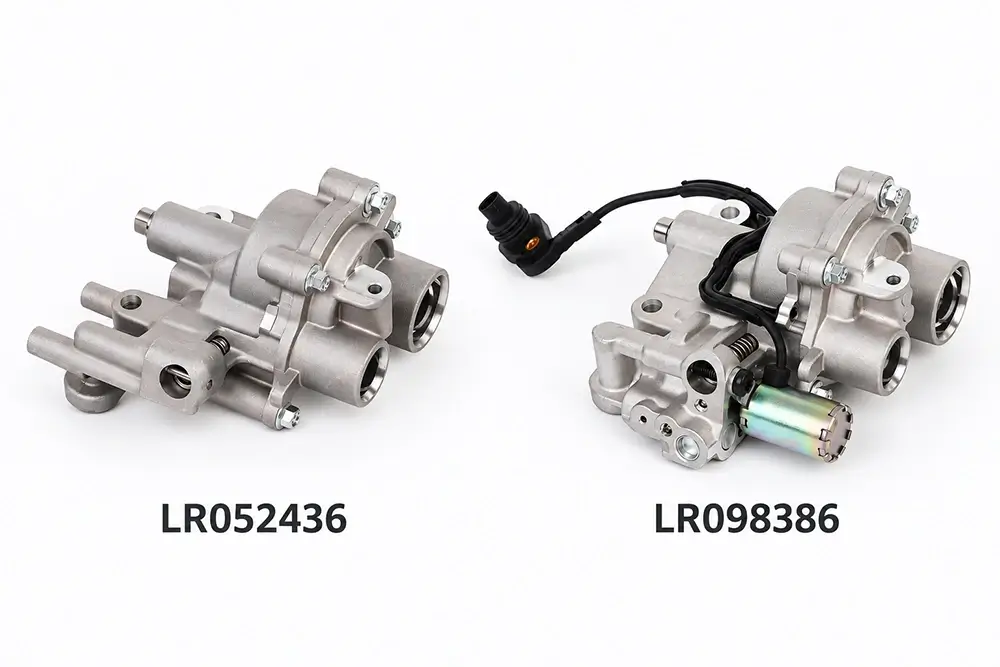
| Oil pump control solenoid | Oil pump control, variable oil pump or related oil-pressure management function | May be confused with the oil pump assembly or a general oil solenoid |
| Piston oil jet | Oil spray or cooling delivery point for piston cooling | May be confused with the solenoid controlling the oil supply |
For VVT-related enquiries, buyers can review Wellgine’s guide to identify the correct VVT solenoid valve. For piston cooling enquiries, the confirmation focus should remain on the piston cooling oil circuit, oil-port layout, installed position and application structure.
Function Confirmation Before Part Matching
Before matching a piston oil cooling solenoid by shape, connector or reference number, buyers should confirm the function of the old part. This step reduces the risk of quoting the wrong engine solenoid valve.
Useful function-confirmation questions include:
- Which engine oil circuit does the valve control?
- Is the valve installed near the piston cooling oil gallery, engine block oil passage, oil filter module or pump-control area?
- Does the catalogue description mention piston cooling, oil jet control, oil spray, oil gallery or oil cooling?
- Does the OE reference identify the solenoid itself or a larger oil module?
- Does the old part show the same inserted length, oil-port layout, seal position and mounting structure?
This function-first approach is especially important when the buyer’s market uses broad terms such as oil control valve, oil solenoid valve or engine solenoid valve. Those names may describe a function category, not a precise replacement part. Function should be confirmed before physical comparison because similar connectors or valve-body shapes do not prove that two solenoids control the same oil circuit.
Structural Features Buyers Should Compare
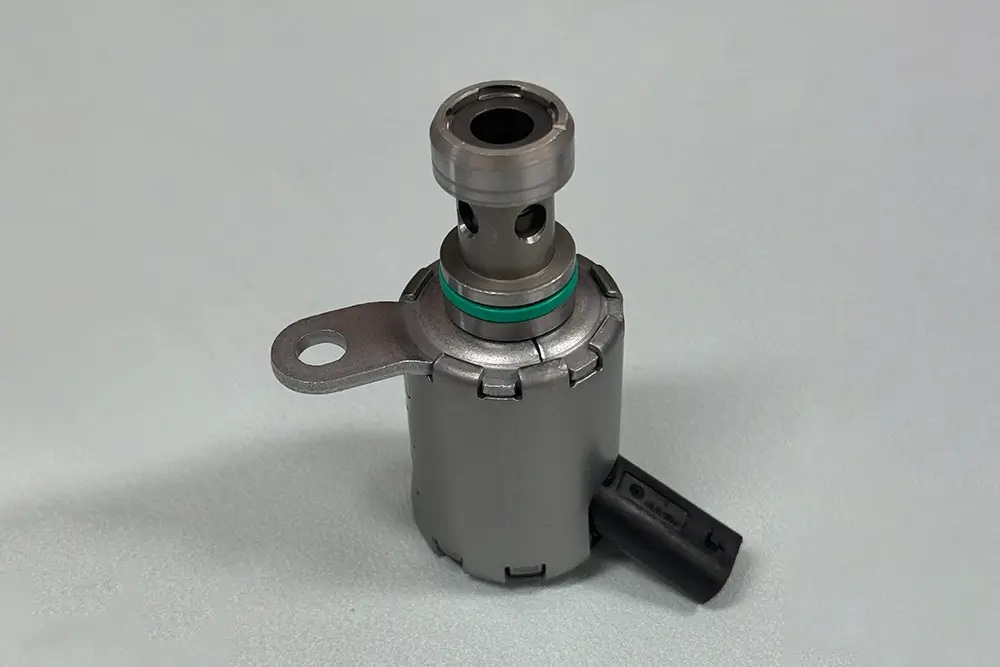
After confirming the function, buyers should compare the physical structure of the valve. For piston oil cooling solenoids, the most useful comparison points are usually the inserted section, oil-port position, sealing area and mounting relationship.
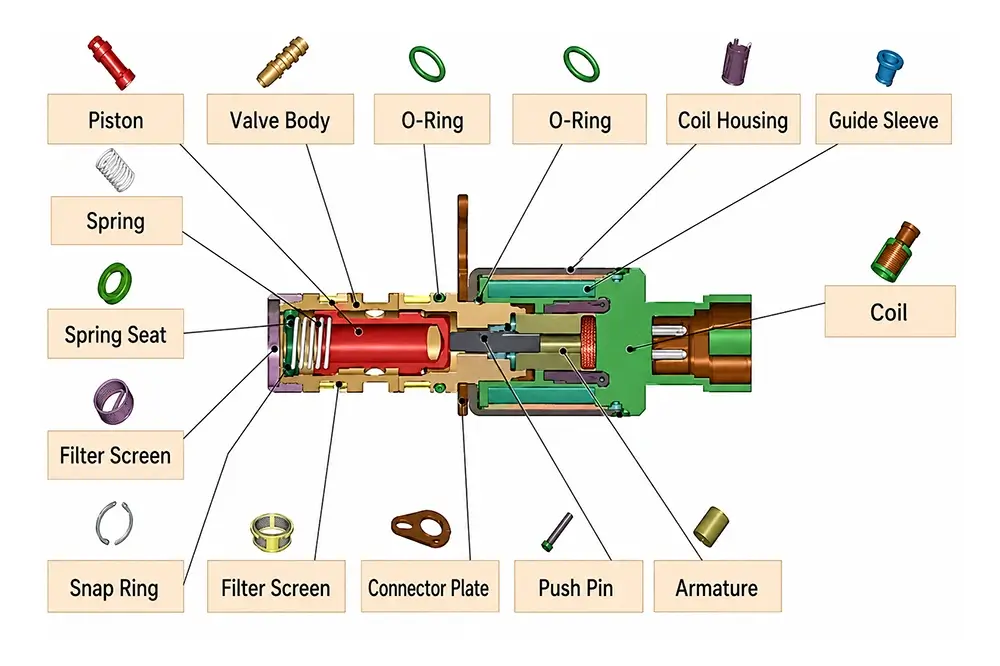
| Structural point | What to compare | Why it matters |
|---|---|---|
| Inserted section | Length, diameter and end shape | Affects how the valve sits inside the oil passage or module |
| Oil ports | Port position, opening shape and alignment | Affects oil-flow routing inside the controlled circuit |
| Seal position | O-ring groove, sealing diameter and distance from the tip | Affects leakage prevention and circuit separation |
| Valve nose or tip | End profile, openings and visible control features | Helps distinguish similar-looking solenoids |
| Mounting structure | Flange angle, bolt-hole position and installation depth | Affects fitment and orientation on the engine |
| Connector direction | Connector angle relative to the valve body and mounting flange | Affects harness connection and installation clearance |
| Supplied scope | Single solenoid, valve with seal or part of a module | Prevents quotation mismatch between component and assembly |
Connector shape and pin count are still important, but they should not be treated as the only matching points. A matching connector does not confirm that the oil-port arrangement, internal valve function or inserted depth is the same.
Typical Misidentification Scenarios
Common identification mistakes include:
- Using only the broad name “oil control valve” without confirming the controlled circuit.
- Treating a similar-looking VVT or oil-pump solenoid as interchangeable.
- Failing to confirm whether the OE reference identifies a single solenoid or a complete module.
- Providing only a connector-side photograph without showing the oil ports, valve tip and seal position.
- Assuming an engine family uses only one type of oil-control solenoid.
The OE reference, engine code, installed position and complete valve structure should be checked together before quotation.
When Product Photos or Samples Are Necessary
Product photos or samples become important when the OE reference is unclear, the old part has no readable marking, the catalogue description is broad, the supplied scope is uncertain or several similar valves exist in the same engine family.
For piston oil cooling solenoid review, useful photos include the complete valve, side view, valve tip, oil-port area, seal position, mounting flange, connector orientation and any visible reference marking. If the component is still installed, a photo of the installed position may also help confirm the oil-circuit function.
A physical sample may be useful for private-label projects, unclear market references, stock programme development or cases where a product photo cannot show the oil-port layout clearly. However, a sample should still be accompanied by application information and quantity expectations.
Inspection Focus for Piston Oil Cooling Solenoids
Inspection requirements should follow the confirmed drawing, approved sample, product specification or agreed project requirement. A piston oil cooling solenoid should not be inspected according to a generic checklist that ignores its oil-circuit function.
Relevant inspection focus may include:
- Product identity and reference confirmation
- Connector condition and pin area
- Inserted body dimensions
- Oil-port position and visible passage features
- Seal groove and O-ring position
- Mounting flange and bolt-hole relationship
- Valve tip condition and visible cleanliness
- Functional check where applicable to the confirmed product specification
- Comparison with approved sample or drawing
- Packaging, label and batch consistency for B2B supply
Buyers can also review Wellgine’s engine parts quality-control process for broader information about inspection, dimensional confirmation and batch order control.
Related Product and Wellgine Supply Support
Wellgine supports selected engine solenoid valves for B2B engine-parts sourcing projects. Matching should be based on the controlled oil circuit, OE reference, engine code, installed position and complete valve structure.
The LR073684 piston oil cooling solenoid is an OE-specific product example. Use that product page for LR073684 and Jaguar Land Rover Ingenium application information; use this guide for general function, location and identification principles.
Before requesting a quotation, buyers can also review the engine-parts enquiry checklist.
Frequently Asked Questions
Is a piston oil cooling solenoid the same as a VVT solenoid?
No. A piston oil cooling solenoid relates to the piston cooling oil circuit, while a VVT solenoid valve controls oil flow for variable valve timing in many hydraulic timing systems. They may both be engine oil-control solenoids, but they control different functions.
Is a piston oil cooling solenoid the same as a piston oil jet?
No. A piston oil jet, or oil squirter, directs oil towards the piston cooling area. A piston oil cooling solenoid is a control valve that may manage oil flow to the piston cooling circuit in specific applications.
Can the name “oil control valve” confirm the correct part?
No. “Oil control valve” is a broad term and may be used for different engine oil-control components. Buyers should confirm the controlled circuit, OE reference, engine code, installed position and structure before matching.
Why does oil-port position matter?
Oil-port position affects how oil flows through the controlled circuit. Two similar solenoids may have different port locations, inserted depths or sealing positions, which can make them unsuitable for the same application.
Can a piston oil cooling solenoid be supplied separately from an oil module?
It depends on the application and product design. Some references may relate to a single solenoid, while others may refer to a larger module or assembly. The supplied scope should be confirmed before quotation.
What photos are most useful for identification?
Useful photos include the full product, side view, connector orientation, valve tip, oil-port area, seal position, mounting flange and visible reference marking. A photo of the installed position may also help confirm the oil-circuit function.
Conclusion
A piston oil cooling solenoid should be identified by its controlled oil circuit, installed position, OE reference and physical structure. Confirm the inserted section, oil ports, seal position, mounting flange, connector orientation and supplied scope before treating similar-looking engine solenoids as interchangeable.
Send Wellgine your OE reference, engine code, installed position, product photographs, sample information and required quantity for piston oil cooling solenoid matching review and B2B quotation support.