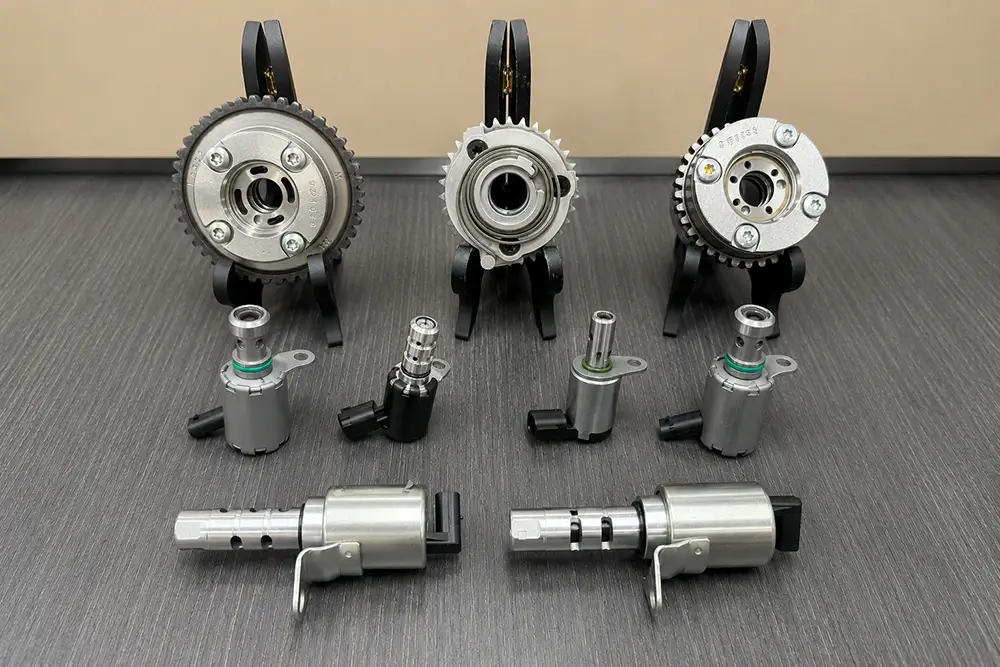
The main difference: a VVT solenoid controls engine-oil flow to the variable valve timing system, while a camshaft phaser mechanically changes the camshaft timing position. They work within the same system but are different components and cannot be selected interchangeably.
A camshaft solenoid valve is usually another name for the VVT solenoid or oil control valve—it is not the camshaft phaser. If the vehicle has a timing fault, the electrical circuit, oil supply, solenoid response, phaser condition and mechanical timing should be checked before either part is replaced.
VVT Solenoid vs Camshaft Phaser: Quick Comparison
| Comparison | VVT / Camshaft Solenoid Valve | Camshaft Phaser |
|---|---|---|
| Main function | Controls pressurised oil flow to the VVT mechanism | Mechanically changes the camshaft timing position |
| Operating type | Electrically controlled oil valve | Oil-operated mechanical timing unit |
| Typical location | Cylinder head or oil-control passage | Camshaft and timing-drive area |
| Initial inspection | Connector, wiring, oil passage and valve response | Timing noise, locking mechanism, gear position and timing system |
| Matching focus | OE number, connector, pin count and valve-body design | OE number, intake/exhaust side, bank and gear structure |
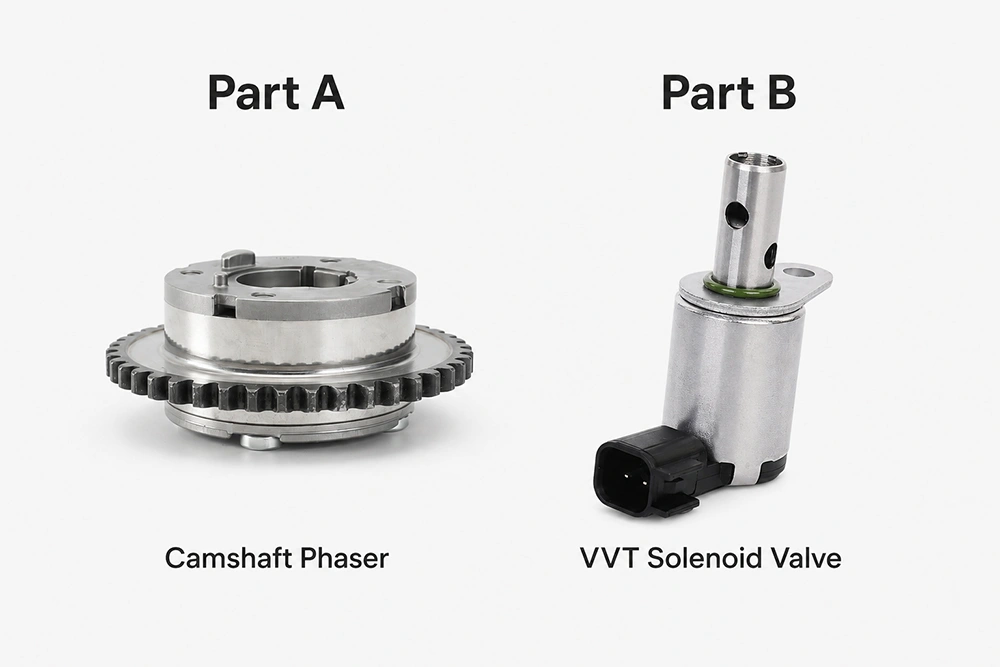
Similar symptoms do not confirm which component has failed. Rough idle, timing fault codes and poor acceleration may be caused by the solenoid, phaser, wiring, oil pressure, blocked oil passages or timing-chain components. Diagnosis should be completed before ordering a replacement part.
Variable valve timing systems help engines adjust valve timing under different operating conditions. Two common components in these systems are the VVT solenoid valve and the camshaft phaser.
Although both are related to valve timing, they are not the same part. For B2B buyers, confusing these components can lead to incorrect enquiries, wrong shipments, unnecessary returns and customer complaints.
This guide explains the difference between VVT solenoid valves and camshaft phasers from a sourcing, application confirmation and quality-control perspective. It is written for distributors, importers, wholesalers, aftermarket programme managers and OEM-oriented engine parts buyers who need accurate product matching before quotation.
What Is a VVT Solenoid Valve?
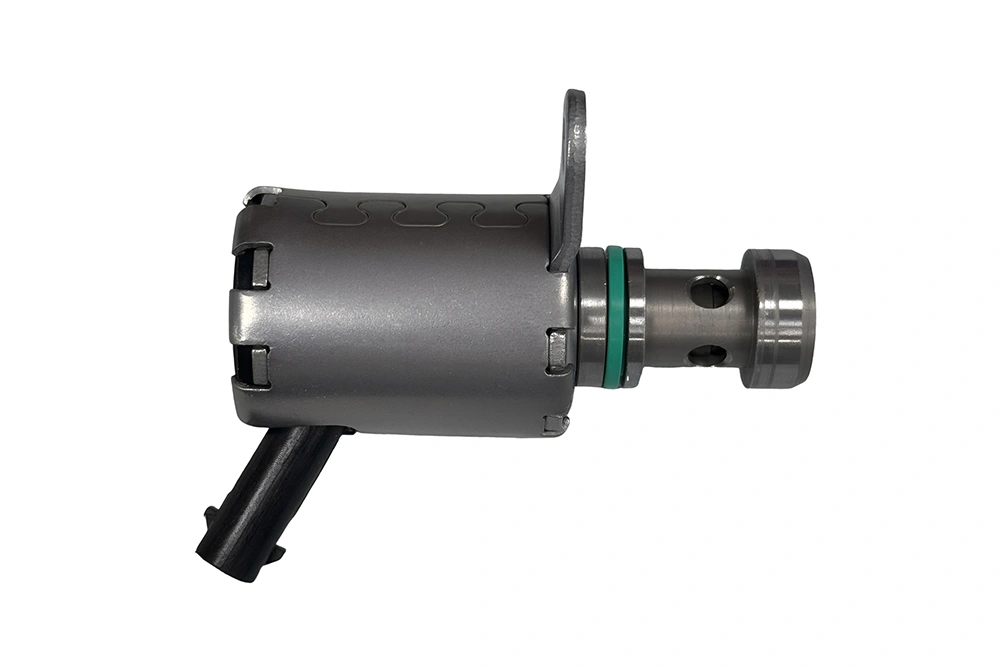
A VVT solenoid valve, also called an oil control valve in some applications, controls oil flow to the variable valve timing mechanism. It receives signals from the engine control system and regulates oil pressure to support timing adjustment.
In practical terms, the solenoid valve acts as an oil-flow control component. If the valve body, connector, pin configuration or internal movement does not match the application, the timing system may not operate correctly.
For sourcing, buyers should check:
- OE number or reference number
- Engine code
- Connector type
- Pin configuration
- Valve body length
- Filter or screen design
- Mounting position
- Vehicle application
- Product photo from several angles
Wellgine supplies selected VVT solenoid valves for aftermarket and wholesale supply, including selected Jaguar Land Rover variable timing solenoid applications.
Is a Camshaft Solenoid the Same as a VVT Solenoid?
In many aftermarket catalogues, “camshaft solenoid,” “VVT solenoid,” “oil control valve” and “camshaft timing control solenoid” may refer to the same type of electrically controlled oil valve. However, none of these names refers to the camshaft phaser itself.
A VVT solenoid controls oil flow, while the camshaft phaser uses that oil pressure to change camshaft timing. Because terminology varies by market, buyers should confirm the OE number, engine code, connector, pin count and valve-body design instead of relying on the product name alone.
What Is a Camshaft Phaser?
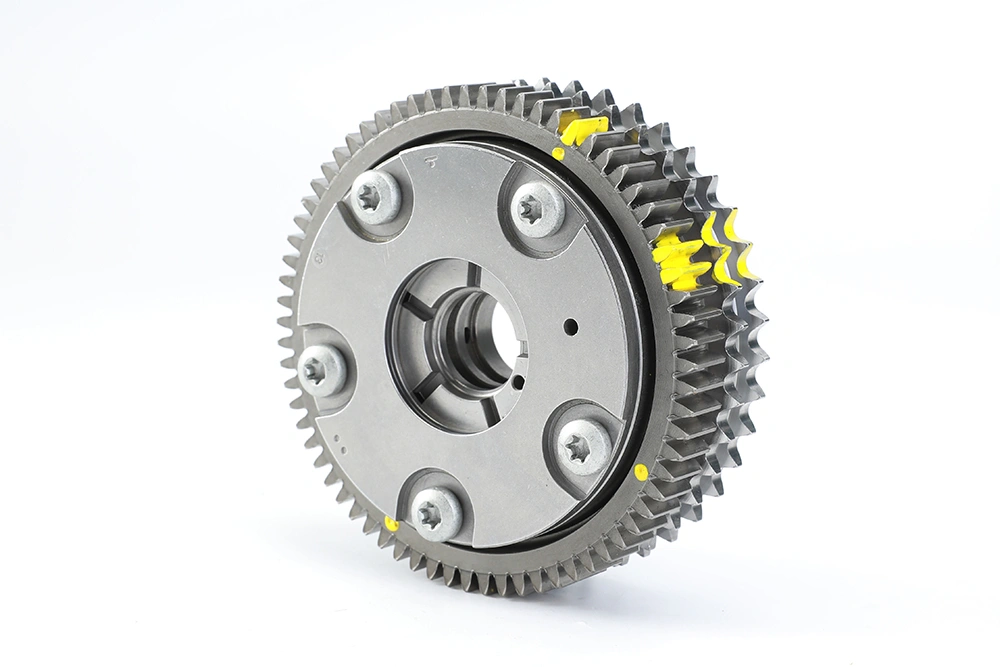
A camshaft phaser, also known as a camshaft adjuster in some markets, is mounted on the camshaft and mechanically changes camshaft timing position. It works with oil pressure and control signals from related components.
Unlike a solenoid valve, a camshaft phaser is a timing adjustment mechanism. It is usually connected with the camshaft and timing drive system. Its gear profile, mounting structure, locking mechanism and intake or exhaust position must be confirmed carefully before sourcing.
For sourcing, buyers should confirm:
- Intake or exhaust position
- OE number or reference number
- Engine family
- Camshaft side or bank position, where applicable
- Mounting structure
- Gear profile
- Timing system compatibility
- Product photo or sample details
Wellgine supplies aftermarket camshaft phasers and camshaft adjusters for selected Mercedes-Benz, Range Rover, Hyundai and other selected applications.
Why Buyers Often Confuse These Two Parts
Both components are connected with variable valve timing, and both may appear in enquiries related to timing faults, rough idle or poor acceleration. In some markets, part names may also be translated differently, causing confusion between solenoid valves, oil control valves, camshaft adjusters, VVT gears and phasers.
To avoid incorrect identification, send the OE number, engine code and clear photographs instead of relying only on the market name. For a solenoid, photograph the connector, pin layout and valve body. For a phaser, photograph the front gear, rear mounting surface and intake or exhaust marking. For the complete ECU, oil-control valve, phaser and camshaft operating sequence, see our VVT system guide.
Common Failure Signs and Diagnosis Caution
VVT-related problems may include rough idle, poor acceleration, timing fault codes, engine noise, unstable engine response or reduced fuel efficiency. However, these signs may not always mean the solenoid valve or phaser is the direct cause.
Which Component Should Be Checked First?
| Initial finding | Check first | Also verify |
|---|---|---|
| Electrical circuit fault, damaged connector or abnormal valve response | VVT solenoid and wiring | Oil passage, power supply and control signal |
| Start-up rattle or mechanical timing noise | Camshaft phaser and timing drive | Oil pressure, timing chain and locking mechanism |
| Camshaft position deviation or correlation fault | Complete timing system | Phaser position, chain timing, sensors and oil pressure |
| Rough idle, poor acceleration or reduced fuel economy | Do not select a part from the symptom alone | Oil condition, wiring, pressure and fault-code diagnosis |
A fault code or symptom alone does not prove that either component has failed. Diagnosis should include oil condition and pressure, electrical checks, timing-chain condition and camshaft-position data before a replacement part is selected.
Matching Checklist for VVT Solenoid Valves
Before requesting quotation for VVT solenoid valves, buyers should prepare:
- OE number or reference number
- Engine code
- Vehicle application
- Connector photo
- Pin count and connector shape
- Valve body length and mounting design
- Filter or screen structure, where visible
- Old part photo from front, side and connector end
- Quantity and packaging requirement
Connector confirmation is especially important. Two solenoid valves may look similar in body shape but use different connectors or pin designs. For distributors, this can create wrong stock and return problems if not checked before purchase. For a detailed identification process, see our guide to identifying the correct VVT solenoid valve.
Matching Checklist for Camshaft Phasers
Before requesting quotation for camshaft phasers, buyers should prepare:
- OE number or reference number
- Engine code
- Vehicle application
- Intake or exhaust position
- Left or right bank, where applicable
- Gear profile or timing structure photo
- Front and back side photos
- Mounting side photo
- Quantity and packaging requirement
Intake and exhaust phasers should not be treated as interchangeable unless the application is clearly confirmed. In many engines, the timing position and internal structure differ. For position, structure and application checks, see our camshaft phaser identification guide.
Not sure whether the required part is a VVT solenoid or a camshaft phaser? Send the OE number, engine code and clear photographs of the connector or gear structure. Wellgine can review the application before quotation.
Component-Specific Quality Control Points
| Component | Important Quality Points | Buyer Review Focus |
|---|---|---|
| VVT Solenoid Valve | Connector fit, pin configuration, valve body condition, response consistency, screen condition | Connector photo, OE number, body length and application |
| Camshaft Phaser | Gear structure, locking mechanism, timing position, mounting accuracy, assembly consistency | Intake/exhaust side, gear photo, OE number and engine code |
| Related timing parts | Compatibility with camshaft, oil pressure and timing system layout | Engine family, application notes and sample comparison |
VVT components require dimensional consistency and stable function. Buyers can review Wellgine’s engine parts quality-control process for information about connector confirmation, dimensional inspection, surface checks, assembly consistency and final inspection before shipment. For further information about production support and component development, review Wellgine’s engine parts manufacturing capabilities.
Common Sourcing Mistakes
- Selecting a component only from a fault code or symptom
- Matching a solenoid without checking its connector and pin count
- Ordering a phaser without confirming intake/exhaust position or bank
- Treating VVT solenoid, oil control valve, adjuster and phaser as interchangeable names
- Using the vehicle model without confirming the engine code and OE reference
How B2B Buyers Should Send an Enquiry
A complete enquiry helps the supplier review the correct part faster. For VVT solenoid valves, send the OE number, engine code, vehicle application, connector photo, valve body photo and quantity. For camshaft phasers, send OE number, engine code, intake or exhaust position, gear-side photo, mounting-side photo and quantity.
If the application is uncertain, a sample or old part photo can help confirm product structure. Buyers sourcing for private label or distributor stock should also provide packaging requirements, expected batch quantity and destination market. Buyers with confirmed OE references, engine codes, application details or product photographs can send a VVT component matching enquiry to Wellgine for review.
Wellgine’s current product categories include VVT solenoid valves and camshaft phasers for selected applications. Buyers can also review related product categories when planning mixed engine parts sourcing projects.
Frequently Asked Questions
Is a Camshaft Solenoid Valve the Same as a VVT Phaser?
No. A camshaft solenoid valve—also commonly called a VVT solenoid or oil control valve—controls pressurised engine-oil flow. The camshaft phaser uses that controlled oil pressure to change the camshaft timing position. They work together but are separate components and cannot be selected interchangeably.
Can the same symptom be caused by either part?
Yes. Rough idle, timing fault codes or poor acceleration may be related to several VVT system components, not only one part.
What should buyers provide for VVT solenoid quotation?
Buyers should provide OE number, engine code, vehicle application, connector photo, product photo and quantity.
What should buyers provide for camshaft phaser quotation?
Buyers should provide OE number, engine code, intake or exhaust position, vehicle application, product photo and quantity.
Why is connector confirmation important for VVT solenoid valves?
Connector shape and pin configuration may differ between similar-looking solenoid valves. Confirming these details helps avoid wrong shipments.
Why is intake or exhaust position important for camshaft phasers?
Intake and exhaust phasers may have different timing positions, gear structures and OE references. The position should be confirmed before quotation.
Request VVT Parts Matching
Need help confirming a VVT solenoid valve or camshaft phaser? Send OE number, engine code, connector photo, product photo or sample details to Wellgine for matching review.