
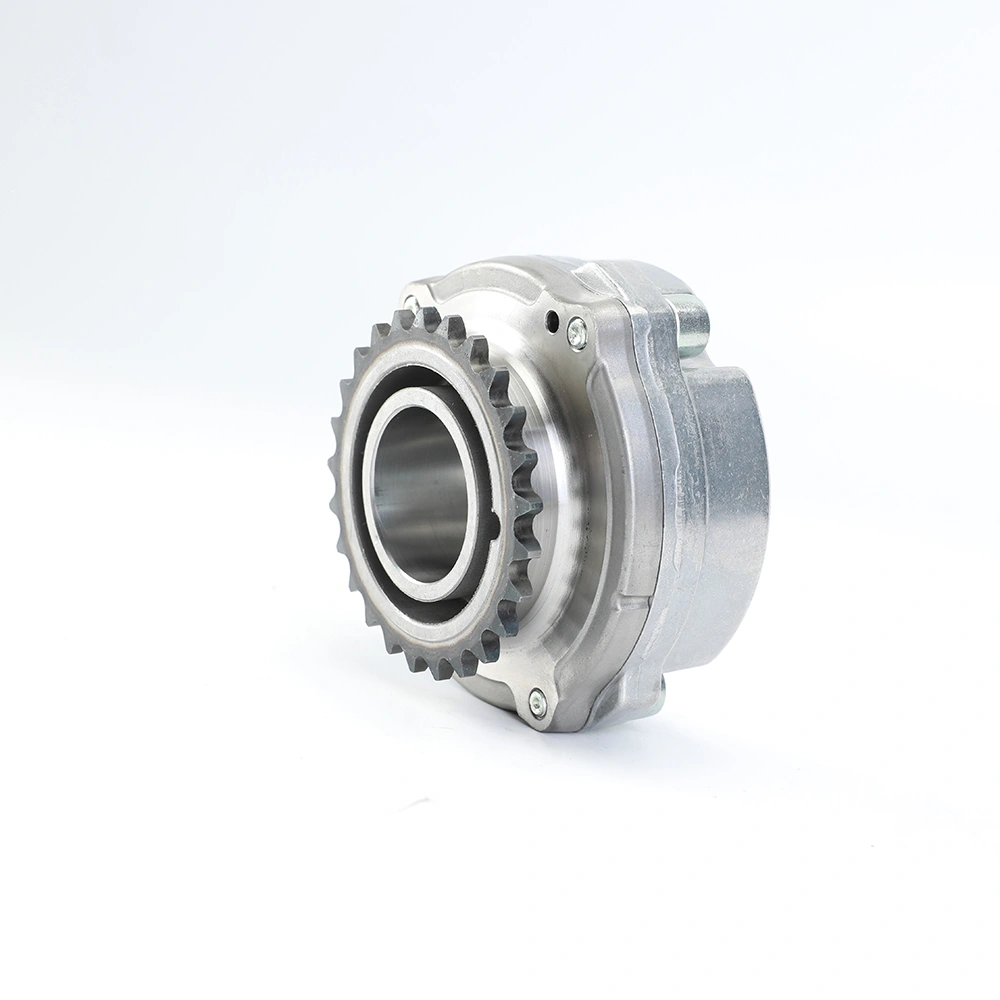
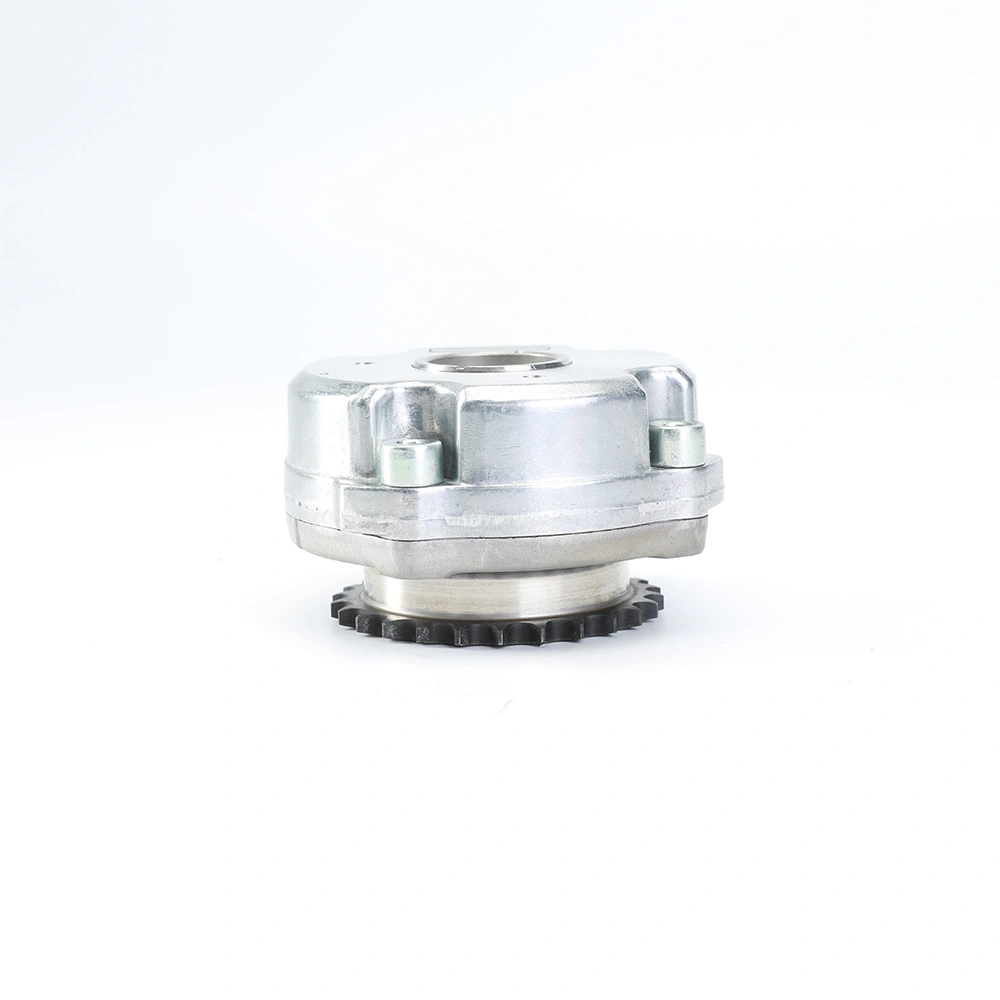
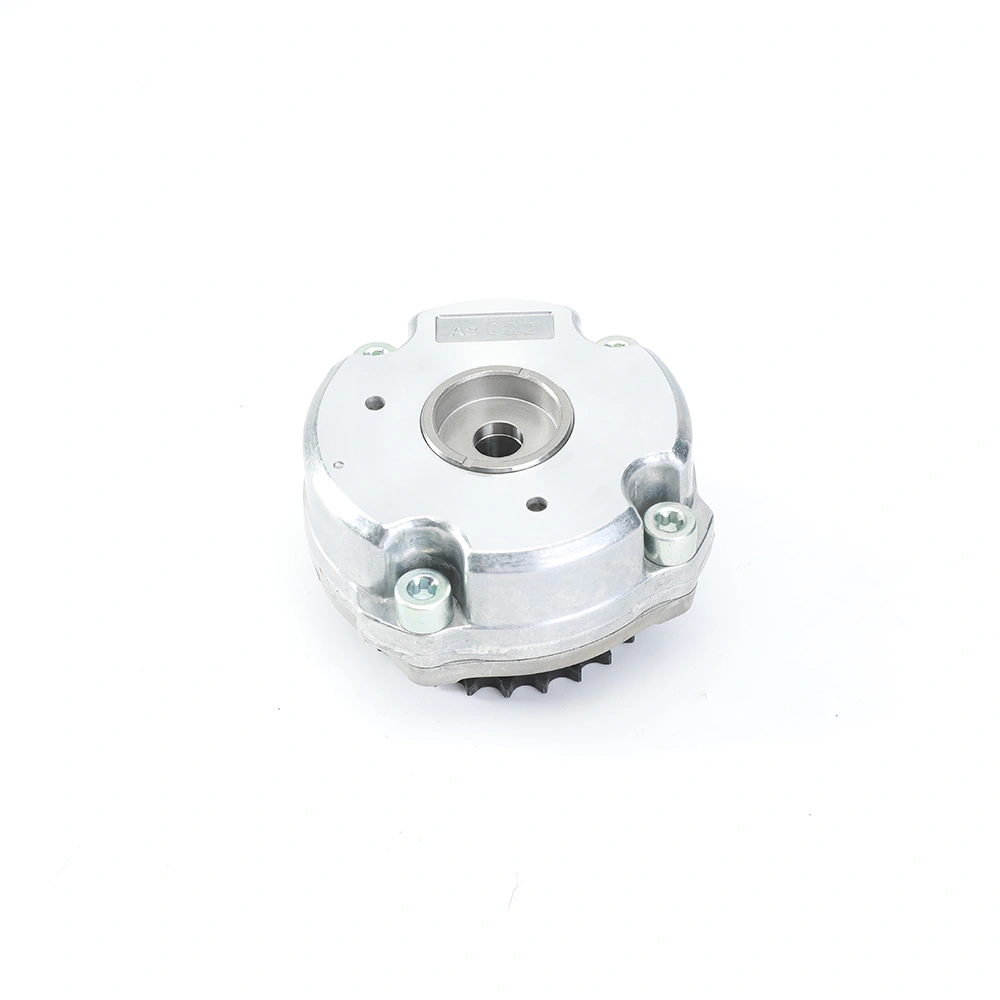
24350-26800 CVVT Assembly – Hyundai Accent & Kia Rio 1.6L
The 24350-26800 CVVT Assembly is the intake-side variable valve timing actuator used on Hyundai and Kia 1.6-litre DOHC petrol engines. The unit mounts directly to the intake camshaft and adjusts cam timing through hydraulic oil pressure controlled by the engine ECU.
This 24350-26800 CVVT Assembly corresponds to OE references including 24350-3CAC0 and is commonly installed on engines such as G4ED and G4FC used in Hyundai Accent and Kia Rio models. During operation the actuator advances or retards the intake camshaft angle relative to the crankshaft, allowing the engine to optimise valve timing across different load and RPM conditions.
In engine rebuilding or timing system service, the 24350-26800 VVT Camshaft Adjuster is typically replaced together with the timing chain, guides and oil control valve. Wear in the internal rotor mechanism or oil chamber sealing can lead to delayed cam phasing response, cold start rattle or fault codes related to camshaft timing control.
Technical Specifications
| Specification | Details |
|---|---|
| Product Name | 24350-26800 CVVT Assembly |
| OE Part Numbers | 24350-26800, 24350-3CAC0 |
| Engine Platform | G4ED, G4FC |
| Engine Displacement | 1.6 L |
| Type | Intake Camshaft Phaser / VVT Actuator |
| Warranty | 12 months or 12,000 miles from the date of Ex-factory |
| Packing | Neutral Packing or Customer Required |
| MOQ | 6 pcs |
| Place for Origin | Ningbo City of China |
| Brand | Wellgine |
Intake Camshaft Phaser 24350-3CAC0 – Typical Failure Patterns
For technicians working on Hyundai or Kia 1.6 engines, several wear patterns are frequently observed with the Intake Camshaft Phaser 24350-3CAC0.
Common symptoms:
- Rattle noise during cold start
- DTC codes such as P0011 / P0014
- Slow camshaft timing response in diagnostic data
- Engine hesitation or poor low-RPM torque
- Timing deviation during ECU monitoring
Mechanical causes
- Internal rotor vane wear
- Locking pin sticking due to oil contamination
- Excess clearance in phaser chambers
- Oil pressure instability from blocked passages
In most rebuild cases the actuator is replaced rather than repaired because internal wear affects hydraulic sealing and timing accuracy.
Why This Unit Fails — Practical Context for Technicians
The G4ED and G4FC CVVT systems are oil-pressure-dependent. The phaser rotor advances by applying pressurised oil to one set of vane chambers and exhausting the other. Several field failure patterns repeat across workshops working on these platforms:
- Sludge build-up from infrequent oil changes: The vane passages are narrow (typically under 2 mm). Thick, contaminated oil cannot move the rotor quickly enough, causing the ECU to log a performance fault (P0011) even though the phaser itself is not mechanically worn.
- Wear at the lock pin: The spring-loaded lock pin holds the phaser at its default retarded position during cold starts before oil pressure builds. Once the pin bores wear oval, the phaser rattles on start-up and the lock position is lost.
- Scored rotor sealing lands: Metallic debris from a stretched timing chain or worn chain guide can enter the phaser and score the rotor-to-housing interface, causing internal oil bypass and loss of authority.
Before condemning the phaser, verify the OCV solenoid, check for P0010 vs P0011 (circuit fault vs performance fault), and confirm oil pressure at the camshaft oil feed passage is within spec. A phaser replacement on a sludged engine without an oil system flush is rarely a lasting fix.
Manufacturing and Quality Control
The 24350-26800 CVVT Assembly is supplied from a dedicated factory specialising in engine timing system components, including camshaft phasers, VVT adjusters and timing gears used in Hyundai and Kia engines. Production focuses on consistent dimensional control and stable hydraulic operation so the actuator can maintain accurate intake camshaft timing during engine operation.
Quality management for the 24350-26800 24350-3CAC0 Camshaft Timing Gear follows structured inspection procedures before shipment to distributors and engine rebuilders. Quality control measures include:
- Batch production consistency: The 24350-26800 VVT Camshaft Adjuster is produced in stable batches to maintain uniform dimensions and phasing performance across supply cycles.
- Dimensional verification: Each Intake Camshaft Phaser 24350-3CAC0 is checked for camshaft mounting accuracy and correct sprocket alignment.
- Functional rotation inspection: Rotation smoothness and phaser movement are inspected to ensure stable camshaft timing adjustment.
- Pre-shipment inspection: Units are visually and mechanically inspected before export packaging.
The factory operates under a direct-supply model, providing the 24350-26800 CVVT Assembly to international distributors, workshops and engine rebuild specialists requiring reliable aftermarket timing components.
FAQ
1. What does the 24350-26800 CVVT Assembly do?
The 24350-26800 CVVT Assembly adjusts the intake camshaft timing using hydraulic pressure so that valve opening occurs earlier or later depending on engine load and speed.
2. Is 24350-26800 the same as 24350-3CAC0?
Yes. The 24350-26800 24350-3CAC0 Camshaft Timing Gear is used interchangeably in many parts catalogues and both reference the intake CVVT actuator for certain Hyundai and Kia engines.
3. Which engines commonly use the Intake Camshaft Phaser 24350-3CAC0?
Most frequently it is installed on 1.6-litre DOHC engines such as G4ED and G4FC used in Hyundai Accent and Kia Rio models.
4. Does the camshaft phaser require ECU programming after installation?
No ECU programming is required. However, clearing stored fault codes and allowing the ECU to relearn idle parameters is recommended.
5. Should the oil control valve be replaced with the CVVT actuator?
In many workshops the oil control valve is replaced together with the 24350-26800 CVVT Assembly to ensure stable oil pressure regulation.
6. Can a worn camshaft phaser affect timing chain life?
Yes. Excess internal clearance in the 24350-26800 24350-3CAC0 CVVT Assembly Intake Camshaft Actuator can cause chain oscillation and abnormal wear over time.
7. Is the actuator installed on the intake or exhaust camshaft?
The 24350-26800 VVT Camshaft Adjuster is used on the intake camshaft.
8. Can the phaser be cleaned instead of replaced?
Cleaning may remove sludge deposits, but internal wear in the rotor mechanism usually means replacement is the safer repair.
9. Is this component used in both Hyundai and Kia vehicles?
Yes. Hyundai and Kia share engine platforms, so the same 24350-26800 VVT Camshaft Adjuster is used across both brands.
10. Can trade customers order larger quantities with custom labelling?
Yes. The factory supports bulk orders and can discuss neutral or own-brand packaging for established distributors.