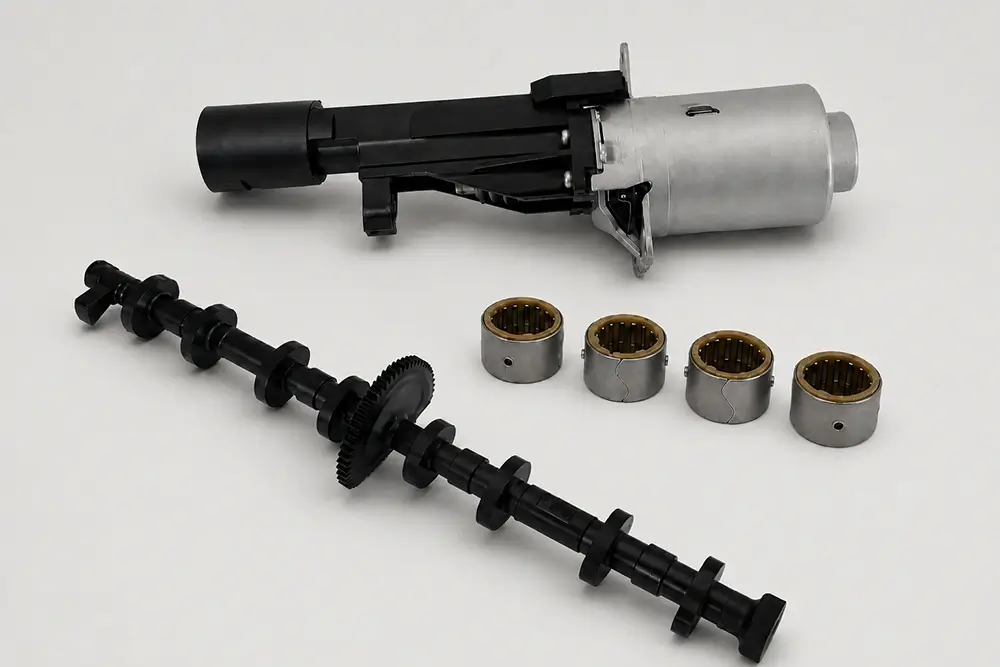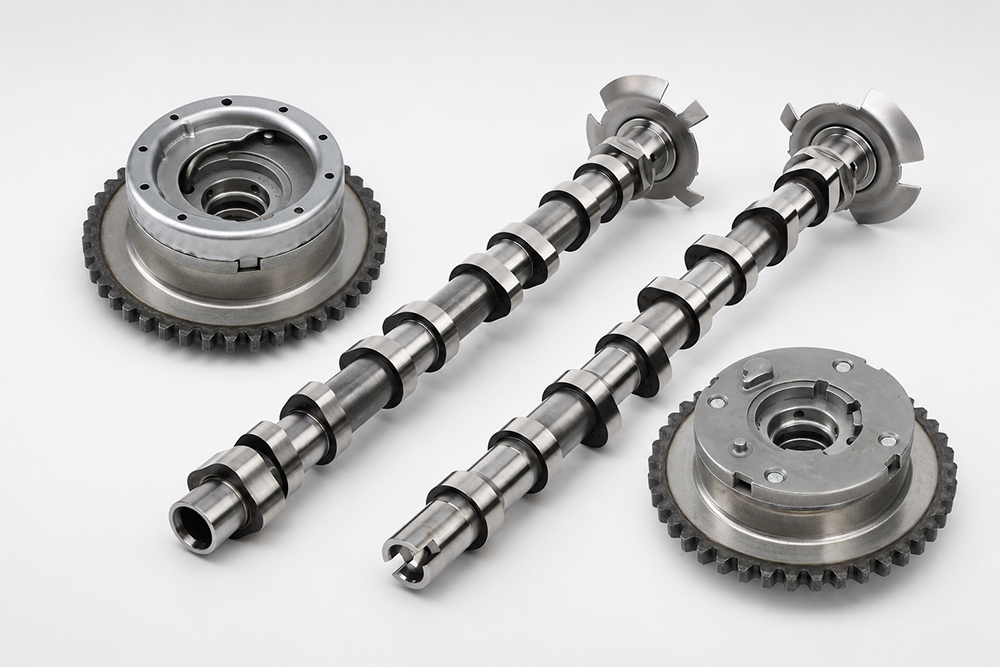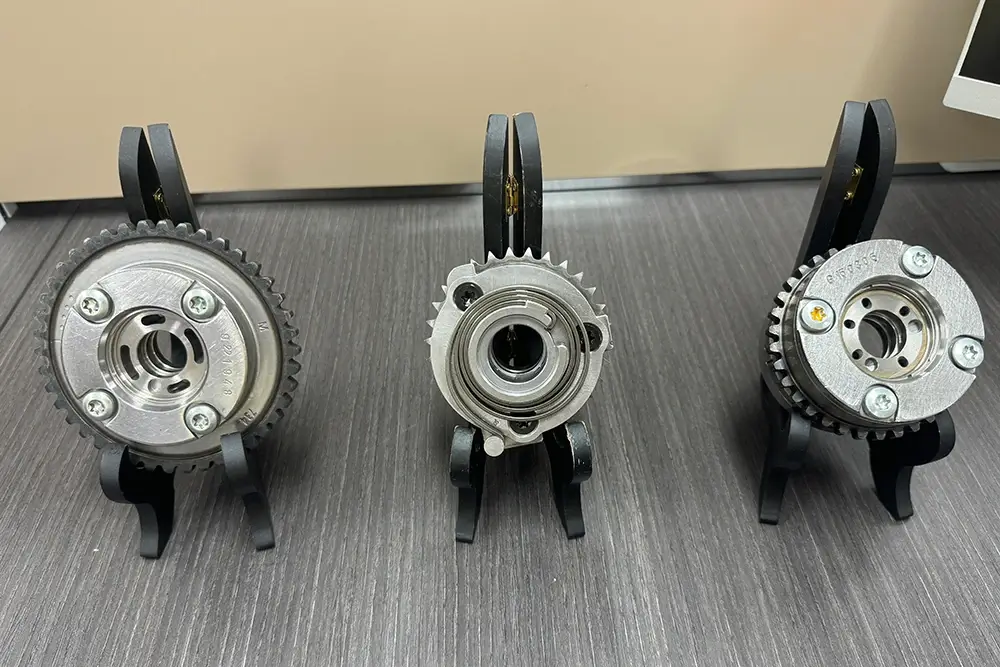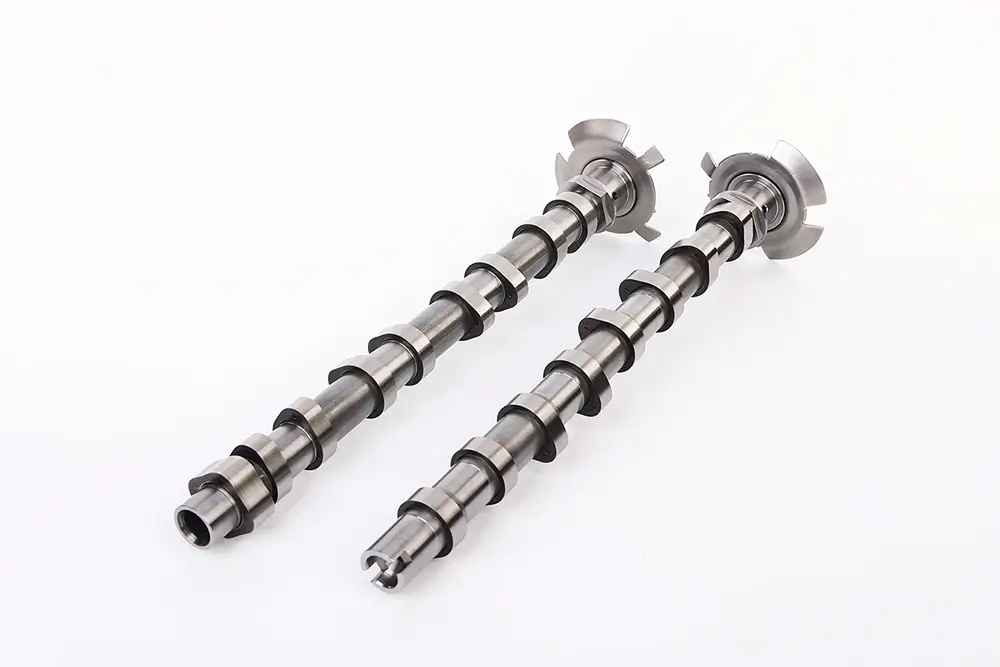
The main difference between an intake camshaft and an exhaust camshaft is the valves each one controls. The intake camshaft opens and closes the intake valves so that fresh air or the air-fuel charge can enter the combustion chamber. The exhaust camshaft opens and closes the exhaust valves so that combustion gases can leave the cylinder.
Although intake and exhaust camshafts from the same engine may look similar, they should not be treated as interchangeable. Their lobe profiles, timing positions, end features, oil passages, sensor triggers, phaser interfaces and OE references may differ.
For replacement matching, confirm the OE number, engine code, intake or exhaust position, cylinder bank where relevant, both camshaft ends and the supplied configuration before ordering.
Intake vs Exhaust Camshaft: Quick Comparison
| Comparison point | Intake camshaft | Exhaust camshaft |
|---|---|---|
| Main function | Controls the opening and closing of intake valves | Controls the opening and closing of exhaust valves |
| Airflow role | Allows fresh air or the air-fuel charge to enter the cylinder | Allows combustion gases to leave the cylinder |
| Typical cylinder-head position | Intake side of the cylinder head | Exhaust side of the cylinder head |
| Cam-lobe design | Designed for intake-valve timing, lift and duration | Designed for exhaust-valve timing, lift and duration |
| VVT connection | May connect to an intake camshaft phaser | May connect to an exhaust camshaft phaser |
| Identification evidence | OE number, engine code, markings, position and end structure | OE number, engine code, markings, position and end structure |
| Interchangeability | Must not be assumed | Must not be assumed |
What Does an Intake Camshaft Do?
The intake camshaft controls the intake valves through its lobes and the related valve-train components. Its profile determines when the intake valves begin to open, how far they open and when they close according to the engine design.
In a variable valve timing system, the intake camshaft may connect to a camshaft phaser that adjusts its angular position relative to the drive. Some engines apply variable timing only to the intake side, while others control both intake and exhaust camshafts.
What Does an Exhaust Camshaft Do?
The exhaust camshaft controls the exhaust valves. Its timing allows combustion gases to leave the cylinder at the point defined by the engine’s valve-timing strategy.
An exhaust camshaft may differ from the intake camshaft in lobe profile, timing relationship, end machining, oil-feed arrangement, sensor-trigger feature, phaser connection, gear or sprocket interface, vacuum-pump drive, overall dimensions and OE reference.
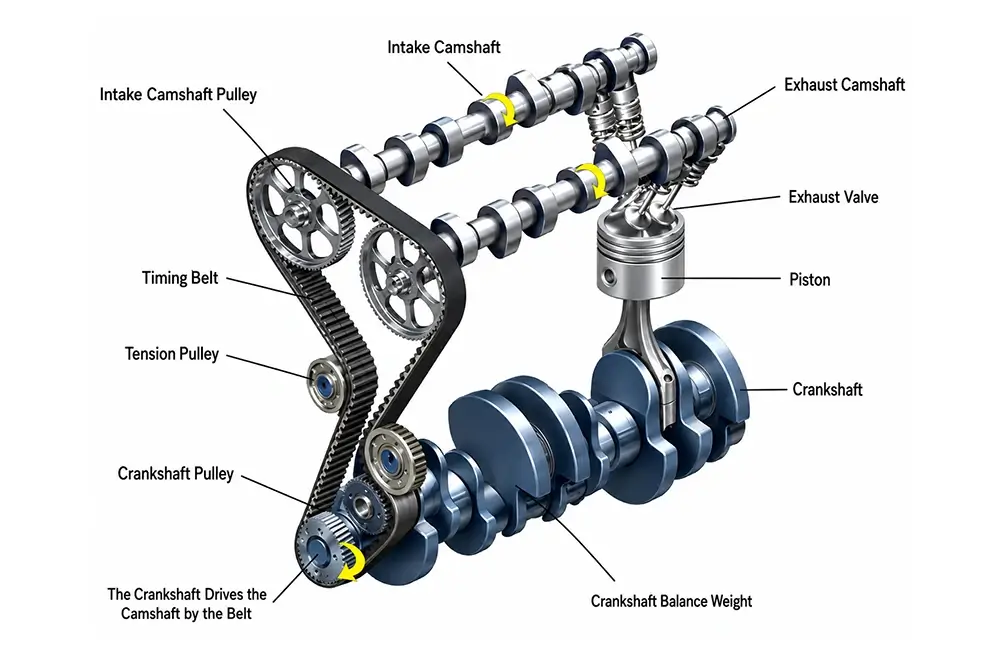
Why Intake and Exhaust Camshafts Can Look Similar
Camshafts from the same engine may share a similar overall length, number of journals, surface finish, lobe count and basic shaft construction. Small differences can still determine the correct position and application.
Important comparison points include:
- lobe angle, lift and profile;
- spacing between lobes and journals;
- oil-feed holes and internal passages;
- sensor reluctor or trigger pattern;
- thread, flange, keyway or locating feature;
- phaser or sprocket attachment;
- vacuum-pump or high-pressure fuel-pump drive features;
- identification markings and OE numbers.
A single side photograph is rarely sufficient to confirm whether a shaft is intake or exhaust.
Can Intake and Exhaust Camshafts Be Interchanged?
Intake and exhaust camshafts should not be assumed interchangeable. Even when they have similar dimensions, their designed positions and functional features may be different.
Interchangeability can be prevented by differences in:
- lobe profile and valve timing;
- phaser, gear or sprocket connection;
- oil-feed holes and VVT passages;
- sensor-trigger position;
- end machining and auxiliary drive features;
- left-bank or right-bank position;
- OE reference and engine revision.
Use confirmed application data, OE information and physical comparison before treating two camshafts as equivalent.
How to Identify the Correct Camshaft Before Ordering
1. Confirm the OE Reference
Start with the complete OE or reference number. Check whether it identifies an intake or exhaust camshaft, whether it applies to Bank 1 or Bank 2, whether it has been superseded and whether it refers to a bare camshaft or a wider assembly.
2. Confirm the Engine Code
Vehicle model and displacement are not always precise enough. One vehicle may use several engines or technical revisions. The enquiry should include the full engine code, fuel type, displacement, model, production year and market where available.
3. Confirm Intake or Exhaust Position
The enquiry and purchase order should state intake camshaft or exhaust camshaft explicitly. Avoid descriptions such as “front camshaft” unless the viewing direction and engine layout are clearly defined.
4. Confirm Bank Position Where Relevant
V-type engines may use different camshafts for Bank 1, Bank 2, the left bank or the right bank. Use reliable engine information because left and right can be interpreted differently when the viewing direction is not stated.
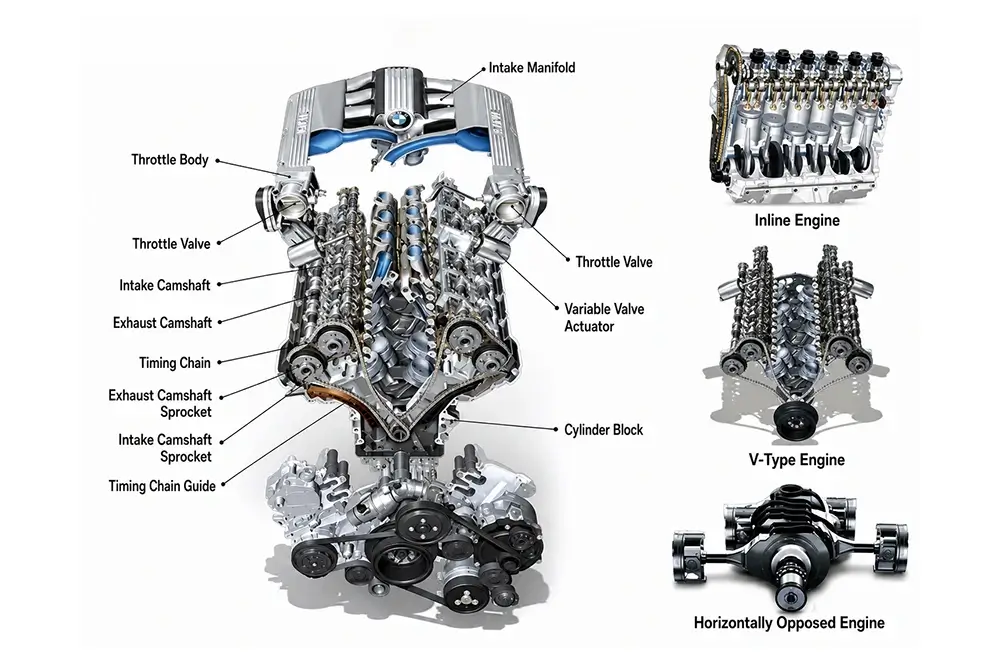
5. Compare Both Camshaft Ends
Compare the phaser or sprocket mounting, bolt thread, flange, keyway, locating pin, sensor trigger, vacuum-pump drive, fuel-pump drive feature, oil hole and end dimensions. Photographs should show both ends clearly.
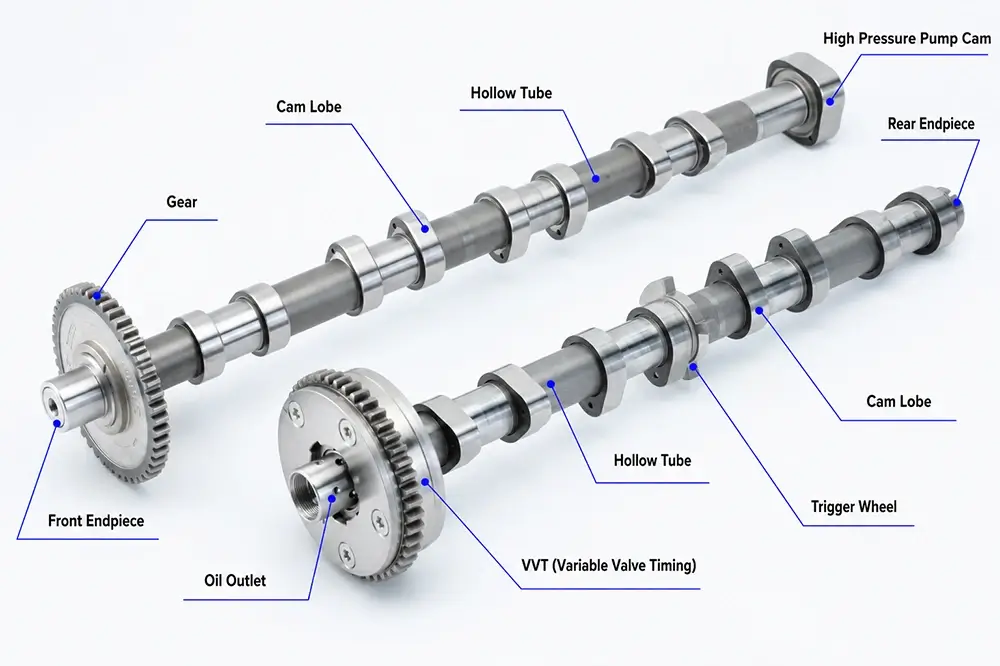
6. Compare Lobes, Journals and Markings
Check the number and position of lobes, journal number and spacing, overall length, journal diameter, thrust surface, additional drive lobes and identification marks. Dimensions should support the OE and application evidence rather than replace it.
Practical Intake or Exhaust Camshaft Identification Checklist
| Check | What to record | Why it matters |
|---|---|---|
| OE number | Complete number and any superseding reference | Provides the initial product identity |
| Engine code | Full code, displacement and fuel type | Separates engine versions |
| Position | Intake or exhaust | Prevents the most common ordering error |
| Bank | Bank 1, Bank 2, left or right where confirmed | Distinguishes V-engine positions |
| Both ends | Phaser, sprocket, trigger, oil holes and drive features | Reveals structural differences |
| Lobes and journals | Count, spacing, profile and additional drive lobes | Supports physical comparison |
| Supplied scope | Bare shaft or assembly | Prevents quotation and delivery disputes |
| Application | Vehicle, year and market | Supports final matching |
Common Camshaft Identification and Ordering Mistakes
- Ordering by vehicle model alone: several engine codes may exist within one model range.
- Assuming intake and exhaust are interchangeable: profiles, timing and end features may differ.
- Omitting the engine code: displacement alone may not identify the engine revision.
- Ignoring the bank position: V-engines may use different shafts on each bank.
- Using only one photograph: important differences may be located at either end of the shaft.
- Confusing the camshaft with the phaser: these are related but separate parts.
- Ignoring the supplied scope: a bare camshaft and a wider assembly are different commercial items.
- Relying on a worn sample alone: markings and features may be damaged or incomplete.
Camshaft, Camshaft Phaser and VVT Solenoid Are Different Parts
- Camshaft: operates the valves through its lobes and the related valve train.
- Camshaft phaser: changes the angular position of the camshaft within the designed range.
- VVT solenoid valve: controls oil flow used to actuate the phaser in many hydraulic VVT systems.
These product names should not be used interchangeably. See the guide to the difference between a VVT solenoid valve and a camshaft phaser for a separate component comparison.
Camshaft Replacement and Sourcing Information
Once intake or exhaust position has been confirmed, buyers should prepare the remaining application and commercial information for quotation. Include:
- OE reference and engine code;
- vehicle make, model, year and market;
- intake or exhaust position;
- Bank 1 or Bank 2 where relevant;
- bare camshaft or assembly requirement;
- photographs of the complete shaft and both ends;
- markings and relevant dimensions;
- sample availability;
- quantity and packaging requirement.
For the wider purchasing workflow, use the camshaft sourcing guide for importers. Buyers preparing a complete RFQ can also use the engine parts enquiry checklist.
Camshaft Inspection Points for Batch Orders
The inspection plan should follow the approved specification, drawing or reference sample. Depending on the product and agreed quality plan, applicable checks may include:
- product identity and intake or exhaust position;
- appearance and machined-surface condition;
- end features, markings and oil holes;
- journal and lobe arrangement;
- specified dimensions;
- cleanliness and rust protection;
- labels, packaging and batch traceability.
Material, hardness and other product-specific requirements should be stated only where they are supported by the applicable drawing, approved sample or project specification.
Related Camshaft Products
Wellgine supplies selected replacement camshafts for international B2B buyers, including selected BMW camshafts, Mercedes-Benz camshafts, VW camshafts and Ford camshafts.
Application review should be based on the OE reference, engine code, intake or exhaust position, bank information, end structure, photographs, required quantity and supplied scope.
Frequently Asked Questions
What is the main difference between an intake and exhaust camshaft?
The intake camshaft controls the intake valves, while the exhaust camshaft controls the exhaust valves. Their lobe profiles, timing relationships and structural features may also differ.
Can intake and exhaust camshafts be interchangeable?
They should not be assumed interchangeable. Their profiles, oil passages, end structures, phaser interfaces, sensor features or OE references may differ.
How can I tell whether a camshaft is intake or exhaust?
Use the OE number, engine code, application data, intake or exhaust position, bank, markings, both end structures and a confirmed sample where necessary.
Why is the engine code necessary?
The same vehicle model or displacement may use several engine variants. The engine code provides a more precise application reference.
Is a camshaft the same as a camshaft phaser?
No. The camshaft operates the valves, while the phaser changes the camshaft’s angular position in a variable timing system.
What does Bank 1 or Bank 2 mean in a camshaft enquiry?
The terms identify the two cylinder banks of certain V-type engines. They may be required to distinguish different camshaft positions.
Request Camshaft Application Review
For a replacement or wholesale camshaft enquiry, send the OE reference, engine code, intake or exhaust position, bank information where applicable, product photographs, required configuration and quantity.
Send your camshaft details to Wellgine for application review.