Camshafts are precision engine components that control valve timing and support stable engine operation. For importers, wholesalers, aftermarket distributors and OEM-oriented sourcing teams, camshaft purchasing requires more than finding a part with a similar shape or vehicle brand label.
A replacement camshaft should be confirmed by OE reference, engine code, intake or exhaust position, cam profile, timing-end structure, material condition, machining accuracy and application details. If these points are not reviewed before quotation, buyers may face incorrect fitment, abnormal engine noise, unstable timing, customer complaints or unnecessary returns.
This guide explains what B2B buyers should check before sourcing replacement camshafts for aftermarket, wholesale and long-term supply projects.
What Does a Camshaft Do?
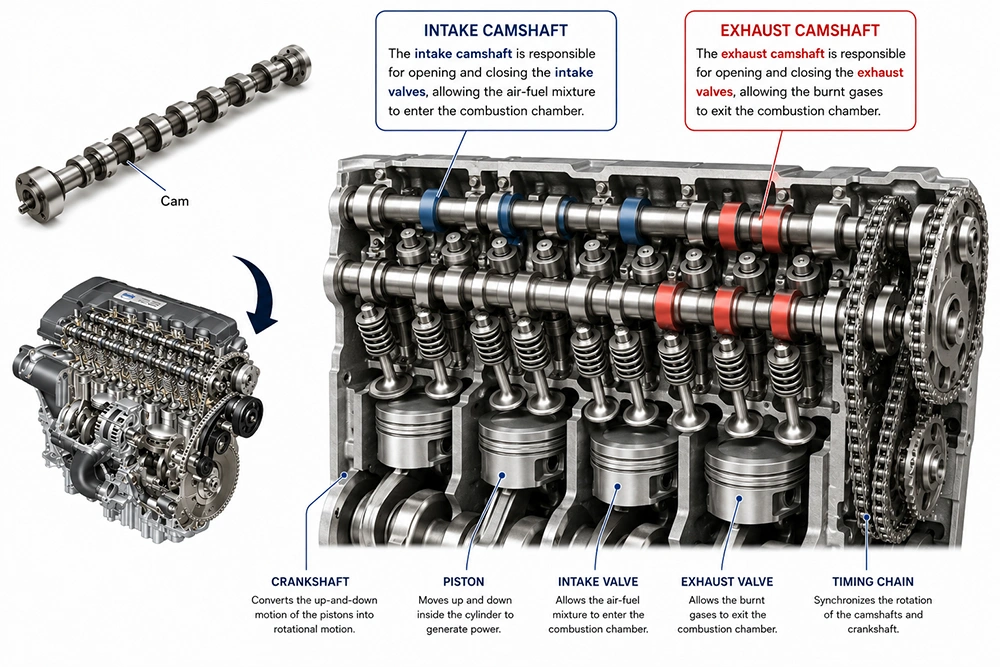
A camshaft controls the opening and closing of engine valves. Its lobe profile, position and timing relationship affect engine breathing, combustion stability, idle quality and engine response. A correctly matched camshaft helps maintain proper valve timing and supports reliable engine operation.
Depending on the engine design, a vehicle may use intake camshafts, exhaust camshafts or multiple camshafts. Some engines also use variable valve timing systems, which means camshaft matching may need to be reviewed together with camshaft phasers, timing gears, oil control valves and related timing components.
For sourcing teams, camshafts should be treated as application-specific precision components, not as general metal shafts. Even small differences in lobe position, journal size, timing-end structure or oil groove design can affect installation and operation.
Intake Camshaft vs Exhaust Camshaft
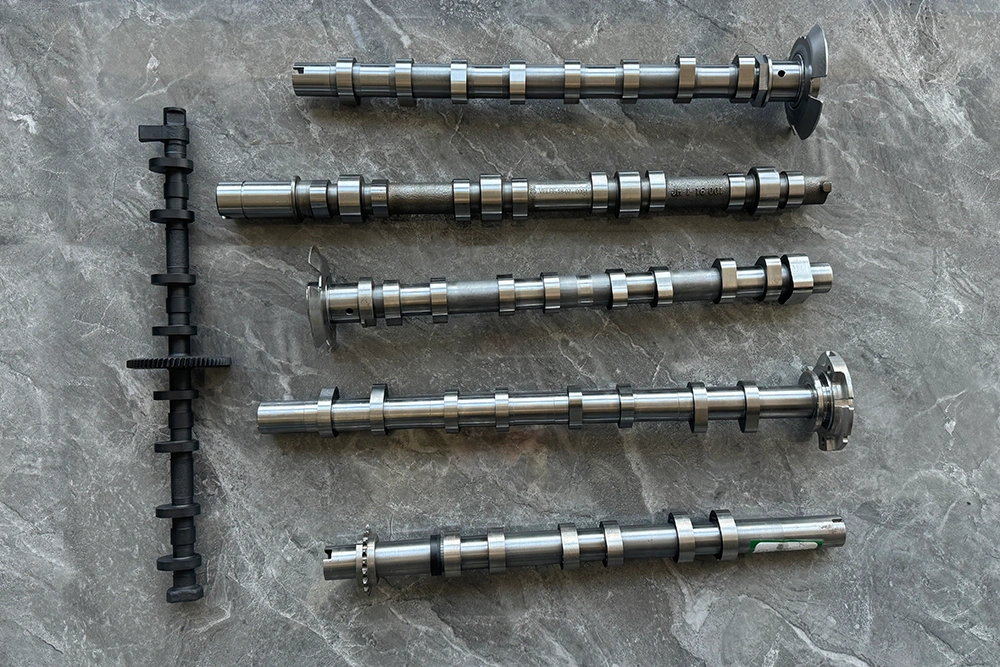
One of the most common sourcing mistakes is confusing intake and exhaust camshafts. These parts may look similar in photos, but they usually have different cam profiles, timing functions, installation positions and OE references.
Before placing an order, buyers should confirm:
- Intake or exhaust position
- Left or right bank, where applicable
- OE number or reference number
- Engine code
- Vehicle application
- Camshaft length and journal position
- Timing-end, gear-end or sensor-related structure
- Related VVT or timing component requirements
For B2B buyers, this confirmation reduces the risk of wrong stock, incorrect quotation and after-sales disputes. If the enquiry does not state intake or exhaust position, the supplier should request confirmation before quoting.
Why Engine Code Matters for Camshaft Matching
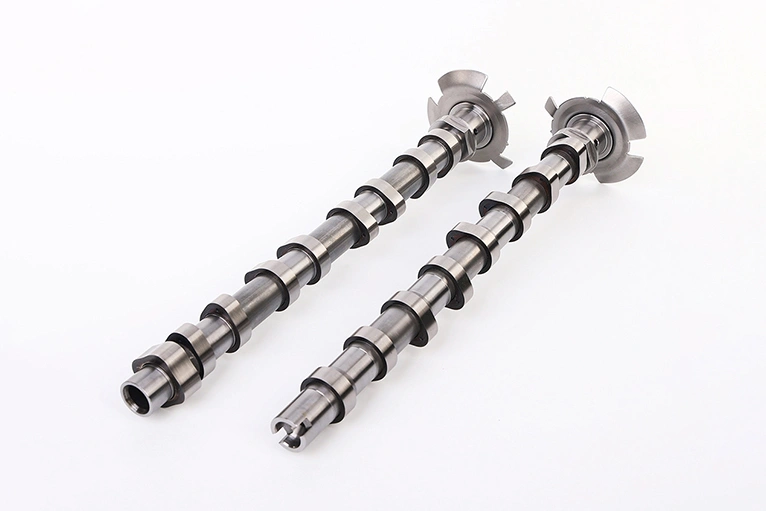
Vehicle brand and model alone are not enough for camshaft matching. The same vehicle model may use different engine versions across production years, regions or trim levels. An engine code helps narrow down the correct application and improves matching accuracy.
For example, two vehicles from the same brand may both use petrol engines, but the camshaft design may differ because of engine generation, valve train layout, VVT system design or market-specific configuration.
If the engine code is not available, clear photos of the old camshaft, package label, casting marks, related OE references and vehicle application information can help the supplier review the correct product more efficiently.
OE Number and Reference Number Confirmation
OE number matching is one of the most important steps in camshaft sourcing. It helps identify the intended replacement part and compare available options. However, buyers should not rely on OE number alone when several versions exist.
The safest confirmation method is to combine:
- OE number or aftermarket reference
- Engine code
- Intake or exhaust position
- Vehicle application
- Product photo or sample comparison
- Quantity and packaging requirement
This combined approach is especially important when buyers are sourcing for distributor stock, mixed product orders or private label programmes.
Material and Manufacturing Considerations
Camshafts require stable material selection and controlled manufacturing. Material quality, casting or forging stability, machining accuracy and surface condition all influence long-term reliability. For a detailed comparison of cast iron, billet steel, surface hardness, hardened depth and common heat-treatment methods, read the camshaft materials and heat treatment guide.
For distributors and importers, the issue is not only whether one sample looks acceptable. The supplier should be able to support consistent batch production for repeated orders. Batch consistency is important because aftermarket buyers often reorder the same reference over time.
When evaluating a supplier, buyers should ask whether the manufacturer can support controlled engine parts manufacturing, dimensional verification and practical production communication before batch supply.
Machining Accuracy and Surface Quality
Camshaft performance depends on accurate lobe profiles, journal dimensions, straightness, timing-end structure and surface finish. Poor machining can contribute to installation difficulty, abnormal wear, valve timing problems, noise or shortened service life.
Important points to review include:
- Cam lobe profile consistency
- Journal diameter accuracy
- Overall straightness
- Timing-end or gear-end structure
- Oil passage or groove design, where applicable
- Surface condition and visible defects
- Dimensional consistency between batches
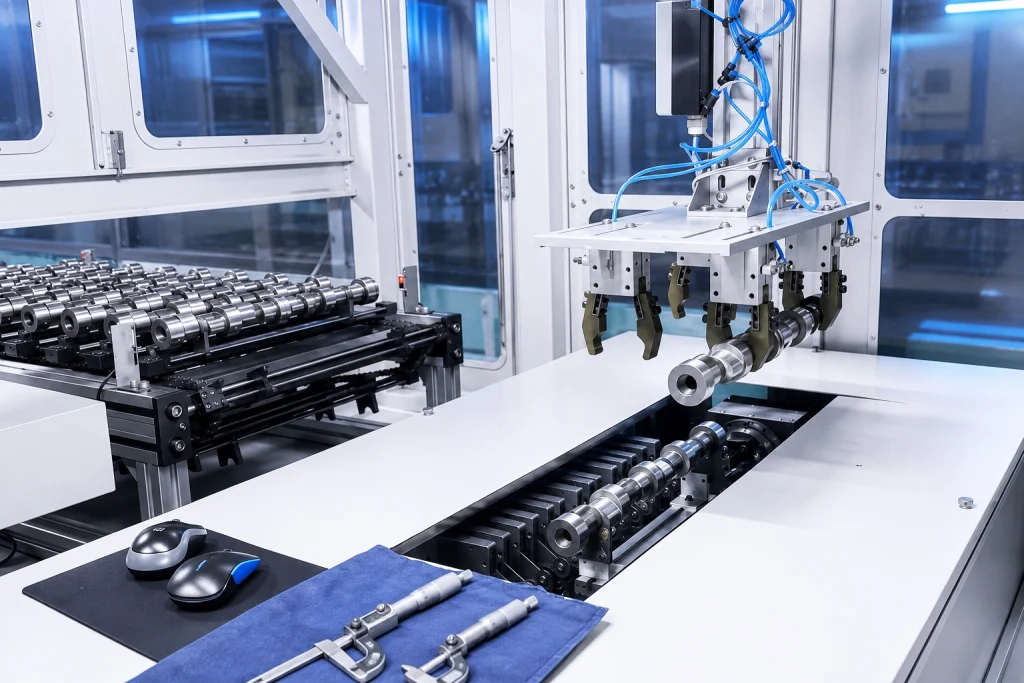
For high-volume B2B purchasing, buyers should not judge camshafts only by catalogue photos. Manufacturing and inspection communication should be part of the supplier evaluation process.
VVT-Related Camshaft Matching
Some camshafts work together with variable valve timing systems. In these applications, buyers may also need to confirm camshaft phasers, adjusters, timing gears, timing chains or oil control valves.
If the camshaft is used in a VVT-related engine, buyers should provide additional information such as intake/exhaust side, timing gear area photos, related OE references and any visible sensor or oil-control features. This helps reduce confusion between the camshaft, camshaft phaser and other timing components.
Camshaft Sourcing Checklist for Importers
| Check Point | Why It Matters | Information to Provide |
|---|---|---|
| OE number | Identifies the intended replacement reference | OE number, aftermarket number or local reference |
| Engine code | Confirms the correct engine platform | Engine code, engine family or vehicle application |
| Intake/exhaust position | Prevents wrong-side ordering | Intake, exhaust, left bank or right bank where applicable |
| Timing-end structure | Affects installation and timing compatibility | Clear photo of gear end or timing side |
| Quantity | Affects quotation and production planning | Sample quantity, trial order or batch quantity |
| Packaging | Important for distributors and private label buyers | Neutral packaging, private label or export carton requirement |
When Product Photos or Samples Are Needed
Product photos or physical samples are useful when the OE number is uncertain, the market uses local reference numbers, the camshaft is for a less common engine, the buyer needs private label supply or the part is being reviewed for a new development project.
Photos should show the full camshaft, gear or timing end, journals, lobes, oil groove areas and any visible marks. If a physical sample is sent, it should be clearly labelled with OE number, application, quantity expectation and buyer reference.
Common Camshaft Enquiry Mistakes
Sending Only the Vehicle Brand
A brand name such as BMW, Mercedes-Benz, VW or Ford is not enough. Buyers should include OE number, engine code and intake/exhaust position.
Not Confirming Intake or Exhaust Position
Many enquiries fail because the position is unclear. Intake and exhaust camshafts should be confirmed before quotation.
Using Low-Quality Photos
Blurred or single-angle photos may not show the timing end, lobe arrangement or visible reference marks. Multiple clear photos are more useful.
Ignoring Batch Consistency
Wholesale buyers should consider repeat supply stability, packaging consistency and inspection communication, not only one sample price.
Mixing Camshaft and Phaser Enquiries
In VVT engine applications, buyers sometimes confuse camshafts with camshaft phasers or adjusters. OE numbers and photos should be used to separate these components clearly.
What Buyers Should Ask a Camshaft Supplier
Before confirming a camshaft supplier, B2B buyers should ask practical questions:
- Can the supplier confirm OE number, engine code and intake/exhaust position before quotation?
- Can product photos or samples be reviewed when the application is uncertain?
- What dimensional checks are applied before shipment?
- How is batch consistency managed for repeat orders?
- Can the supplier support neutral packaging or private label requirements?
- Can the supplier support mixed product purchasing across related engine parts?
Wellgine Camshaft Supply Support
Wellgine supplies selected car camshafts for petrol and diesel engine applications, supporting OE replacement, aftermarket distribution, wholesale orders and OEM sourcing projects.
Current category support includes selected BMW camshafts, Mercedes-Benz camshafts, VW, Ford and JMC applications. Customers can send OE number, engine code, vehicle application, product photo or sample details for matching review.
Frequently Asked Questions
What information is needed for camshaft quotation?
Buyers should provide OE number, engine code, vehicle application, intake or exhaust position, product photo, quantity and packaging requirements.
Can intake and exhaust camshafts be interchangeable?
Usually no. Intake and exhaust camshafts often have different profiles, timing functions and OE references.
Why is engine code important for camshaft sourcing?
Engine code helps confirm the correct application because the same vehicle model may use different engine versions.
Does Wellgine support camshaft wholesale orders?
Yes. Wellgine supports selected camshaft supply for wholesale, aftermarket and OEM-oriented sourcing projects depending on product type and quantity.
Send Your Camshaft Requirement
Need support confirming a replacement camshaft? Send your OE number, engine code, intake/exhaust position, vehicle application and product photo for review.