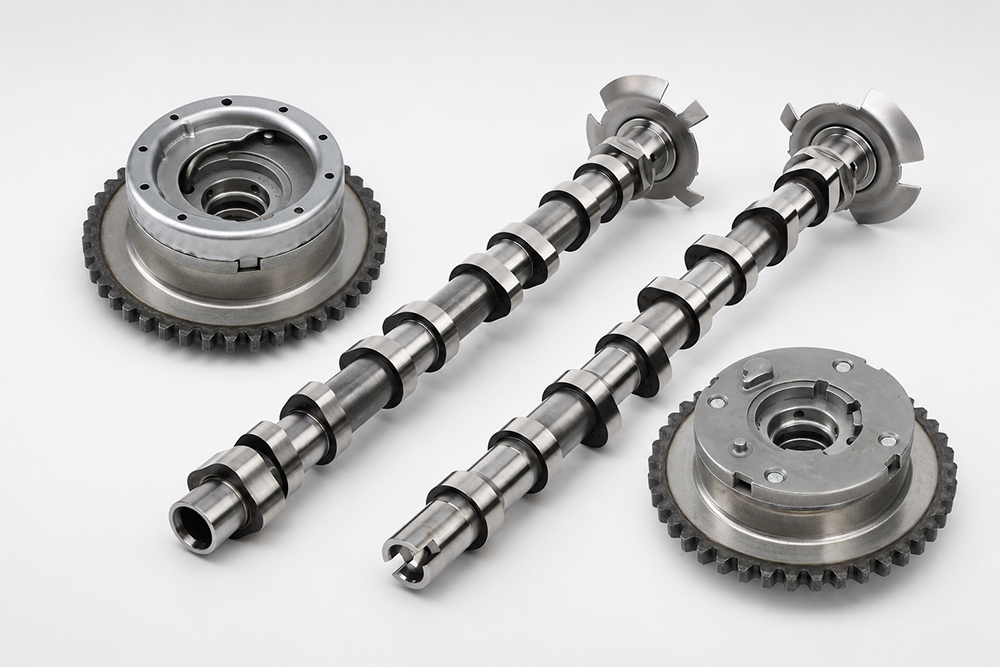
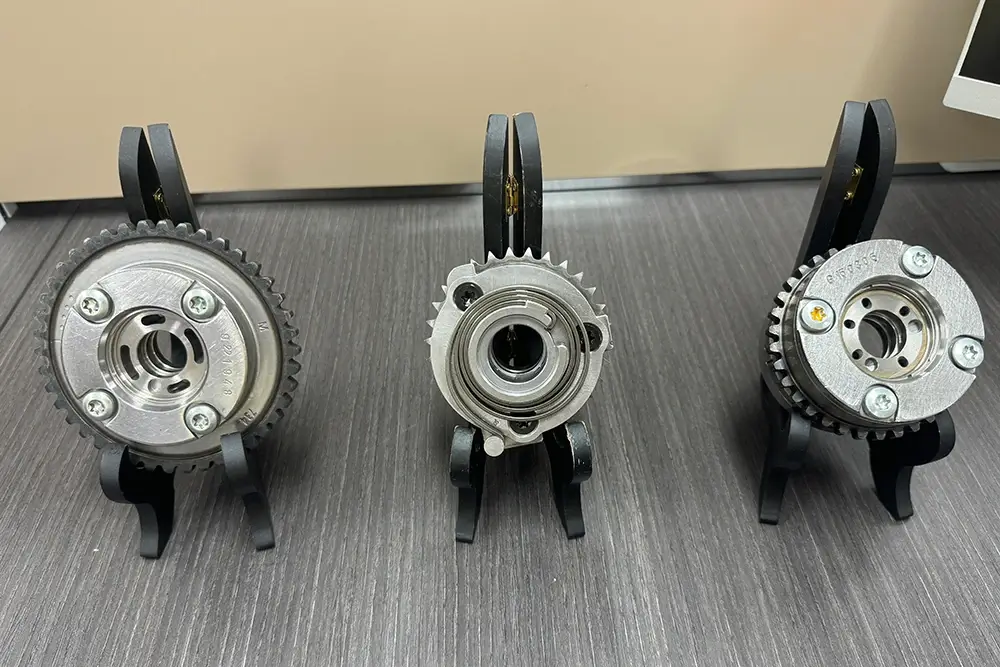
The BMW N20/N26 valve train combines conventional camshaft operation with Valvetronic variable intake-valve lift.
For parts buyers, the system can be confusing because the intake camshaft, eccentric shaft, Valvetronic servomotor and intermediate levers all influence intake-valve operation, yet none of them performs exactly the same function.
The easiest way to understand the system is to separate the components by role.
The intake camshaft provides the basic cam profile.
The intermediate lever transfers that cam movement towards the intake valve.
The eccentric shaft changes the lever geometry and therefore changes how much of the camshaft motion reaches the valve.
The Valvetronic servomotor rotates the eccentric shaft to the position requested by the engine-management system.
These components form one mechanical control chain, but they remain separate replacement and sourcing items.
How the N20/N26 Valvetronic System Fits Together
BMW’s N20 valve-gear layout places the intake camshaft, intermediate lever, eccentric shaft and Valvetronic servomotor in one variable-valve-lift mechanism. The N20 uses Valvetronic III, and BMW service information for N20/N26 engines treats the eccentric shaft, intermediate levers and intake camshaft as related valve-gear components.
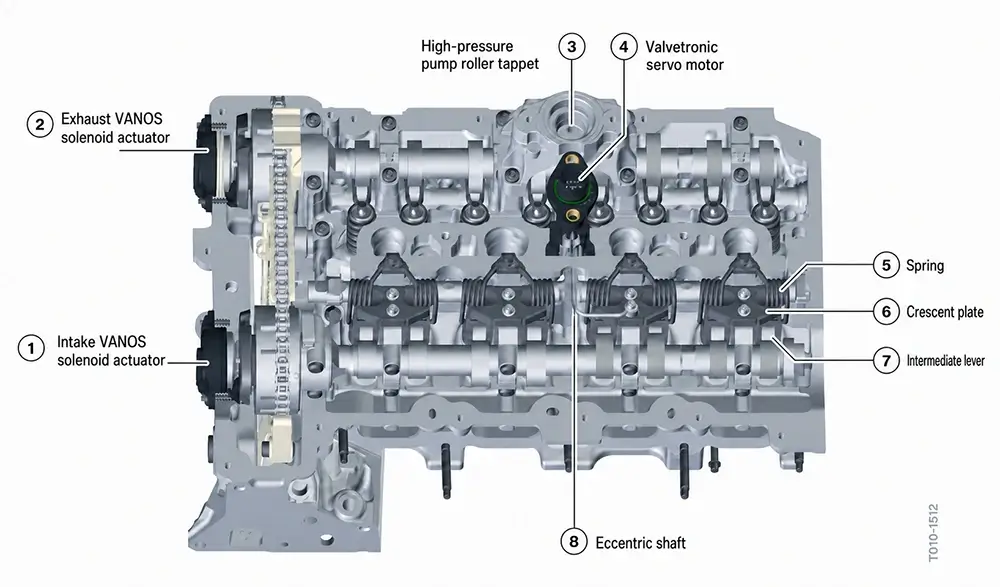
A simplified relationship is:
Valvetronic servomotor → eccentric shaft → intermediate lever geometry → intake camshaft motion → intake valve lift
At the same time, the camshaft continues to rotate mechanically with the engine.
The Valvetronic system therefore does not replace the camshaft. Instead, it changes how the intake camshaft’s existing lobe motion is transmitted to the intake valve.
That distinction is the key to understanding the entire system.
The Intake Camshaft Still Provides the Basic Valve Motion
The intake camshaft remains the component that carries the cam lobes.
As the camshaft rotates, each lobe acts through the intake-side valve gear. In a conventional fixed-lift system, the relationship between cam-lobe geometry and valve lift is largely fixed.
Valvetronic adds another controllable geometry between the intake camshaft and the valve.
The camshaft therefore determines the basic lobe profile, while the Valvetronic mechanism changes how much of that profile is transferred through the intermediate lever.
This means the intake camshaft and eccentric shaft should not be treated as equivalent components.
A camshaft problem concerns the rotating lobe-bearing shaft itself.
An eccentric-shaft problem concerns the variable-lift geometry used to modify the camshaft’s effect on the valve.
For supported replacement applications, buyers can review Wellgine’s BMW Camshafts range.
The Intermediate Lever Connects Camshaft Motion to Variable Valve Lift
The intermediate lever is the mechanical link that makes Valvetronic possible.
BMW N20 valve-gear diagrams place the intermediate lever between the intake camshaft and the intake roller follower. The eccentric shaft changes the position or effective geometry of this lever.
This creates a variable transmission ratio.
When the eccentric shaft moves, the contact relationship between the camshaft, intermediate lever and follower changes. The same rotating cam lobe can therefore produce a different amount of intake-valve lift.
The relationship can be understood as:
camshaft lobe → intermediate lever → roller follower → intake valve
with the eccentric shaft controlling the geometry of that transmission.
This is why the intermediate lever is not simply another rocker arm. Its position within the Valvetronic mechanism is directly affected by the eccentric shaft.
The Eccentric Shaft Controls the Lever Geometry
The eccentric shaft is the main mechanical adjustment element of the Valvetronic system.
Rather than opening the intake valves directly, it changes the position of the intermediate levers.
As the shaft rotates, its eccentric profiles alter the lever geometry. This changes how strongly the intake camshaft lobe acts through the intermediate lever towards the valve.
In simplified terms:
eccentric shaft position changes → intermediate-lever geometry changes → intake valve lift changes
The eccentric shaft therefore controls valve lift, not camshaft timing.
This distinction is particularly important because BMW also uses VANOS for variable camshaft timing.
Valvetronic and VANOS work in the same valve train, but they control different variables:
Valvetronic changes intake valve lift.
VANOS changes camshaft timing.
Confusing those two systems can lead to incorrect parts identification.
The Valvetronic Servomotor Positions the Eccentric Shaft
The eccentric shaft does not move itself.
BMW’s N20 technical documentation shows a Valvetronic servomotor mounted at the cylinder head. The motor drives the eccentric shaft through a worm-gear mechanism, and BMW notes that the eccentric-shaft position sensor is integrated into the servomotor on this system.
The control relationship is therefore:
DME command → Valvetronic servomotor → worm gear → eccentric shaft rotation
Once the eccentric shaft moves, the intermediate-lever geometry changes and the intake valve lift changes accordingly.
The servomotor is therefore an actuator.
The eccentric shaft is the mechanical adjustment shaft.
They work together, but they are not interchangeable and they should not be treated as one component during procurement.
Why the Worm-Gear Interface Matters
The servomotor must transmit controlled rotational movement to the eccentric shaft.
BMW’s N20 training material specifically identifies the servomotor gearing and notes that the worm gear used to adjust the eccentric shaft is lubricated by an oil spray nozzle.
This tells us something important about the mechanical relationship: the motor, drive gear and eccentric shaft form a loaded mechanical interface rather than an electrical actuator operating in isolation.
For parts identification, relevant areas can therefore include:
- servomotor mounting interface;
- motor drive geometry;
- eccentric-shaft gear condition;
- shaft support and bearing condition;
- related lubrication features.
However, this system guide does not apply a universal wear limit, backlash value or motor-current threshold. Those checks must come from the applicable BMW workshop procedure or a validated product-specific inspection standard.
Valvetronic and VANOS Control Different Things
One of the most useful distinctions on the N20/N26 platform is between variable lift and variable timing.
BMW uses both systems.
The Valvetronic system changes the effective lift of the intake valves.
Double VANOS changes the angular timing of the intake and exhaust camshafts.
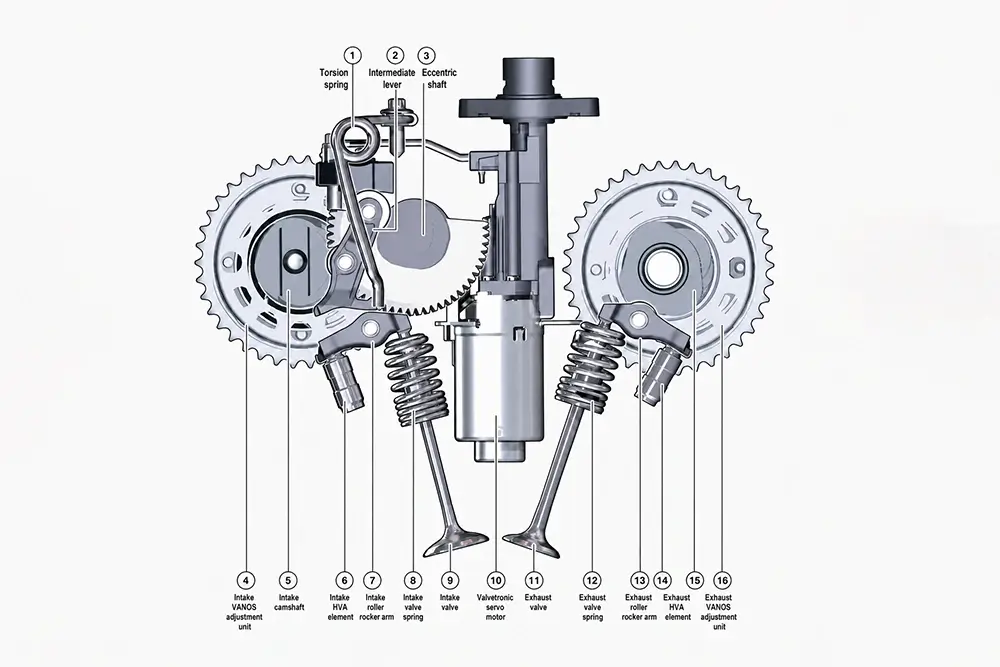
The two systems therefore act on different parts of valve operation:
| System | Main control variable | Main mechanical components |
|---|---|---|
| Valvetronic | Intake valve lift | Servomotor, eccentric shaft, intermediate lever, intake-side follower |
| VANOS | Camshaft timing | Intake/exhaust camshafts, VANOS adjusters and hydraulic control |
| Camshaft | Basic valve-motion profile | Intake or exhaust camshaft lobes |
This explains why a Valvetronic fault should not automatically be interpreted as a camshaft-timing fault, and a VANOS issue should not automatically be treated as an eccentric-shaft problem.
How the Intake Camshaft and Eccentric Shaft Work Together
The intake camshaft and eccentric shaft are both shaft-like components in the cylinder head, which is one reason they are sometimes confused in parts enquiries.
Their functions are different.
The intake camshaft rotates continuously with the engine and carries the valve-control lobes.
The eccentric shaft is positioned by the Valvetronic servomotor and changes the geometry of the intermediate levers.
The resulting relationship is:
camshaft provides motion
plus
eccentric shaft determines how that motion is transmitted
which produces:
variable intake-valve lift
This system-level view is more useful than identifying the eccentric shaft as simply another type of camshaft.
Position and Component Matching Matter During Repair or Sourcing
The Valvetronic mechanism contains several components that operate together mechanically.
BMW service information for N20/N26 engines warns that intermediate levers and related valve-gear parts need to remain correctly organised during service, and that mixing components can affect engine operation.
For parts buyers, the broader lesson is that component identity and position matter.
A complete application check can involve:
- engine platform;
- engine variant;
- OE reference;
- eccentric-shaft reference;
- servomotor reference;
- bearing or support components;
- intake-camshaft identity;
- physical structure;
- production information where applicable.
A visually similar Valvetronic component should not be assumed interchangeable simply because it belongs to a BMW four-cylinder engine.
11377630747 as an N20 Eccentric-Shaft Reference
Wellgine currently lists 11377630747 as an N20 Valvetronic eccentric-shaft reference.
Within this system guide, that product represents the eccentric-shaft component role rather than the entire Valvetronic system.
The exact OE query should continue to be handled by the product page.
The system guide instead answers a different question:
Where does the eccentric shaft sit in relation to the motor, intermediate levers and intake camshaft?
That distinction keeps the technical guide and product page from competing for the same search intent.
The N20 Valvetronic Kit Shows How the Components Are Sourced Together
Wellgine also lists a BMW N20 Valvetronic Eccentric Shaft Repair Kit containing a confirmed supply combination of:
- one eccentric shaft;
- one Valvetronic servomotor;
- four needle-bearing sets.
This is useful for understanding the difference between system relationship and commercial packing scope.
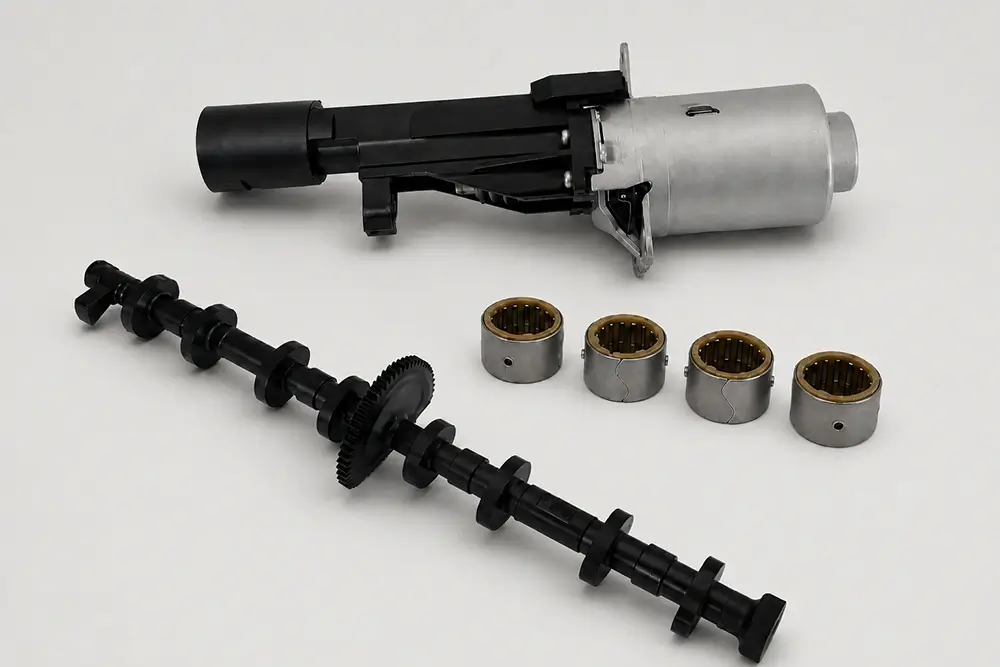
The system itself contains more components than the kit.
The kit contains the specific replacement parts listed in its approved packing configuration.
Buyers should therefore never assume that “Valvetronic kit” means every component shown in a valve-gear diagram.
For procurement, always confirm the supplied scope separately from the technical system layout.
A Valvetronic Fault Does Not Automatically Identify the Failed Part
Because several components work in series, a Valvetronic-related complaint should not automatically be assigned to the eccentric shaft or servomotor.
A system-level investigation may need to distinguish between:
- servomotor operation;
- eccentric-shaft movement;
- drive-gear condition;
- intermediate-lever condition;
- shaft bearing or support condition;
- intake-camshaft condition;
- mechanical binding;
- position feedback;
- wiring or control;
- installation or adjustment problems.
The exact diagnostic procedure depends on the engine and fault context.
This article therefore does not provide a universal motor-current value, eccentric-shaft travel angle, adaptation value or wear limit.
Those values should come from the relevant BMW diagnostic or workshop information.
The Eccentric Shaft Is Not the Intake Camshaft
For sourcing, this distinction is worth stating explicitly.
The eccentric shaft does not replace the intake camshaft.
The intake camshaft still carries the lobes that generate the base valve motion.
The eccentric shaft changes the transmission geometry of that motion through the intermediate lever.
A useful summary is:
Intake camshaft = creates cam motion
Intermediate lever = transfers cam motion
Eccentric shaft = varies the transmission geometry
Valvetronic servomotor = positions the eccentric shaft
Intake valve = receives the resulting variable lift
This relationship is the core of the N20/N26 Valvetronic system.
What Buyers Should Confirm Before Ordering N20/N26 Valvetronic Parts
Once the required component has been identified, application confirmation should come before quotation or replacement.
Useful information includes:
- OE reference from the original component or catalogue;
- N20 or N26 engine identification;
- engine variant;
- vehicle model;
- production information where relevant;
- VIN when required for catalogue confirmation;
- photograph of the original eccentric shaft or motor;
- motor connector and mounting details;
- eccentric-shaft drive-gear details;
- required bearing or support components;
- required quantity;
- whether the enquiry is for one component or a complete kit.
For broader BMW engine-parts sourcing, see Wellgine’s BMW Engine Parts page.
That commercial page should remain the primary destination for broad BMW engine-parts supplier intent, while this guide remains focused on N20/N26 Valvetronic system relationships.
The N20/N26 Valvetronic Relationship in One View
The system can be reduced to four connected mechanical jobs:
The intake camshaft provides the base valve-motion profile.
The intermediate lever transfers that motion towards the intake valve.
The eccentric shaft changes the lever geometry and therefore changes intake-valve lift.
The Valvetronic servomotor positions the eccentric shaft according to the engine-management command.
VANOS operates alongside this system to change camshaft timing, but it does not replace the Valvetronic variable-lift mechanism.
For distributors, engine rebuilders and parts procurement teams, understanding this relationship makes it easier to distinguish an eccentric shaft, servomotor, intake camshaft and complete Valvetronic repair kit before moving to exact OE matching.
Buyers can continue to the 11377630747 N20 eccentric shaft, the BMW N20 Valvetronic repair kit, Wellgine’s BMW Camshafts range or the broader BMW Engine Parts page.
Technical reference note: The system descriptions in this guide are based on BMW N20 technical-training material and N20/N26 workshop information reviewed during research. Component positions, repair procedures, adaptation values and diagnostic thresholds must be confirmed against the exact engine and applicable BMW service information. This guide does not apply one universal specification across every N20/N26 vehicle application.