A low oil-pressure warning does not always mean the oil pump itself has failed.
The engine oil pump depends on a reliable supply of oil from the sump. Before oil reaches the pump, it normally passes through an oil pickup tube and strainer or screen. If that inlet becomes restricted, cracked, loose or unable to remain submerged in oil, the pump may not receive enough oil to maintain the required lubrication flow.
This can create symptoms that look similar to oil pump failure.
For that reason, pickup-tube and strainer problems should be separated from actual oil-pump faults before replacement parts are ordered.
Oil Pickup Tube, Strainer and Oil Pump: What Is the Difference?
The three components have different jobs.
| Component | Main function | Typical failure area |
|---|---|---|
| Oil pickup tube | Carries oil from the sump to the oil-pump inlet | Cracks, damaged joints, loose mounting, sealing leaks |
| Pickup strainer / screen | Prevents larger debris from entering the pump | Sludge, debris or restriction |
| Oil pump | Draws and pressurises oil for the lubrication system | Rotor/gear wear, housing wear, drive fault, pressure-control fault |
A typical lubrication path is:
Oil sump → pickup screen → pickup tube → oil pump → filter → oil galleries → bearings and other lubricated components
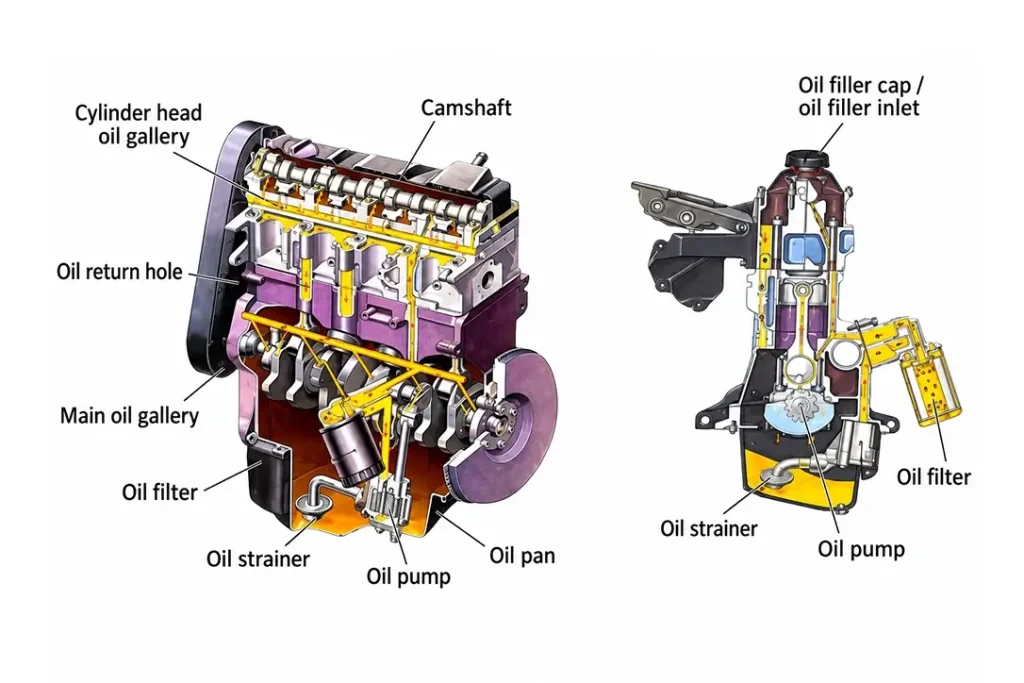
This means the pickup is on the suction side of the pump.
A healthy oil pump cannot maintain normal supply if the inlet path feeding it is restricted or leaking.
What Does an Oil Pump Pickup Tube Do?
The pickup tube normally extends into the engine oil sump and allows the oil pump to draw oil from the pan.
A strainer or screen at the inlet helps prevent larger debris from reaching the pump.
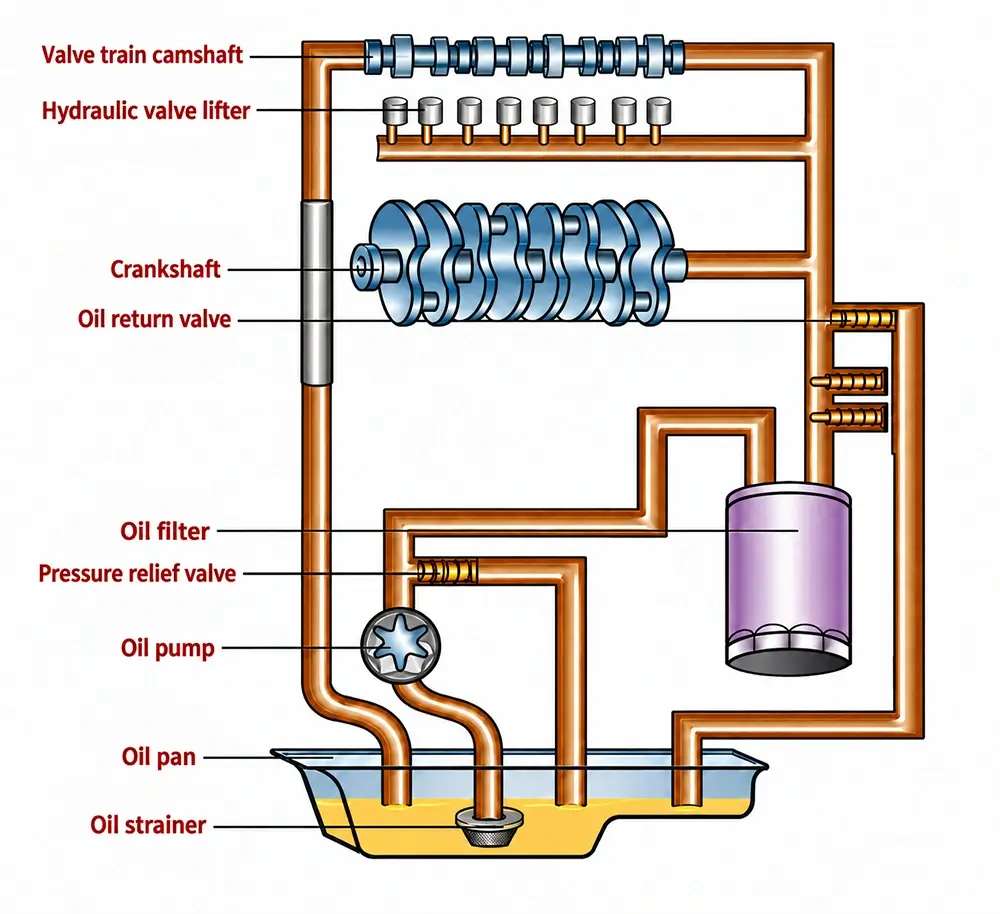
The pickup assembly must do three things reliably:
- remain immersed in oil under expected operating conditions;
- provide an unrestricted flow path;
- remain sealed between the pickup and the pump inlet.
If any of these conditions are lost, pump inlet supply can become unstable.
Common Oil Pump Pickup Tube Symptoms
A pickup-related fault can produce several symptoms, but none of them confirms the pickup tube by itself.
Typical warning signs may include:
- low oil-pressure warning;
- low measured oil pressure;
- delayed pressure build-up after start-up;
- pressure that becomes unstable under acceleration or cornering;
- ticking or knocking associated with poor lubrication;
- pressure changes that vary with oil temperature or engine speed;
- evidence of sludge or debris in the sump.
These symptoms overlap with oil-pump wear, excessive bearing clearance, oil-viscosity problems and pressure-sensor faults.
Diagnosis is therefore required before a part is selected.
Clogged Oil Pickup Strainer Symptoms
A clogged or restricted pickup strainer limits how much oil can enter the pump.
Common causes include:
- sludge;
- carbon deposits;
- gasket or sealant debris;
- metallic particles;
- contamination left after internal engine damage.
A restricted screen may allow enough flow in one operating condition but not another.
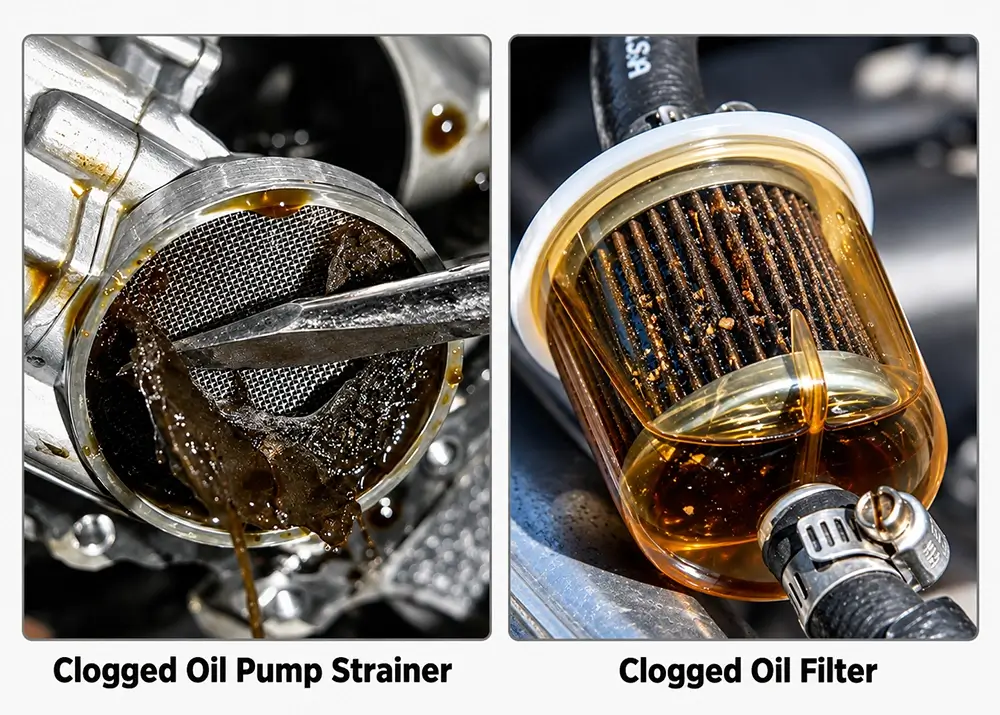
For example, a partially blocked pickup may become more noticeable when:
- oil is cold and more viscous;
- engine demand increases;
- pump speed rises but inlet supply remains restricted.
A service-manual diagnosis of low oil pressure may therefore include both a worn oil pump and a loose or plugged pickup screen as separate causes.
What Happens if the Pickup Tube Is Cracked?
A cracked pickup tube can interfere with the pump’s inlet supply.
The effect depends on the position and severity of the damage.
If the crack is located above the oil level, the pump may draw air through the damaged area instead of receiving a solid oil supply.
Possible results can include:
- unstable oil-pressure readings;
- delayed pressure build-up;
- pressure loss under specific conditions;
- aerated oil supply;
- lubrication noise.
Service information specifically lists a hole in the oil pickup tube as a possible cause of low oil pressure.
Pickup Tube Seal or O-Ring Leakage
Some engines use a seal or O-ring where the pickup tube joins the pump or another inlet passage.
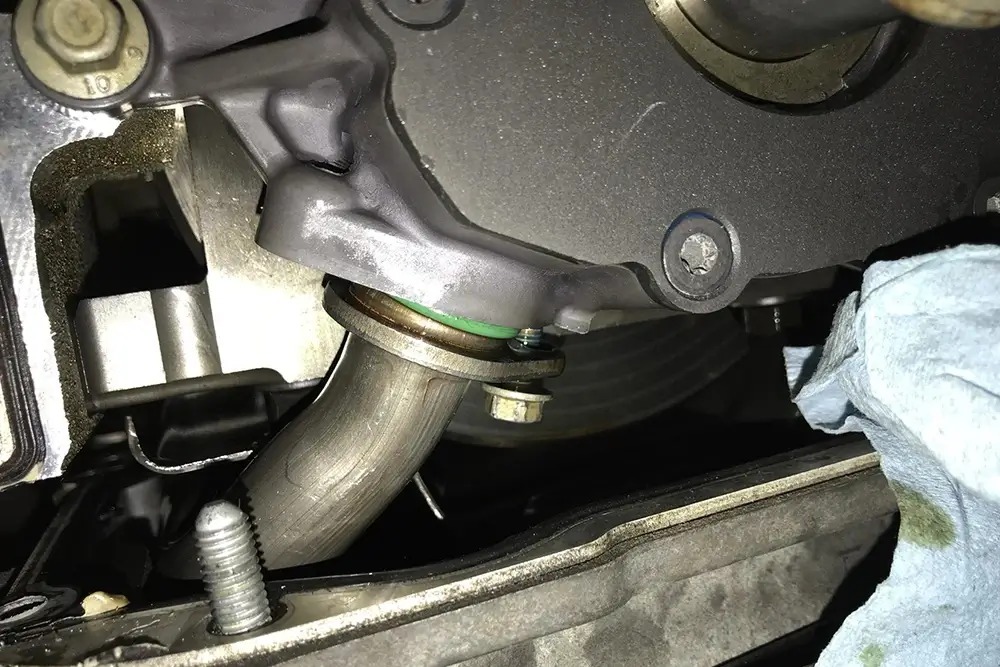
If this seal loses its ability to maintain a tight suction-side connection, the system may draw air into the inlet.
That can create a problem even if the pickup tube itself is not visibly blocked.
This is different from an external oil leak.
A suction-side leak may occur inside the lubrication system, so there may be no obvious oil dripping outside the engine.
Depending on engine design, the symptoms may be more noticeable:
- at cold start;
- at hot idle;
- after extended storage;
- when oil level changes;
- under certain engine angles or acceleration conditions.
Application-specific diagnosis is necessary because pickup sealing arrangements vary considerably.
Why a Pickup Restriction Can Look Like Oil Pump Failure
Both faults can reduce oil pressure.
But the mechanism is different.
Pickup Restriction
The pump cannot receive enough oil.
Oil Pump Failure
The pump receives oil but cannot move or pressurise it correctly.
That distinction matters.
If the actual problem is a blocked pickup screen and only the pump is replaced, the new pump may still be starved of oil.
Likewise, if the pickup system is clean and sealed but the pump has excessive internal clearance or a damaged drive, replacing the pickup tube will not solve the pressure problem.
Oil Pump Pickup Tube vs Oil Pump Failure
| Diagnostic point | Pickup tube / strainer fault | Oil pump fault |
|---|---|---|
| Inlet flow restriction | Strong possibility | Not necessarily |
| Sludge on pickup screen | Relevant | May damage pump secondarily |
| Crack or suction leak | Relevant | Normally outside pump internals |
| Pump rotor / gear wear | No | Relevant |
| Pump housing wear | No | Relevant |
| Pressure-control valve fault | Usually not pickup-related | May be pump-related |
| Low measured oil pressure | Possible | Possible |
| Mechanical inspection required | Yes | Yes |
The pressure symptom alone cannot distinguish the two.
Can a Blocked Pickup Cause Low Oil Pressure at Idle?
Yes, but the pattern is not unique to pickup restriction.
Low pressure at hot idle can also result from:
- unsuitable oil viscosity;
- increased bearing clearance;
- oil-pump wear;
- pressure-control leakage;
- incorrect electronic pressure indication.
That is why a pickup blockage should not be diagnosed from idle pressure alone.
For a more detailed pressure-pattern explanation, see Low Oil Pressure at Idle vs Under Load.
Can Pickup Problems Cause Pressure Loss Under Acceleration or Cornering?
Yes, under some conditions.
The pickup inlet must remain submerged in engine oil.
If oil level is too low, sump control is poor or the pickup position is compromised, movement of oil inside the sump can temporarily reduce inlet supply.
This is sometimes described as oil starvation.
Possible conditions include:
- hard acceleration;
- braking;
- cornering;
- steep vehicle angle;
- low oil level.
However, an intermittent pressure drop under these conditions should not automatically be blamed on the pickup tube itself.
The oil level, sump design, baffles, pickup position and engine-specific lubrication system all need to be considered.
Why Sludge on the Pickup Screen Matters
The pickup screen can become a collection point for contamination in the sump.
Examples include:
- degraded oil deposits;
- sludge;
- old gasket material;
- sealant fragments;
- metallic debris.
However, contamination itself should trigger a wider question:
Where did the debris come from?
If metallic material is present, the engine may already have internal wear.
Installing a new pickup or pump without addressing the source of contamination can result in repeat failure.
How to Diagnose a Pickup Tube or Strainer Problem
1. Verify the Oil Level and Oil Condition
Before removing parts, check:
- oil level;
- specified viscosity;
- visible contamination;
- signs of fuel or coolant dilution;
- maintenance history.
A low oil level can create pickup starvation without a defective pickup tube.
2. Verify Actual Oil Pressure
A dashboard warning or electronic gauge should not be treated as sufficient proof.
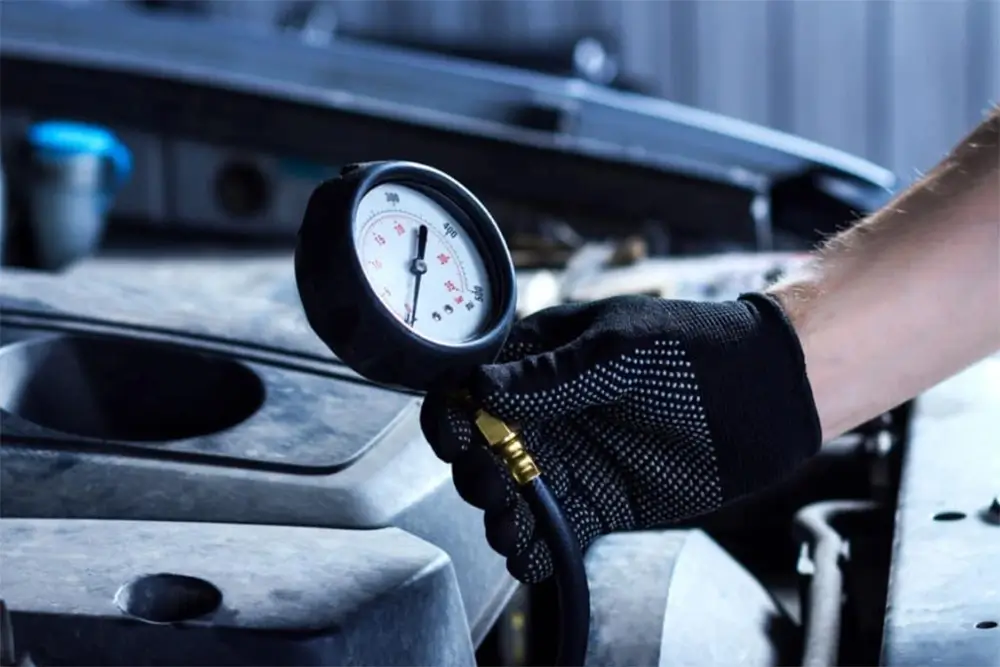
Use the engine manufacturer’s specified test procedure and compare actual pressure with the correct specification.
Mechanical oil-pressure testing helps separate:
- true hydraulic pressure loss;
- pressure-sensor faults;
- gauge or wiring problems.
3. Record Pressure by Operating Condition
Record:
- oil temperature;
- engine RPM;
- pressure reading;
- cold-start behaviour;
- hot-idle behaviour;
- higher-RPM pressure.
A pressure pattern can narrow the diagnosis, but it still does not identify one component by itself.
4. Inspect the Oil and Filter for Contamination
Metal debris or sludge can provide evidence of a wider lubrication problem.
Where appropriate, inspect:
- drained oil;
- oil filter material;
- sump contents.
5. Inspect the Pickup Tube and Screen
If diagnosis points towards inlet restriction or suction leakage, physical inspection may require oil-pan removal.
Check:
- screen blockage;
- sludge;
- tube cracks;
- damaged joints;
- loose fasteners;
- damaged seals or O-rings;
- tube-to-pump alignment;
- pickup position relative to the sump.
6. Inspect the Oil Pump if Necessary
If pickup supply is confirmed good but pressure remains below specification, inspect the pump itself.
Possible checks include:
- rotor or gear wear;
- pump housing clearance;
- drive condition;
- pressure-control valve movement;
- internal scoring;
- contamination.
What Not to Do: Do Not Order from Symptoms Alone
A low oil-pressure warning cannot reliably tell you whether the customer needs:
- an oil pump;
- pickup tube;
- pickup screen;
- pickup O-ring;
- oil-pressure sensor;
- bearings;
- another lubrication-system component.
This is especially important for B2B sourcing.
Symptoms identify a diagnostic direction.
They do not identify the correct replacement reference.
How B2B Buyers Should Confirm an Oil Pickup or Oil Pump
Before quotation, buyers should provide as much of the following as possible:
- OE number;
- engine code;
- vehicle make and model;
- production year and market;
- original pump photographs;
- pickup tube photographs;
- screen shape;
- mounting points;
- flange or O-ring interface;
- tube bend and length;
- pump inlet position;
- required quantity.
If the pickup is supplied with the oil pump as an assembly on a specific application, confirm the full supplied scope before ordering.
Some products may include:
- pump only;
- pump with housing;
- pump with pickup tube;
- pump with screen;
- pump with control valve;
- pump as part of a larger engine assembly.
The assembly scope should not be assumed from appearance.
Oil Pickup Tube and Oil Pump Matching Checklist
| Matching item | What to confirm |
|---|---|
| OE reference | Original and superseding numbers |
| Engine code | Exact engine family and generation |
| Pickup geometry | Length, bends and inlet position |
| Screen | Shape, mesh design and housing |
| Mounting | Bolt points and flange shape |
| Seal interface | O-ring, gasket or direct joint |
| Pump connection | Inlet type and alignment |
| Assembly scope | Pump only or pump + pickup |
| Product photos | Multiple angles |
| Quantity | Sample or batch requirement |
When the Pickup Is Not the Problem
A clean pickup screen and intact pickup tube do not prove the lubrication system is healthy.
Low oil pressure can still result from:
- worn oil pump;
- stuck pressure-control valve;
- excessive bearing clearance;
- incorrect oil viscosity;
- plugged filter;
- internal oil-gallery leakage;
- faulty sensor or gauge.
OEM service information routinely lists these possibilities together, which is why proper diagnosis must consider the complete lubrication system rather than one component.
For a broader symptom overview, see Oil Pump Failure Symptoms: How to Diagnose Before Replacement.
Frequently Asked Questions
What Are the Symptoms of a Bad Oil Pump Pickup Tube?
Possible symptoms include low oil pressure, delayed pressure build-up, lubrication-related noise and unstable pressure under some operating conditions. These symptoms are not specific to the pickup tube and require diagnosis.
Can a Clogged Oil Pickup Screen Cause Low Oil Pressure?
Yes. A blocked or restricted screen can reduce the amount of oil reaching the pump inlet.
Can a Bad Pickup Tube Damage the Oil Pump?
Potentially. If the pump repeatedly operates with inadequate oil supply or aerated oil, wider lubrication-system damage may occur. The exact failure sequence depends on the engine and fault condition.
Can an Oil Pickup Tube Leak Without Leaking Oil Externally?
Yes. A suction-side leak at a tube, joint or seal may draw air into the pump inlet without creating an obvious external leak.
Can a Pickup Tube Problem Look Like a Bad Oil Pump?
Yes. Both can produce low oil pressure. Mechanical pressure testing and inspection of the pickup, pump and wider lubrication system are required to distinguish the cause.
Does Sludge on the Pickup Screen Mean the Oil Pump Must Be Replaced?
Not automatically. The source and extent of contamination need to be assessed. The pump should be inspected if contamination may have entered or damaged it.
Should the Pickup Tube Be Replaced with the Oil Pump?
That depends on the engine design, part condition and supplied assembly. It should not be assumed. Confirm OE information and inspect the pickup and sealing interfaces.
Oil Pump and Pickup Sourcing
For engine oil pump or pickup-related sourcing enquiries, send Wellgine:
- OE reference;
- engine code;
- application;
- original pump and pickup photographs;
- mounting and connection details;
- required quantity.
Wellgine can review selected engine oil pump enquiries for OE-reference matching and B2B sourcing.