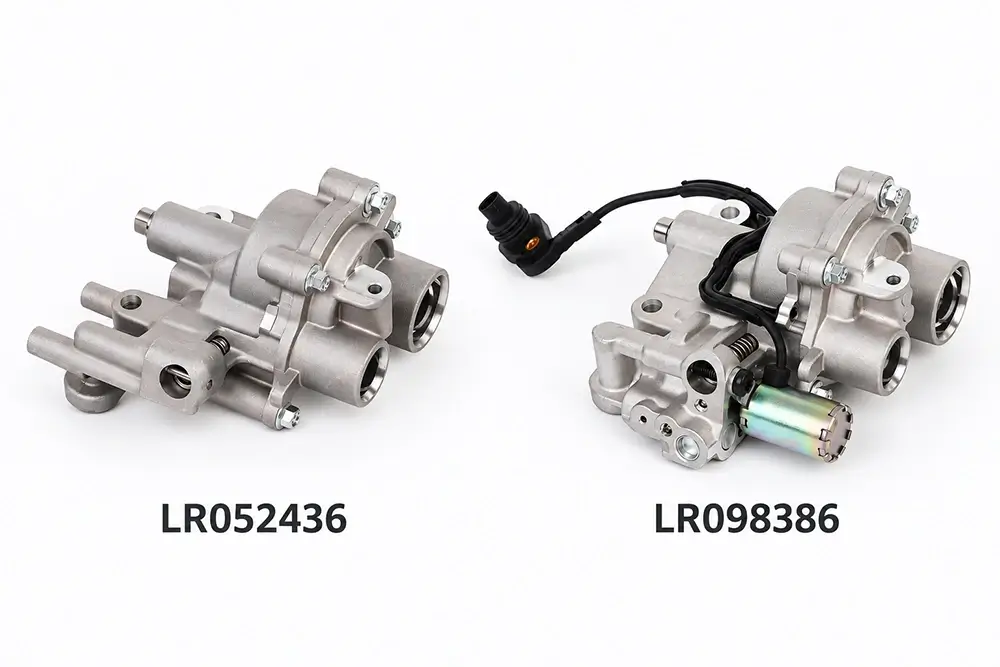
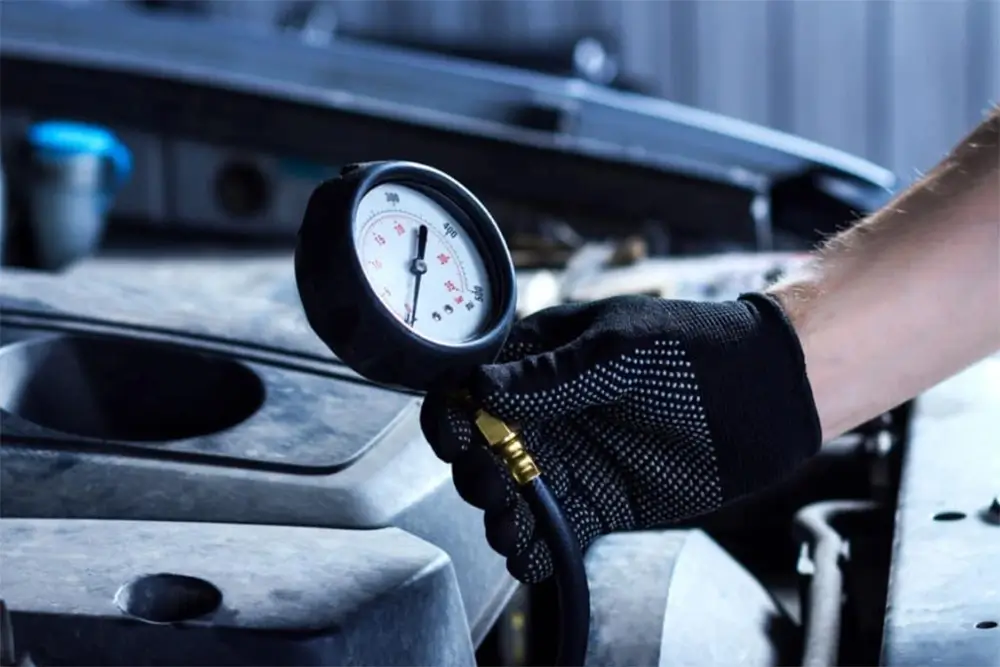
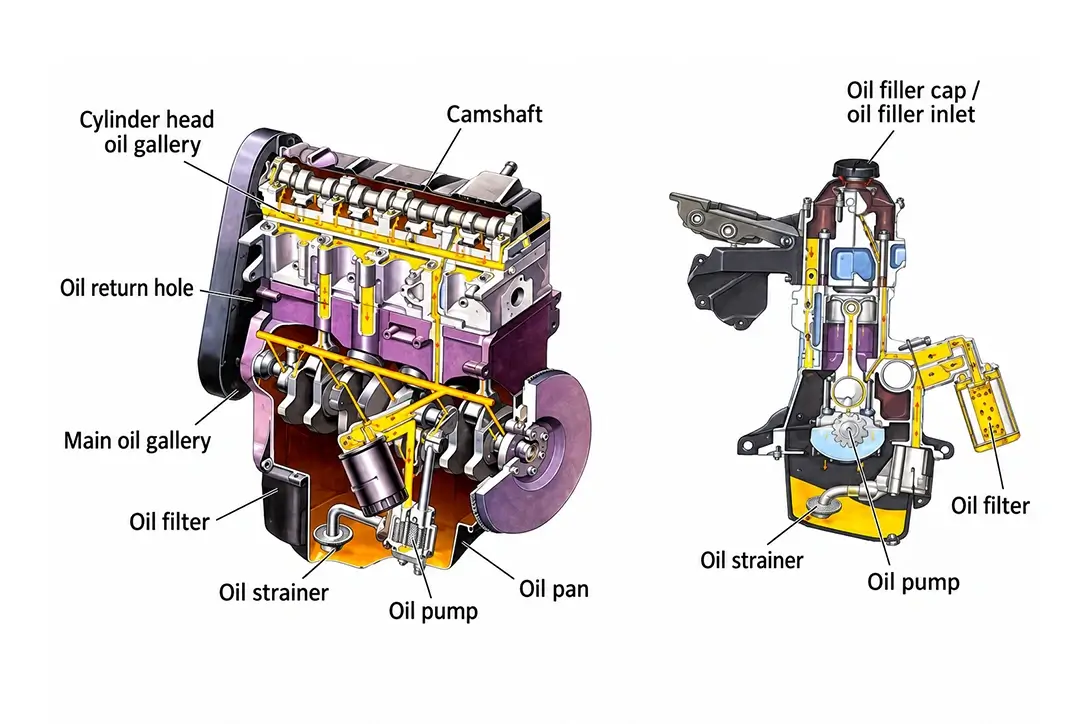
Electric water pumps can fail electrically, mechanically or hydraulically, but an overheating engine does not by itself prove that the pump is defective. A useful diagnosis separates the command and electrical supply to the pump from the actual coolant circulation it produces, while also checking the thermostat, cooling fan, coolant level, air in the circuit and other components that can create similar symptoms.
For workshops, distributors and replacement-parts buyers, this distinction matters. Replacing a pump without confirming the failure mode can leave the original cooling problem unresolved.
Electric Water Pump Failure Symptoms at a Glance
The most common signs of a possible electric water pump problem are rising coolant temperature, intermittent overheating, weak cabin heating, unusual cooling-fan operation, pump-related fault codes and a pump that does not respond when commanded.
However, none of these symptoms confirms pump failure by itself. A thermostat fault, low coolant level, trapped air, restricted radiator flow, damaged wiring, an incorrect temperature signal or a cooling-fan problem can produce similar results.
The first diagnostic objective is therefore to compare the visible symptom with the pump command, electrical supply and actual coolant circulation.
| Symptom or observation | Possible pump-related explanation | Other causes that must still be checked |
|---|---|---|
| Engine temperature rises above normal | Pump is not operating or coolant flow is insufficient | Low coolant, thermostat, radiator restriction, cooling fan or air lock |
| Overheating occurs intermittently | Electrical connection, internal pump control or pump operation is intermittent | Sensor signal, wiring, thermostat or changing operating conditions |
| Cabin heating becomes weak or inconsistent | Coolant is not circulating correctly through the relevant circuit | Air in the circuit, heater-core restriction, control valve or low coolant |
| Pump does not respond during an actuator test | Internal electrical or mechanical pump fault | Power supply, ground, fuse, connector, wiring or communication signal |
| Pump can be heard but temperature continues to rise | Motor operates but actual coolant flow is inadequate | Damaged impeller, trapped air, restriction, thermostat or incorrect installation |
| Pump or cooling-system fault code is stored | The control system has detected abnormal pump operation or temperature behaviour | Wiring, connector, control module, sensor signal or another cooling-system fault |
What Are the Main Symptoms of an Electric Water Pump Failure?
Symptoms vary by vehicle and by whether the electric pump is the main engine coolant pump or an auxiliary pump. Common warning signs can include:
- engine coolant temperature rising above its expected range;
- intermittent rather than continuous overheating;
- a temperature or cooling-system warning;
- reduced or inconsistent cabin heating where the affected circuit supplies the heater;
- unusually frequent or high-speed radiator-fan operation;
- stored coolant-pump, temperature-management or communication faults;
- little or no observable coolant circulation when the pump is commanded to operate;
- abnormal humming, grinding or other noise from the pump area;
- a pump that fails to respond during an actuator or output test.
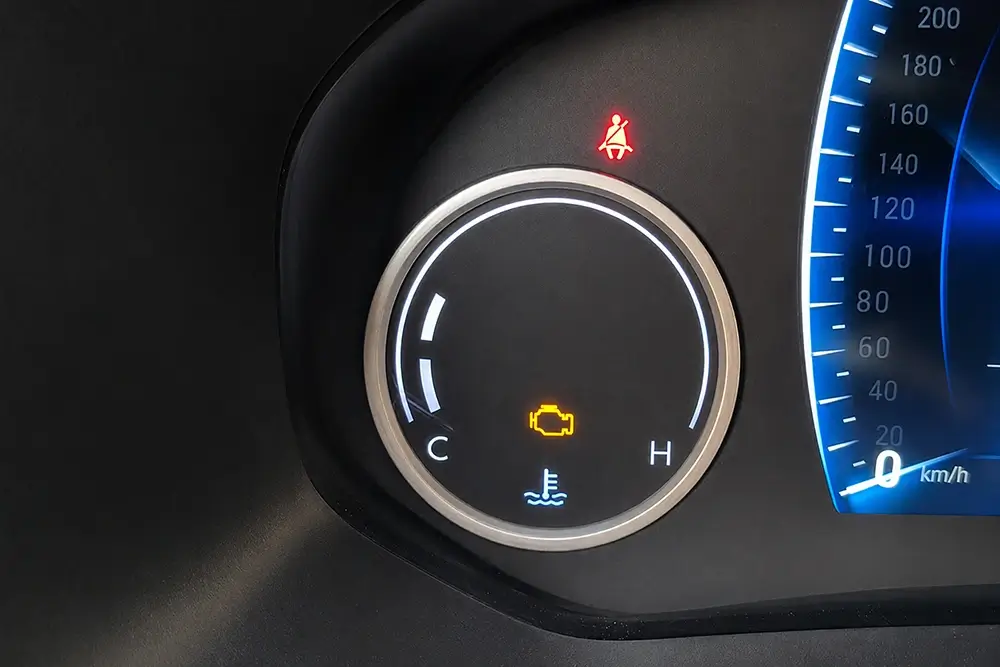
None of these symptoms should be treated as a stand-alone confirmation.
A thermostat that does not open correctly, a low coolant level, an air pocket, restricted radiator flow, a fan-control problem or an incorrect temperature signal can also produce overheating or abnormal thermal behaviour. Cooling-system diagnosis therefore needs to test the complete circuit rather than assume that the electric pump is the cause.
Will a Bad Electric Water Pump Throw a Code?
A failing electric water pump may store a pump-control, communication or cooling-system fault code, but a pump-specific code is not guaranteed in every failure mode.
An electrical or communication failure is more likely to be detected directly when the control system can monitor the pump command and response. A mechanical or hydraulic problem may be less direct. For example, the pump motor may operate while a damaged impeller, trapped air or a restricted coolant path prevents adequate circulation. In that situation, the vehicle may record an overheating or coolant-temperature fault rather than a code that conclusively identifies the pump.
A fault code should therefore be treated as diagnostic evidence rather than automatic proof that the pump must be replaced. The code definition, commanded pump operation, electrical supply, wiring condition and actual coolant circulation should be checked together.
Why Electric Pump Faults Need a Different Diagnostic Approach
A conventional mechanically driven water pump is directly linked to engine operation through its drive system. An electrically driven coolant pump has an additional diagnostic layer: the pump needs an electrical supply and a control strategy as well as a mechanically and hydraulically functional pumping element.
Electric coolant pumps can also operate independently of engine speed and can be controlled according to the cooling demand of the vehicle.
That means a technician may need to answer three separate questions:
- Is the control system requesting pump operation?
- Is the pump receiving the electrical conditions required to respond?
- When it operates, is it actually circulating coolant through the intended circuit?
A failure in any one of these areas can produce a similar temperature complaint.
For a broader explanation of the difference between pump architectures and cooling-circuit roles, see Mechanical vs Electric Water Pumps: Main, Auxiliary and Replacement Differences.
1. Check the Cooling-System Complaint Before Condemning the Pump
Start with the actual symptom.
Record when the temperature problem occurs:
- immediately after starting;
- during idle or low-speed operation;
- under sustained engine load;
- only after the engine has warmed fully;
- after a previous cooling-system repair;
- intermittently;
- or only in a particular thermal-management mode.
The timing helps define what should be tested next.
For example, insufficient cooling at idle does not automatically identify the water pump. Radiator-fan operation, thermostat behaviour, radiator airflow and the plausibility of the coolant-temperature signal are also relevant diagnostic checks.
Before electrical testing, inspect the basic cooling-system condition:
- coolant level;
- visible leaks;
- damaged hoses or connectors;
- signs that the system has recently been opened;
- obvious contamination;
- loose electrical connections;
- and physical damage around the pump.
Never open a hot, pressurised cooling system. Follow the vehicle manufacturer’s specified cooling, filling and bleeding procedure.
2. Scan the Vehicle Before Disconnecting Components
Where the vehicle provides electronic pump monitoring, diagnostic scanning should normally come before parts replacement.
Record:
- stored and pending diagnostic trouble codes;
- coolant-temperature data;
- pump command or requested operation, where available;
- reported pump speed or status, where supported;
- control-module communication faults;
- and related fan, thermostat or thermal-management faults.
The important point is not simply whether a code is present.
A coolant-temperature or over-temperature fault describes the result seen by the control system. It does not automatically identify the failed component.
Likewise, a communication or electrical code may point towards the pump circuit, connector, wiring, power supply or control network rather than proving internal pump failure.
Use the diagnostic trouble code defined for the exact vehicle and control system. Do not apply a fault-code list from another make, engine or pump design.
3. Confirm That the Pump Is Being Commanded
Many electronically controlled cooling systems provide an actuator, output or service test that can request pump operation without relying solely on normal driving conditions.
If the manufacturer provides such a test, compare:
- the requested pump state;
- the actual reported response, if available;
- audible or physical pump operation;
- temperature behaviour;
- and evidence of coolant circulation.
Command present, pump does not operate
Possible areas to investigate include:
- power supply;
- ground;
- fuse or protection circuit;
- connector condition;
- wiring;
- control or communication signal;
- and an internal pump fault.
No command is being issued
The pump itself should not immediately be blamed.
The diagnostic path may instead involve:
- sensor inputs;
- control logic;
- wiring or communication;
- vehicle operating conditions;
- or another fault preventing normal pump activation.
Vehicle-specific service information remains the authority for test conditions and expected values.
4. Check Power, Ground and Electrical Integrity
An electric pump that is not operating needs a circuit check before replacement.
Depending on the system design, diagnosis may include inspection of:
- supply voltage under the specified test condition;
- ground integrity;
- connector terminal condition;
- corrosion or coolant contamination;
- damaged or stretched wiring;
- fuse and circuit protection;
- excessive resistance;
- control or communication wiring;
- and voltage drop while the circuit is loaded.
A simple static voltage reading may not tell the whole story.
A circuit may show voltage with little load but fail when the pump is commanded. For that reason, use the electrical procedure and acceptable limits specified by the vehicle manufacturer.
Do not apply one universal resistance, current or voltage specification to all electric coolant pumps. Pump architecture and control methods differ between applications.
5. Confirm Coolant Circulation — Not Just Motor Noise
Hearing an electric motor run confirms activity, but it does not necessarily confirm adequate coolant flow.
A pump may be electrically active while coolant circulation remains inadequate because of:
- an internal mechanical fault;
- an impeller problem;
- restriction elsewhere in the circuit;
- trapped air;
- incorrect coolant level;
- an improperly operating valve or thermostat;
- or an incorrect installation or hose connection.
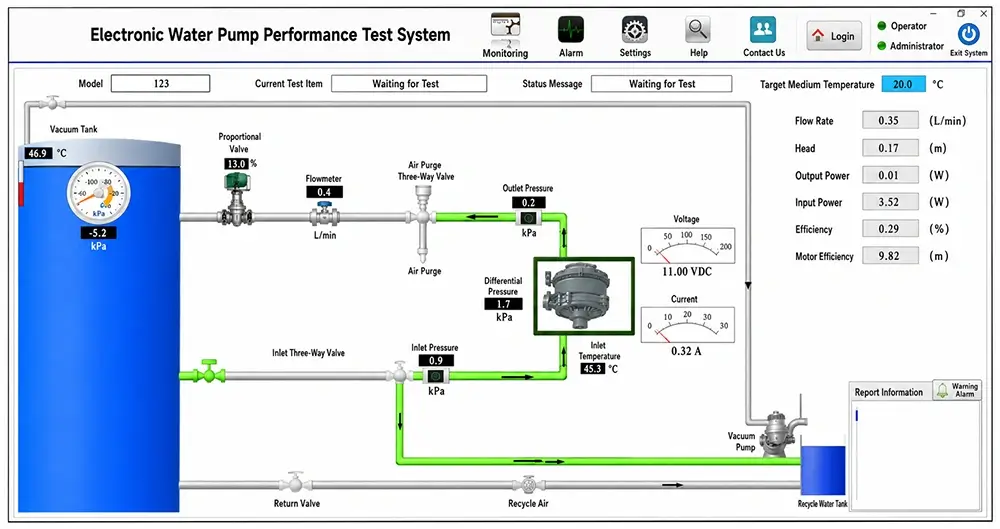
Coolant-flow diagnosis therefore requires the technician to compare pump operation with actual thermal behaviour in the relevant circuit.
Depending on the OEM procedure, useful observations may include:
- temperature changes through the intended coolant path;
- heater performance;
- radiator inlet and outlet behaviour;
- return flow at the designated observation point;
- scan-tool temperature data;
- and the response when the pump is commanded at different operating states.
These checks must follow the manufacturer procedure because cooling circuits and control strategies vary substantially between vehicles.
6. Rule Out Air in the Cooling Circuit
Air introduced during coolant draining, pump replacement or other cooling-system work can imitate a circulation failure.
An air pocket may interfere with heat transfer and coolant circulation even when the pump itself is functional.
This is particularly important when the complaint starts immediately after cooling-system service.
The correct response is not automatically another pump replacement. Verify that the filling and bleeding procedure has been completed exactly as specified for the vehicle.
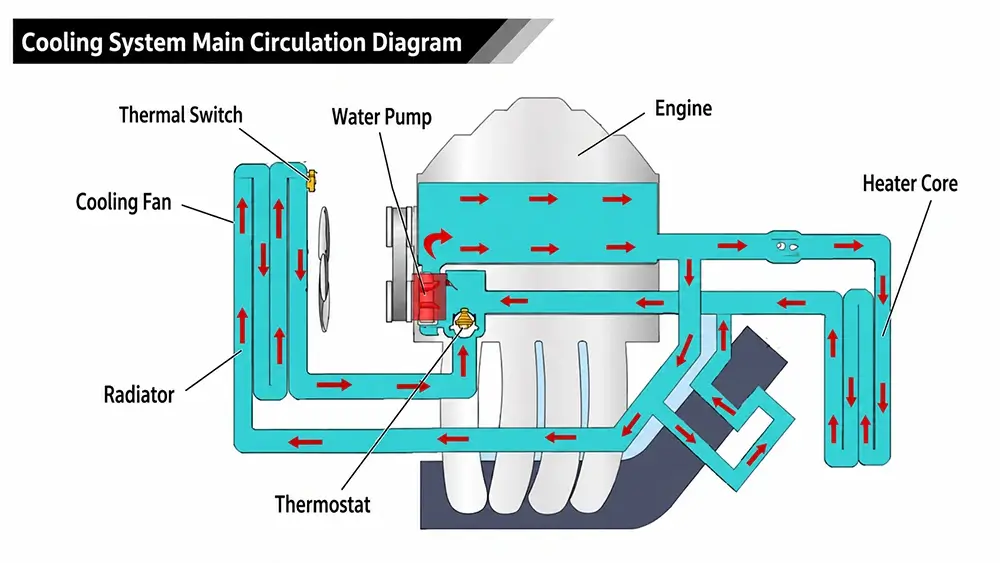
7. Separate Pump Failure from Other Cooling-System Faults
A useful diagnostic process actively attempts to disprove the pump diagnosis.
8. Remember That Main and Auxiliary Electric Pumps Do Different Jobs
Not every electric water pump is the main engine coolant pump.
Modern vehicles can use additional pumps for specific thermal-management circuits. Depending on the application, an auxiliary pump may support cabin heating, turbocharger thermal management or another dedicated circuit.
Auxiliary Water Pump Failure Symptoms
An auxiliary electric water pump may produce different symptoms from a failed main engine coolant pump because it serves a more limited thermal-management circuit.
Depending on the vehicle and circuit, possible symptoms can include weak cabin heating at idle, inconsistent heater performance, abnormal temperature behaviour after the engine is switched off, insufficient coolant circulation through a turbocharger or auxiliary cooling circuit, and a pump that does not respond during an actuator test.
These symptoms still do not confirm that the auxiliary pump itself has failed. The relevant hoses, valves, electrical connector, wiring, coolant level, bleeding condition and control command should be checked before replacement. The exact circuit served by the pump must also be identified before ordering.
This changes the diagnosis.
Before ordering a replacement pump, identify:
- whether the component is a main or auxiliary pump;
- which coolant circuit it serves;
- connector configuration;
- hose-port arrangement;
- OE reference;
- engine code;
- vehicle application;
- and any superseded part reference.
That identification step also prevents an informational diagnosis query from turning into an incorrect parts order.
Wellgine’s Car Water Pumps range can be used as the commercial reference point for automotive replacement applications.
9. What Should Be Checked Before Ordering a Replacement Electric Water Pump?
For distributors, workshops and B2B buyers, a confirmed diagnostic decision is only one part of the replacement process.
Before purchase, record the information needed to identify the correct component:
- OE number on the removed or referenced pump;
- vehicle make and model;
- model year or production information where relevant;
- engine code;
- main or auxiliary cooling-circuit role;
- electrical connector configuration;
- hose-port orientation;
- clear photographs of the existing part when the OE reference is uncertain.
Do not assume that two pumps are interchangeable because their housings look similar.
Electrical control, connector pin-out, flow requirements and circuit role can differ even where the external shape is close.
For Jaguar and Land Rover sourcing requirements, buyers can also review the Jaguar Land Rover Water Pumps category.
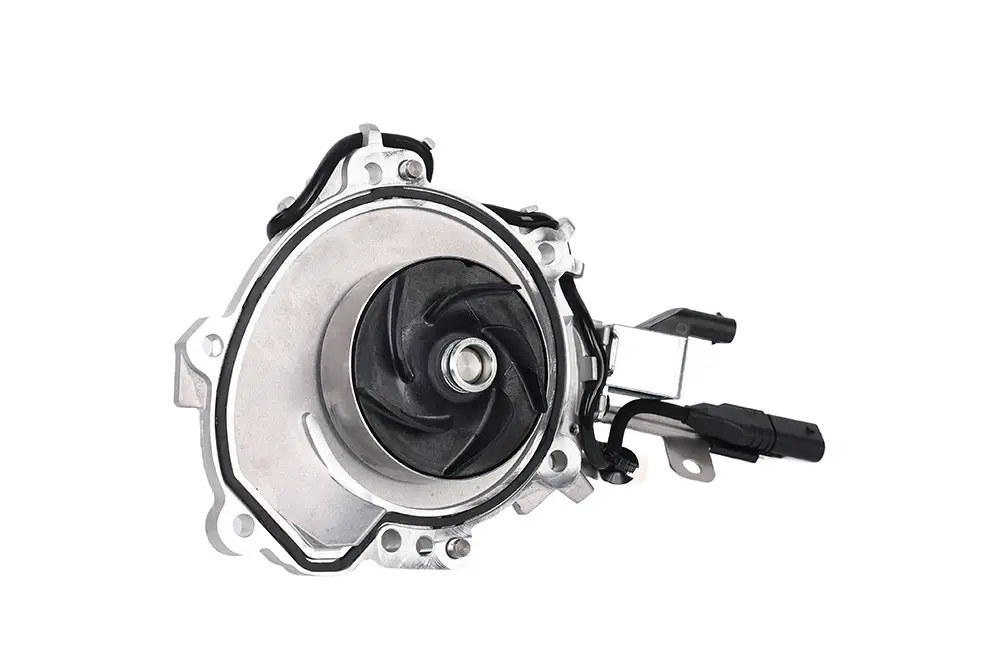
Where an application has already been narrowed to the relevant OE-reference group, Wellgine also lists the LR123906 electrical water pump for Jaguar Land Rover Ingenium AJ200 applications. OE and application information should still be confirmed against the exact vehicle before ordering.
A Practical Electric Water Pump Diagnostic Sequence
For a workshop or technical buyer evaluating a suspected failure, the process can be reduced to the following sequence:
1. Confirm the complaint
Identify exactly when and how the temperature or circulation problem occurs.
2. Inspect the cooling system
Check coolant level, leaks, hoses, connectors and signs of previous service.
3. Scan the control system
Record fault codes and relevant live data before clearing anything.
4. Identify the pump’s circuit role
Confirm whether it is a main pump or an auxiliary pump and what circuit it serves.
5. Request pump operation where the OEM diagnostic procedure permits it
Compare commanded operation with the pump’s response.
6. Test the electrical circuit if the pump does not respond
Check the specified power, ground, wiring and control conditions under load.
7. Verify coolant circulation if the pump operates
Do not mistake motor noise for confirmed coolant flow.
8. Check competing causes
Evaluate the thermostat, radiator, fan, coolant-temperature inputs, system restriction and trapped air.
9. Confirm the replacement reference
Match OE number, engine/application, connector and coolant-circuit role before procurement.
This sequence helps distinguish a failed pump from a cooling-system problem that merely produces similar symptoms.
FAQ
Can an electric water pump fail without leaking coolant?
Yes. An electric coolant pump can have an electrical, control or internal mechanical problem without producing an external coolant leak. Lack of leakage therefore does not prove that the pump is operating correctly.
Does an overheating engine prove that the electric water pump has failed?
No. Overheating can also result from low coolant, trapped air, a thermostat fault, inadequate radiator airflow, cooling-fan problems, restrictions or incorrect temperature information. The pump should be tested as part of the full cooling system.
Can a pump make noise and still circulate coolant?
Possibly. Noise can indicate a developing mechanical problem, but diagnosis should not be based on sound alone. The pump’s electrical response and actual coolant circulation should also be checked.
Can an electric water pump run but still cause an overheating complaint?
Yes. Electrical operation does not by itself demonstrate that the required coolant circulation is present. Internal pump problems, trapped air, restrictions or another cooling-system component can still prevent correct thermal management.
Should a replacement pump be selected only by vehicle model?
No. For B2B replacement sourcing, the OE reference, engine code, cooling-circuit role, connector and application should be checked together. Vehicle model alone may cover several engines or cooling-system configurations.
Electric Water Pump Diagnosis Before Replacement
The most reliable diagnosis does not start with the assumption that the water pump is defective.
It establishes whether the pump is being commanded, whether its electrical circuit can support operation and whether the resulting coolant flow is adequate. It then checks the rest of the cooling system for faults capable of producing the same symptom.
For aftermarket distributors, workshops and procurement teams sourcing automotive electric water pumps, Wellgine can support product identification using the OE reference, engine code, vehicle application and product photographs.
Explore the Car Water Pumps range or send the application information required for replacement-part confirmation.