An engine oil pump pressure relief valve can fail in two opposite directions.
A relief valve stuck open can prevent the lubrication system from building or maintaining sufficient oil pressure. A valve stuck closed can prevent excess pump output from being relieved, allowing pressure to rise abnormally high.
The symptoms are therefore very different even though the same valve is involved.
For engine-parts buyers and rebuilders, this distinction is important because low or high oil pressure alone does not prove that the complete oil pump must be replaced.
Oil Pump Relief Valve Stuck Open vs Stuck Closed
| Condition | Hydraulic effect | Typical pressure result | Main diagnostic direction |
|---|---|---|---|
| Normal valve operation | Opens only when pressure reaches the designed control range | Pressure remains within specification | No relief-valve fault indicated |
| Valve stuck open | Oil bypasses when it should remain in the pressure circuit | Low or no oil pressure | Valve/bore, contamination, spring, pump and wider lubrication system |
| Valve stuck closed | Excess flow cannot be relieved normally | Abnormally high oil pressure | Valve binding, contamination, oil viscosity, restriction and pressure measurement |
| Valve partly sticking | Valve movement is inconsistent | Unstable or condition-dependent pressure | Mechanical pressure test and physical inspection |
The exact pressure specification and valve arrangement vary by engine.
What Does an Oil Pump Pressure Relief Valve Do?
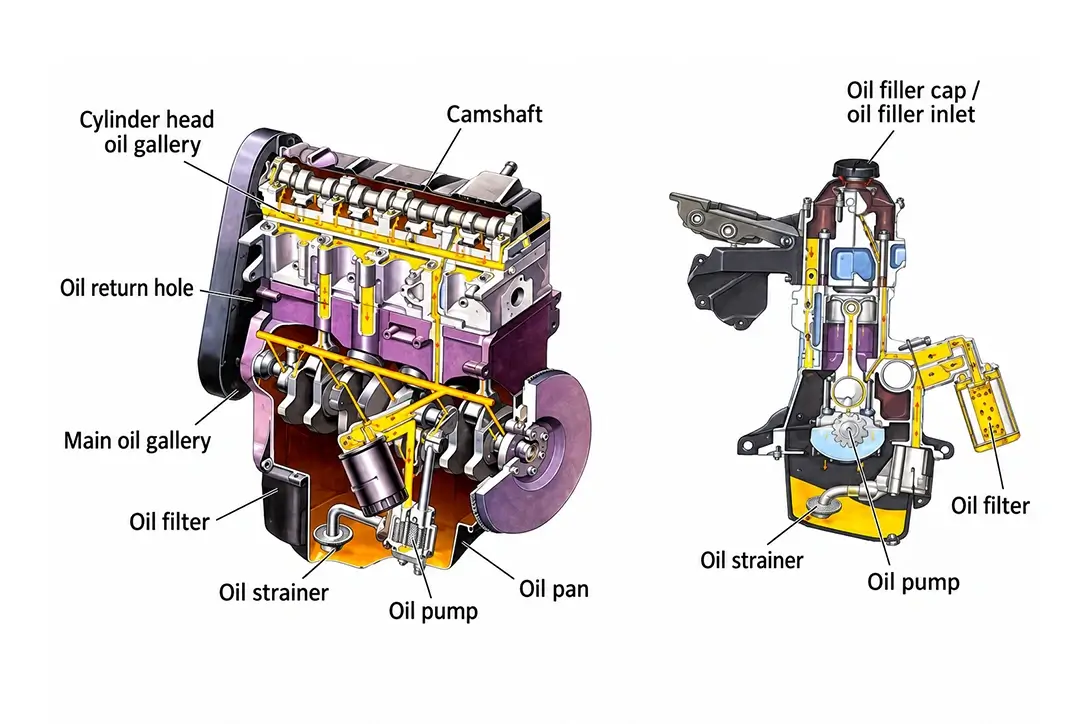
An engine oil pump is normally a positive-displacement pump.
As pump speed increases, it can move more oil than the engine requires under some operating conditions.
Because engine oil is effectively incompressible in this context, the lubrication system requires a method of preventing excessive pressure.
The pressure relief valve provides that control.
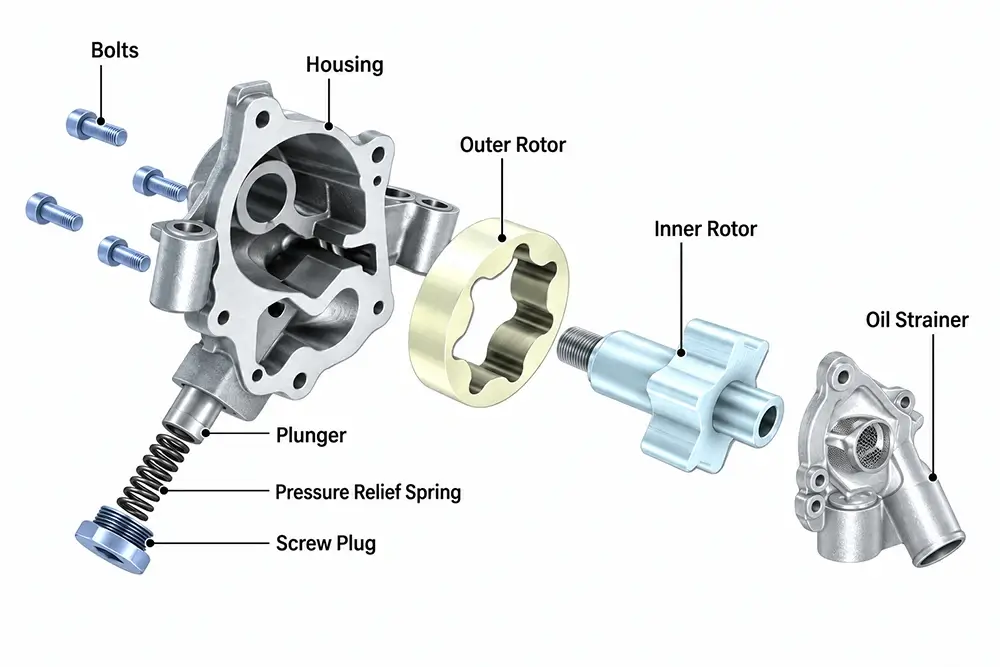
A typical relief-valve assembly may contain:
- a valve piston or plunger;
- spring;
- valve bore;
- bypass passage;
- retaining plug or cover.
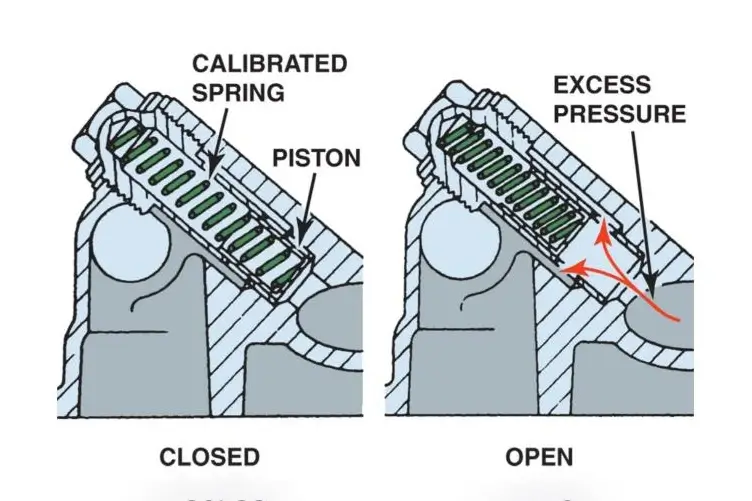
When system pressure is below the designed opening threshold, spring force keeps the valve closed.
When pressure reaches the required level, hydraulic force overcomes spring force and moves the valve.
Excess oil can then be routed:
- back to the pump inlet;
- back to the sump;
- or through another bypass path,
depending on engine design.
What Happens When the Relief Valve Is Stuck Open?
A valve that remains open creates a bypass path when the lubrication system is trying to build pressure.
Instead of directing the required pump output into the main oil galleries, part of that flow continues to escape through the relief circuit.
The result can be:
- low actual oil pressure;
- no oil pressure in a severe case;
- slow pressure build-up;
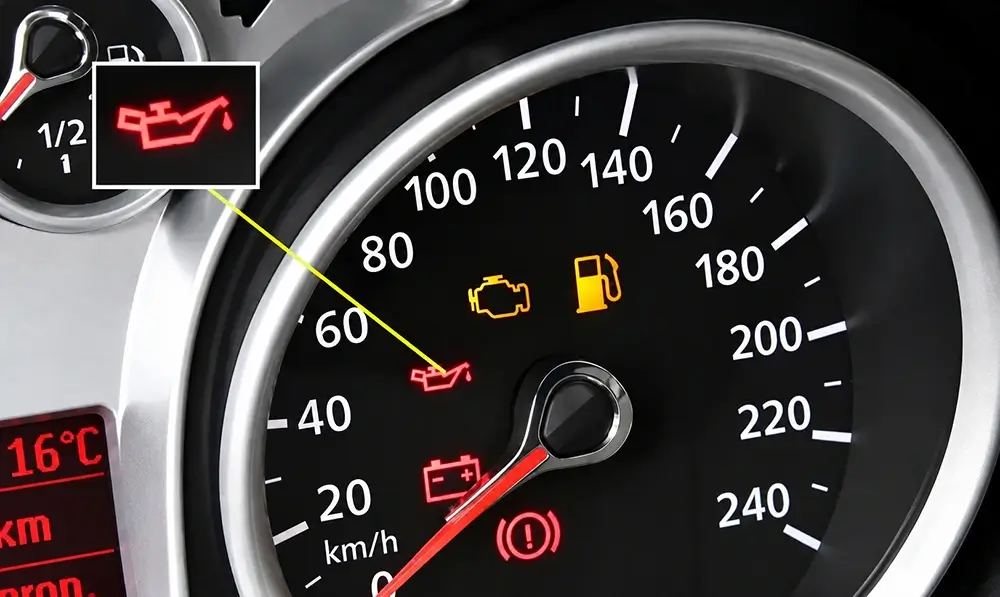
- oil-pressure warning;
- lubrication-related valvetrain noise;
- pressure that remains below specification as RPM changes.
However, this pressure pattern is not unique to the relief valve.
Stuck-Open Relief Valve Symptoms
Possible symptoms include:
- low oil-pressure warning;
- low mechanical pressure reading;
- ticking or other lubrication-related noise;
- pressure below specification at hot idle;
- pressure that does not recover normally as RPM increases;
- delayed oil-pressure build-up.
A stuck-open valve can resemble several other faults.
These include:
- clogged pickup screen;
- pickup-tube suction leak;
- worn oil pump;
- excessive bearing clearance;
- incorrect oil viscosity;
- low oil level;
- oil-pressure sensor or gauge fault.
This is why the valve should not be diagnosed from symptoms alone.
Why Can a Relief Valve Stick Open?
A spring-loaded relief valve must move freely inside its bore and return to its seat correctly.
Possible causes of abnormal movement include:
Sludge or Varnish
Deposits may interfere with free valve movement.
Metallic Debris
Wear debris can enter the valve area and prevent the plunger from seating correctly.
Burrs or Bore Damage
Burrs, scoring or other bore damage can interfere with normal valve movement and sealing.
Valve Wear
Wear between the valve and bore can affect sealing and movement.
Spring Damage
A weakened, damaged or incorrect spring can change the pressure at which the valve begins to open.
Exact inspection limits must come from the engine manufacturer’s service information.
What Happens When the Relief Valve Is Stuck Closed?
A stuck-closed valve creates the opposite condition.
The pump continues moving oil, but the normal relief path cannot open when system pressure becomes too high.
Possible consequences include:
- unusually high oil-pressure readings;
- excessive cold-start pressure;
- filter or filter-seal stress;
- external leakage at vulnerable seals or gaskets;
- abnormal pressure response as RPM increases.
A stuck-closed relief valve therefore should not be confused with the low-pressure failure associated with a stuck-open valve.
Stuck-Open vs Stuck-Closed Pressure Pattern
The simplest distinction is:
Stuck open → pressure is being relieved too easily.
Stuck closed → pressure cannot be relieved when required.
But actual diagnosis still needs operating conditions.
Pressure should be recorded together with:
- oil temperature;
- engine RPM;
- oil viscosity;
- cold or hot operating state;
- manufacturer’s specified pressure.
There is no universal PSI value that proves a relief-valve fault.
Why Cold Oil Matters
Cold oil is more viscous than fully warmed oil.
This increases resistance to flow and can produce higher oil pressure during cold operation.
The relief valve therefore becomes particularly important when:
- oil is cold;
- engine RPM rises;
- pump output exceeds current lubrication demand.
A pressure reading that is high immediately after cold start is not automatically evidence that the valve is stuck closed.
The question is whether pressure remains outside the engine manufacturer’s specified range under the correct test conditions.
A Stuck-Open Valve vs a Worn Oil Pump
These two faults can look similar on a pressure gauge.
Stuck-Open Relief Valve
The pump may still be mechanically capable of moving oil, but part of its output is continuously bypassed.
Worn Oil Pump
Internal pump leakage or excessive clearance reduces the pump’s ability to deliver the required output.
Both may cause:
- low hot-idle pressure;
- low measured pressure;
- lubrication noise.
The gauge reading alone may therefore not identify the component.
The relief valve and pump mechanism need to be inspected separately.
Stuck-Open Valve vs Pickup Restriction
A pickup fault is another major diagnostic boundary.
A relief valve stuck open affects the pressure-control side of the pump.
A restricted pickup affects the inlet supply side.
For pickup-specific diagnosis, see Oil Pump Pickup Tube and Strainer vs Oil Pump Failure.
Relief Valve vs Variable-Displacement Oil Pump Control Valve
These components should not be treated as interchangeable.
Pressure Relief Valve
Its main purpose is to prevent excessive lubrication-system pressure by opening a bypass path when the designed pressure threshold is reached.
Variable-Displacement Control Valve
Its purpose is to change the hydraulic state that controls the effective displacement of a variable oil pump.
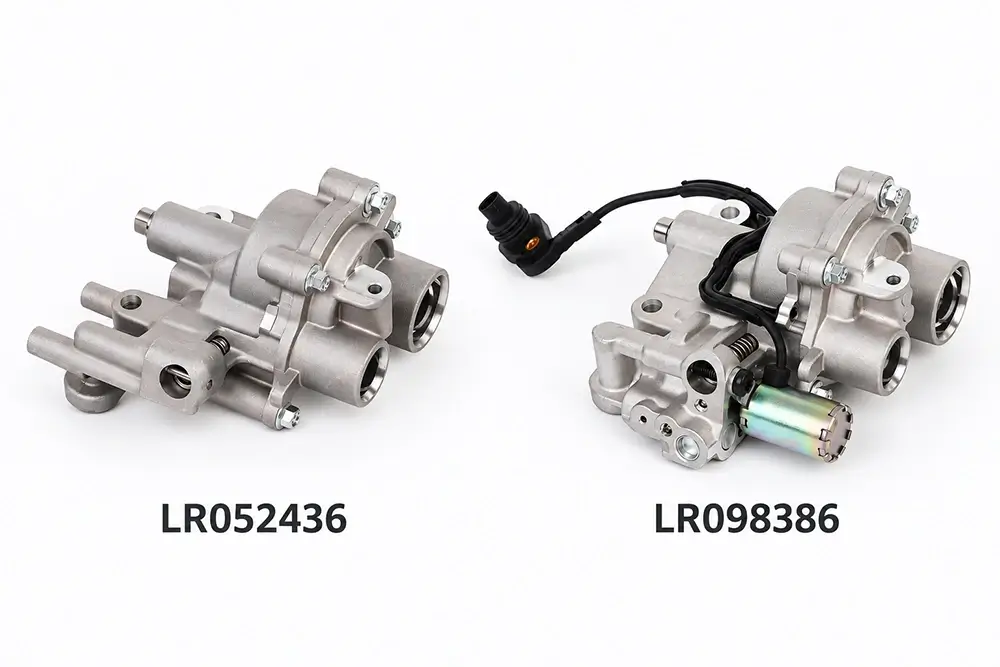
A fixed-displacement pump can contain a pressure relief valve.
A variable-displacement pump may contain:
- displacement-control valve;
- solenoid;
- hydraulic control chambers;
- pressure relief valve.
Some systems therefore contain both types of valve.
For that architecture, see Variable-Displacement Oil Pump: Control Valve, Solenoid and Pump Differences.
How to Test a Suspected Oil Pressure Relief Valve Fault
1. Confirm Oil Level
Verify that oil level is correct before diagnosing the pump.
A low level can cause true pressure loss without any valve fault.
2. Confirm the Correct Oil
Check:
- approved viscosity;
- oil condition;
- contamination;
- possible fuel or coolant dilution.
Incorrect viscosity can materially change pressure behaviour.
3. Verify the Oil Filter
Confirm:
- correct filter reference;
- correct installation;
- no collapsed or restricted element;
- correct seals or O-rings.
4. Verify Actual Oil Pressure
Do not rely only on the dashboard warning or electronic gauge.
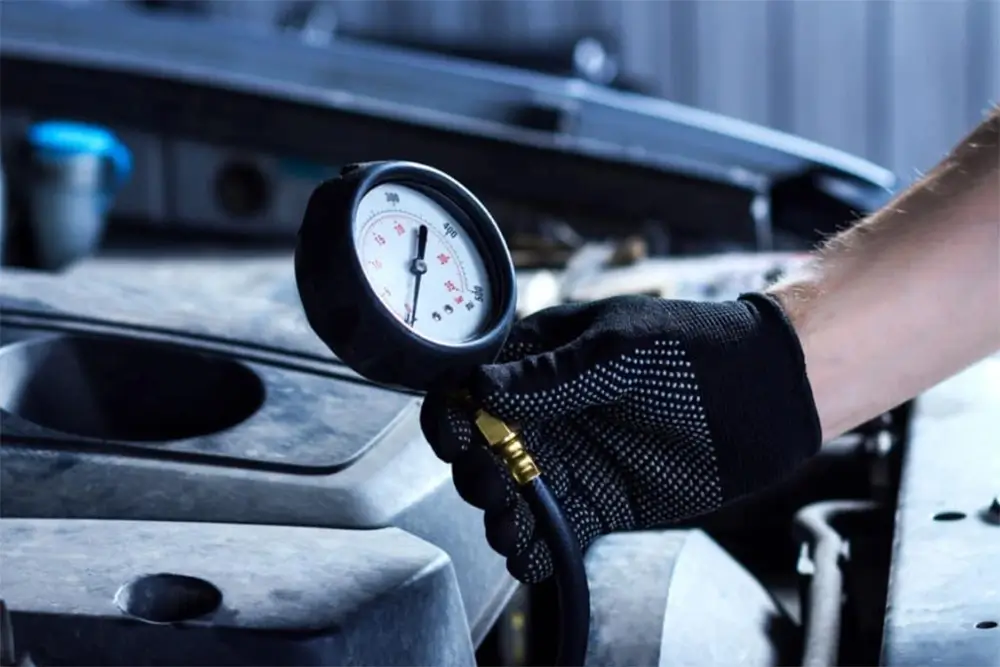
Use the engine manufacturer’s specified test port or pressure-sender location and install a mechanical oil-pressure gauge according to the service procedure.
Record pressure at the exact:
- temperature;
- RPM;
- engine condition
specified by the manufacturer.
5. Compare Idle and Raised-RPM Pressure
The relationship between idle pressure and higher-RPM pressure can help narrow the diagnosis.
For more detail, see Low Oil Pressure at Idle vs Under Load.
6. Inspect the Pickup System
Before condemning the relief valve or pump, inspect relevant:
- pickup screen;
- pickup tube;
- pickup seals;
- oil-pan contamination.
7. Inspect the Relief Valve
Where the engine design permits service, inspect:
- valve or plunger;
- valve bore;
- free movement;
- scoring;
- sludge;
- metal debris;
- spring condition;
- retaining components.
Do not grind, modify or alter the spring to change the opening pressure unless a manufacturer procedure explicitly requires it.
What Does Contamination Tell You?
If sludge or metallic debris is found around the relief valve, simply cleaning or replacing the valve may not be the complete repair.
Ask:
Where did the contamination come from?
Possible wider problems include:
- inadequate maintenance;
- internal engine wear;
- damaged pump components;
- deteriorated gasket material;
- previous engine failure.
Metal debris in particular may indicate that the lubrication system needs broader inspection.
Is the Relief Valve Part of the Oil Pump?
Often, but not always in exactly the same way.
Depending on engine design, a pressure relief or regulating valve may be:
- integrated into the pump housing;
- installed in the front or timing cover;
- located elsewhere in the lubrication circuit.
For replacement sourcing, this creates an important assembly-scope question.
Can the Relief Valve Be Replaced Separately?
Sometimes.
Depending on the engine and supplier, it may be available as:
- valve only;
- valve and spring;
- valve repair components;
- oil pump with integrated valve;
- complete front-cover / pump assembly.
Do not assume separate serviceability from the component’s appearance.
The OE parts breakdown and exact engine application should determine the correct supplied scope.
Oil Pump and Relief Valve B2B Matching Checklist
| Item | What to confirm |
|---|---|
| OE reference | Original and superseding numbers |
| Engine code | Exact engine generation |
| Pump type | Fixed or variable displacement |
| Relief valve location | Pump, cover or separate circuit position |
| Valve supplied separately? | Confirm parts catalogue |
| Spring included? | Confirm assembly scope |
| Pump housing | Compare casting and passages |
| Inlet / outlet | Confirm oil-routing architecture |
| Control valve / solenoid | Do not confuse with relief valve |
| Product photos | Front, rear and valve area |
| Quantity | Sample or production requirement |
When the Complete Oil Pump May Need Inspection
A relief-valve problem does not automatically mean only the valve is affected.
Inspect the wider pump if there is evidence of:
- rotor or gear wear;
- housing scoring;
- excessive internal clearance;
- contaminated oil;
- damaged pump drive;
- sticking displacement mechanism on applicable pumps;
- damaged valve bore integrated into the pump housing.
If the relief-valve bore itself is damaged and forms part of the pump housing, replacing only the movable valve may not correct the fault.
Frequently Asked Questions
What Happens if an Oil Pump Relief Valve Is Stuck Open?
Oil may continuously bypass through the relief circuit instead of maintaining normal gallery pressure. This can cause low or, in severe cases, no oil pressure.
What Happens if the Oil Pressure Relief Valve Is Stuck Closed?
The valve may fail to release excess pump output, allowing oil pressure to rise abnormally high.
Can a Stuck-Open Relief Valve Cause Low Oil Pressure at Idle?
Yes. However, worn bearings, thin oil, pump wear, pickup problems and sensor faults can cause similar symptoms.
Can a Stuck Relief Valve Cause Zero Oil Pressure?
A severely stuck-open valve is one possible cause. Pickup restriction and other pump or lubrication faults should also be checked.
Can a Stuck-Closed Relief Valve Damage the Oil Filter?
Excessive system pressure can place abnormal stress on the filter and sealing components. The actual outcome depends on the system and pressure level.
What Makes an Oil Pressure Relief Valve Stick?
Possible causes include sludge, varnish, debris, scoring, bore damage and abnormal spring or valve condition.
Is the Relief Valve the Same as the Oil Pump Control Solenoid?
No. A relief valve limits excessive pressure. A control solenoid on a variable-displacement system changes the hydraulic control state of the pump.
Should the Whole Oil Pump Be Replaced for a Stuck Relief Valve?
Not automatically. Serviceability depends on the engine design, valve location, bore condition and whether the valve is supplied separately.
Engine Oil Pump Sourcing
For an oil-pump or pressure-relief-related sourcing enquiry, provide Wellgine with:
- complete OE reference;
- engine code;
- vehicle application;
- pump photographs;
- relief-valve area photographs where available;
- supplied assembly requirements;
- required quantity.
Wellgine supplies selected engine oil pumps and oil-pump assemblies for international aftermarket and B2B sourcing.